
1. Why Under 3s Aren’t Just Tiny Kindergartens
Babies and toddlers develop differently. This shows itself in three main ways:
- Sensory and motor: They explore through their mouths, hands and whole bodies. Materials need to be graspable, safe to chew, and non-toxic.
- Language: They understand far more than they can say. Materials need obvious, self-explanatory use — complicated rules just don’t work.
- Social: They tend to play alongside each other rather than together. You need enough materials so everyone has one — otherwise you’ll have endless squabbles.
The upshot: Keep complicated toys to a minimum, but have multiples of everything. Robust, safe, and crystal-clear in how they work.
2. The Five Key Experience Areas
A well-set-up nursery covers five areas. The materials often overlap, but the focus of each is clear:
1. Movement and Gross Motor Skills
- Crawling tunnel, climbing mountain
- Rocking horse, slide
- Ride-on car, push wagon
- Wobble board, balance stones
2. Senses and Perception
- Touch pouches with natural materials
- Sound bottles, simple instruments
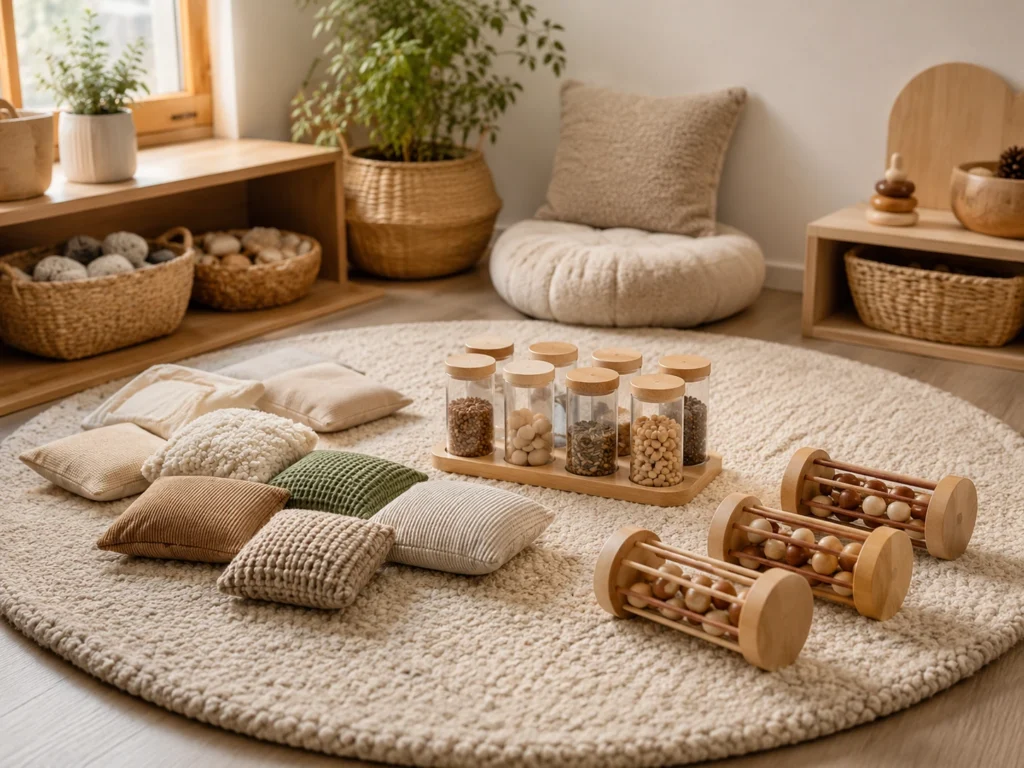
- Shaking sets with large wooden beads, beans, rice
- Mirrors at tummy height
3. Grasping and Fine Motor Skills
- Grasping toys in different textures
- Wooden rings, stacking rings
- Large wooden beads 20 mm diameter or bigger
- Shape sorters with large pieces
4. Language and Communication
- Board books with thick card pages
- Finger puppets, cloth dolls
- Animal games and sound games
5. Pretend Play and Everyday Life
- Play kitchen with wooden vegetables
- Dolls and doll beds
- Tool bench with wooden tools
- Dressing-up corner (scarves, hats)
3. Core Materials Explained
Grasping Toys — Baby’s First Playthings
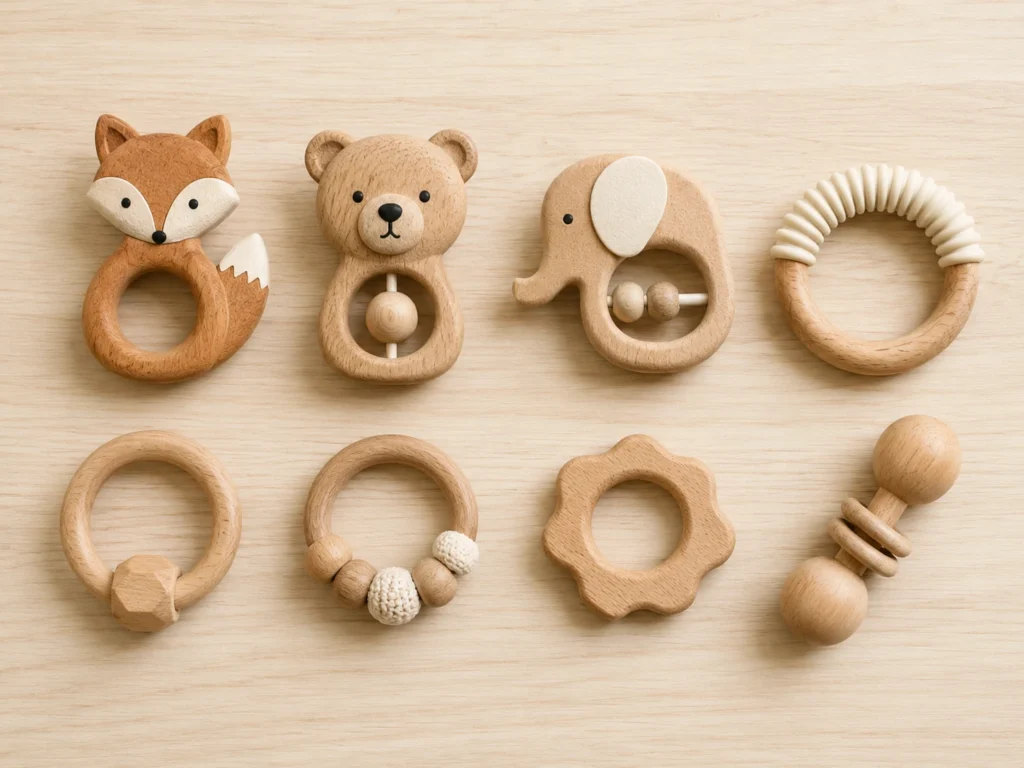
A grasping toy is often the first plaything a baby actively uses. It develops touch, sight and hearing all at once. Every well-equipped nursery needs at least 6–8 different grasping toys on its shelves: ones with wooden rings, ones with wooden beads, crocheted animals, ones with bells. Non-negotiable: all materials must meet EN-71-3 safety standards, all knots must be secure, and there must be no choking hazards.
Wooden Beads — More Versatile Than Any Learning Toy
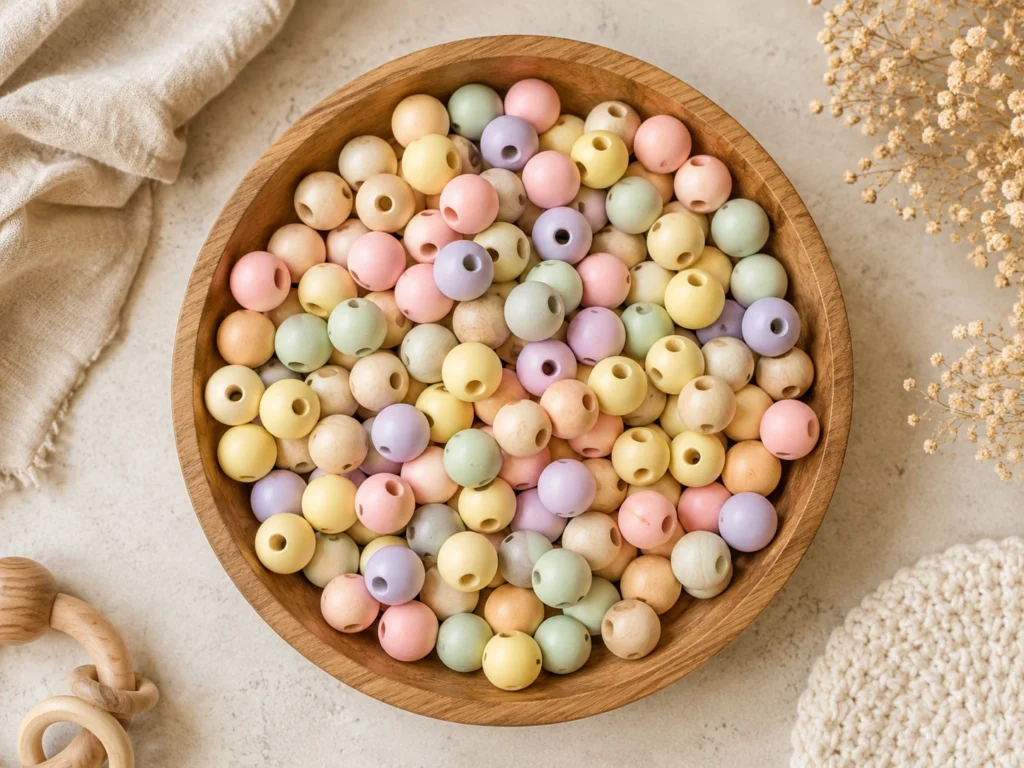
Large wooden beads (20 mm diameter or bigger) are the Swiss Army knife of nursery materials. You can sort them, pour them from one container to another, stack them in bowls, thread them onto wooden sticks, and use them for touch activities. A well-stocked nursery has 100–200 wooden beads in 3–5 colours.
Stacking Rings and Shape Sorters
These are classics because they simply work. A stacking ring toy with large wooden discs in 3–5 graduated sizes. A shape sorter with large wooden shapes — square, circle, triangle.
Movement Spaces
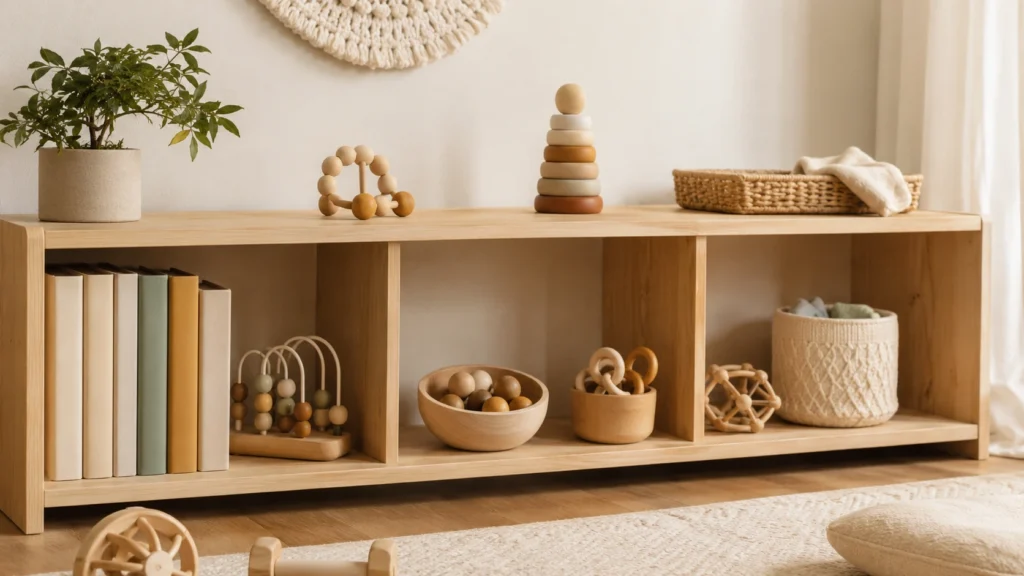
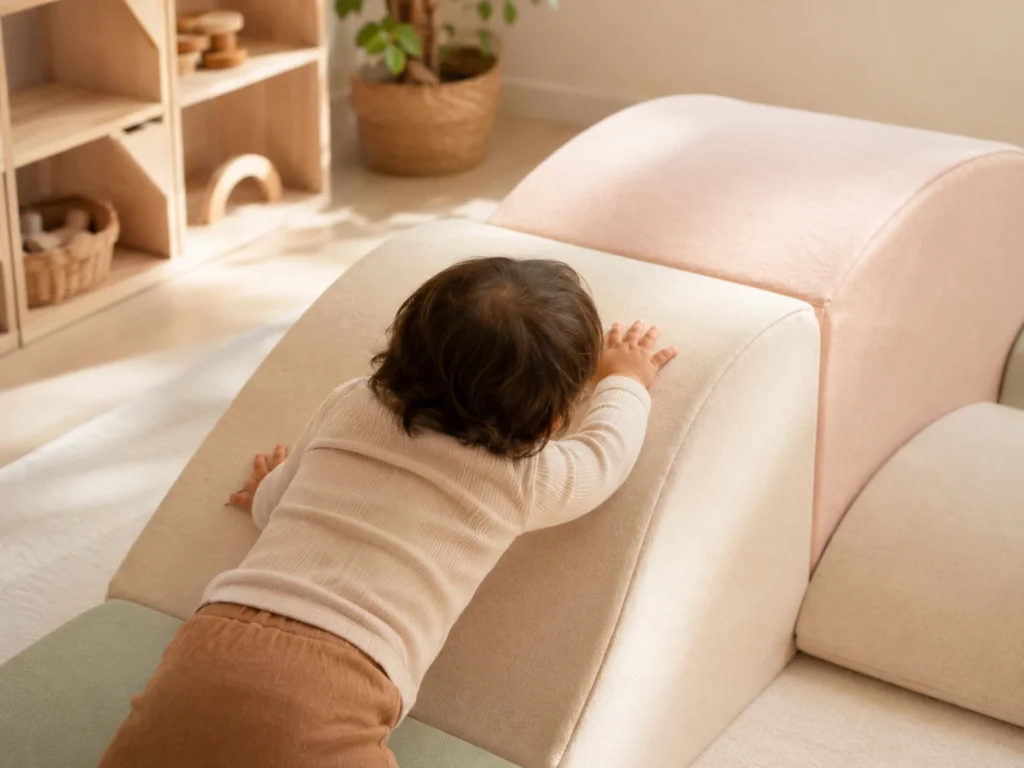
Under 3s need chances to move. A climbing mountain, a tunnel, a wobble board — all of this fits into a standard group room if you keep your furniture to a minimum.
Mobiles
For the youngest, who spend a lot of time on their backs, a baby mobile is invaluable. It develops their eyes, encourages reaching, and can become part of a settling routine. You’ll want one above each changing table and one in the quiet area.
4. Safety Is Non-Negotiable
Safety standards for under 3s are strict for a reason — babies are almost always putting things in their mouths. These points are absolute:
- EN-71-3 testing for anything that might go in a mouth. Must resist saliva and sweat, with no harmful substances.
- Minimum 32 mm diameter for loose parts — this is the standard choke tube test.
- Secure knots and connections. Assume anything that could come loose will — it’s not a question of if, but when.
- No strings or cords longer than 22 cm within reach — strangulation risk.
- Mobiles out of reach — secure them safely, never hang them over crawling areas.
Read more in our guide on Safe Craft Materials for Nurseries and Kindergartens.
5. When Your Budget Is Tight — The Priorities
Equipping a nursery is expensive, and budgets are almost always tight. If you need to prioritise, this order has proven itself:
- Safe grasping toys — essential, in sufficient quantities.
- Large packs of wooden beads — endlessly useful, lasts for years.
- Stacking rings and shape sorters — timeless, working well for years.
- Board books — at least five per child in the group.
- Movement equipment — tunnels, climbing mountains, rocking horses.
- Pretend play materials — play kitchens, dolls.
You can safely skip: anything that runs on batteries, anything with lights and sounds, anything plastic. In a nursery setting, they’re a waste of money.
FAQ
How much under 3s material do I need per child?
A rough guide: 2–3 freely available items per child. So if you have 12 children, you’re looking at 24–36 items — stored in open shelving where children can reach them, not locked in cupboards.
How often should I rotate materials?
Rotate roughly monthly — keep some classics out all the time (stacking rings, grasping toys), swap other things around. This stops it all becoming overwhelming and keeps children engaged.
Can I buy secondhand under 3s materials?
Wooden toys, yes. Fabric items, better to buy new — it’s hard to verify hygiene and safety standards with secondhand textiles.
Complete Under 3s Packages: We supply thoughtfully curated nursery sets — all components meet EN-71-3 safety standards, delivered on account with 14 days’ payment terms, bulk discount from 10 units. Submit a nursery enquiry.