
1. Why Approach Sensory Development Systematically?
In early childhood, the brain is remarkably plastic. What gets practised strengthens. What doesn’t gets weaker. This is especially true for sensory skills that are hard to catch up on later — like distinguishing different sounds or developing touch sensitivity.
Deliberate sensory development has two effects:
- Direct: Children’s senses sharpen — they hear more subtly, feel more precisely, notice details.
- Indirect: When children perceive subtly, they can describe subtly — vocabulary, language and thinking skills all improve.
Sensory development isn’t frills, it’s foundation. And the best part: you don’t need expensive kit — most activities work with what you’ve already got.
2. The Seven Sensory Areas
| Area | What It Develops | Example Activity |
|---|---|---|
| Visual (Sight) | Colour, shape, detail, depth | Sorting wooden beads by colour |
| Auditory (Hearing) | Distinguishing sounds, directional hearing | Sound bottle matching game |
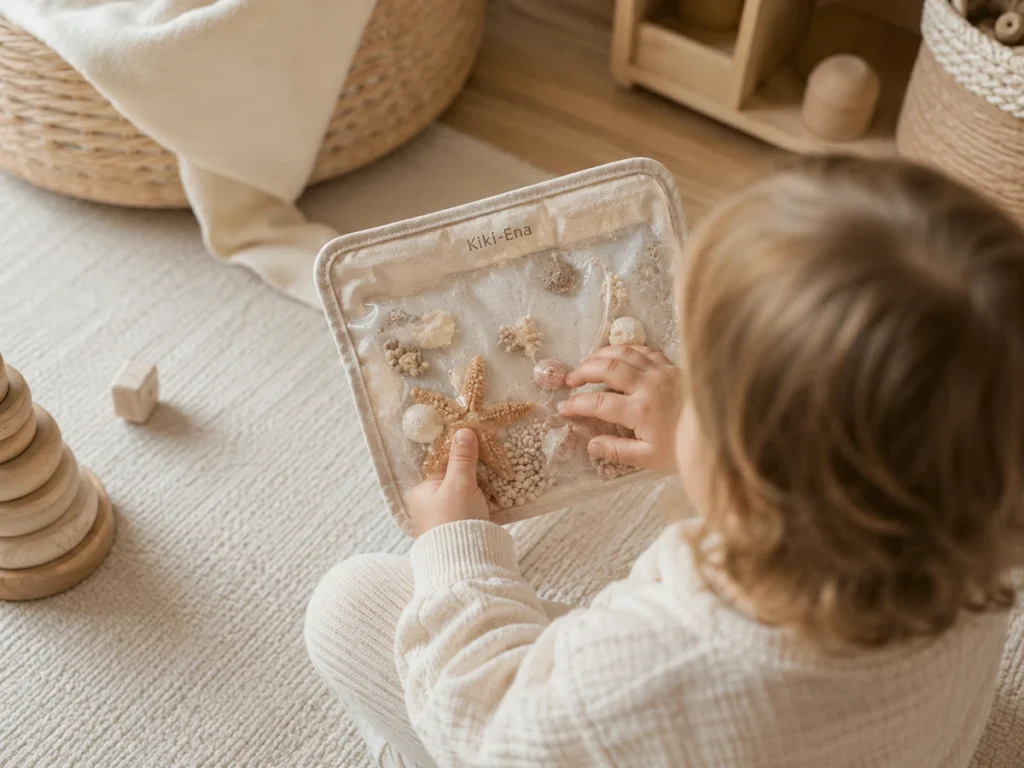
| Tactile (Touch) | Texture, temperature, texture | Touch pouches with natural materials |
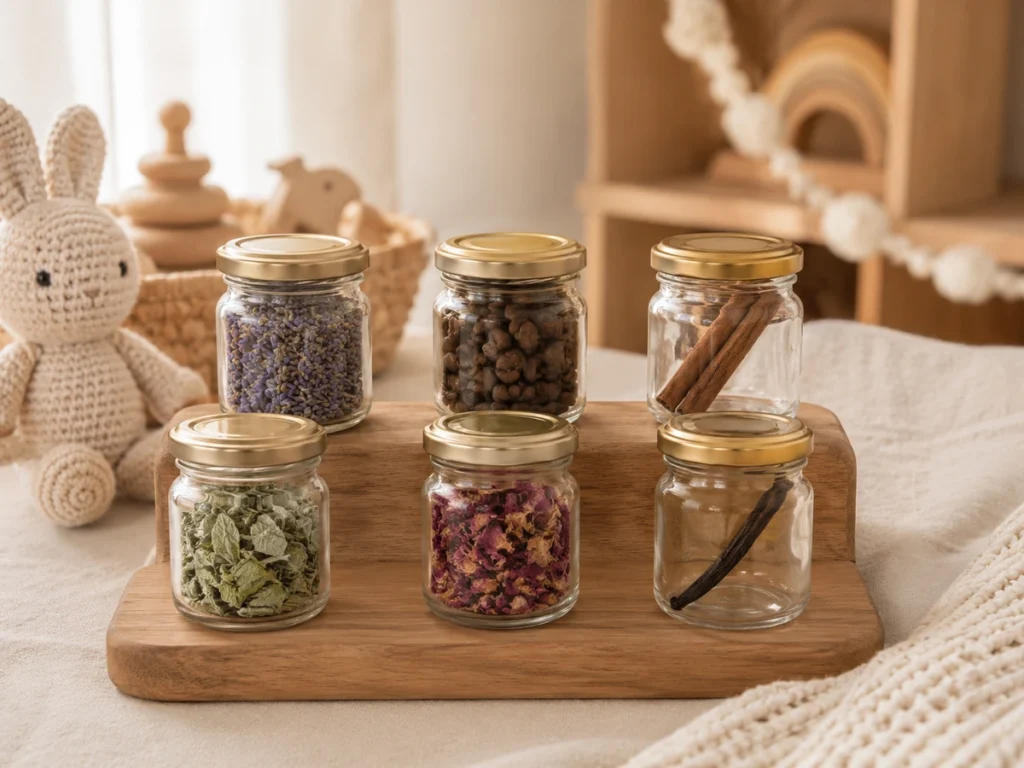
| Olfactory (Smell) | Distinguishing scents | Scent jars with lavender, coffee, lemon |
| Gustatory (Taste) | Sweet, sour, salty, bitter | Tasting activity at breakfast time |
| Vestibular (Balance) | Spinning, acceleration | Wobble board, swing |
| Proprioceptive (Body Awareness) | Muscle and joint awareness | Carrying heavy objects, crawling tunnel |
3. Building Sensory Activities into the Day
Rather than having a separate sensory time, it’s worth weaving perception throughout the day. Here are concrete ideas:
Circle Time
- Listening game: Eyes closed, what can you hear? (Cars, birds, the fridge, breathing) — this trains auditory discrimination.
- Touch circle: A wooden bead is passed around — each child describes what it feels like.
- Light and shadow: A sunbeam travels across the room — who can spot it?
Free Play Time
- Sensory corner: A permanent space with touch pouches, scent jars, sound bottles, bead shakers — open access for children.
- Barefoot path: Different floor textures (carpet, cushions, sandbags) — children walk across them barefoot.
Movement Time
- Eyes closed, moving through the room: With a partner as guide — learning to trust.
- Sound journey: Different stations make different sounds (tapping a wooden board, rustling fabric, ringing bells).
Lunchtime
- Taste awareness: Before the first bite, have a smell — what do you think it will taste like?
- Quiet moment: A few seconds of stillness and noticing before eating begins.
4. What Materials You Actually Need
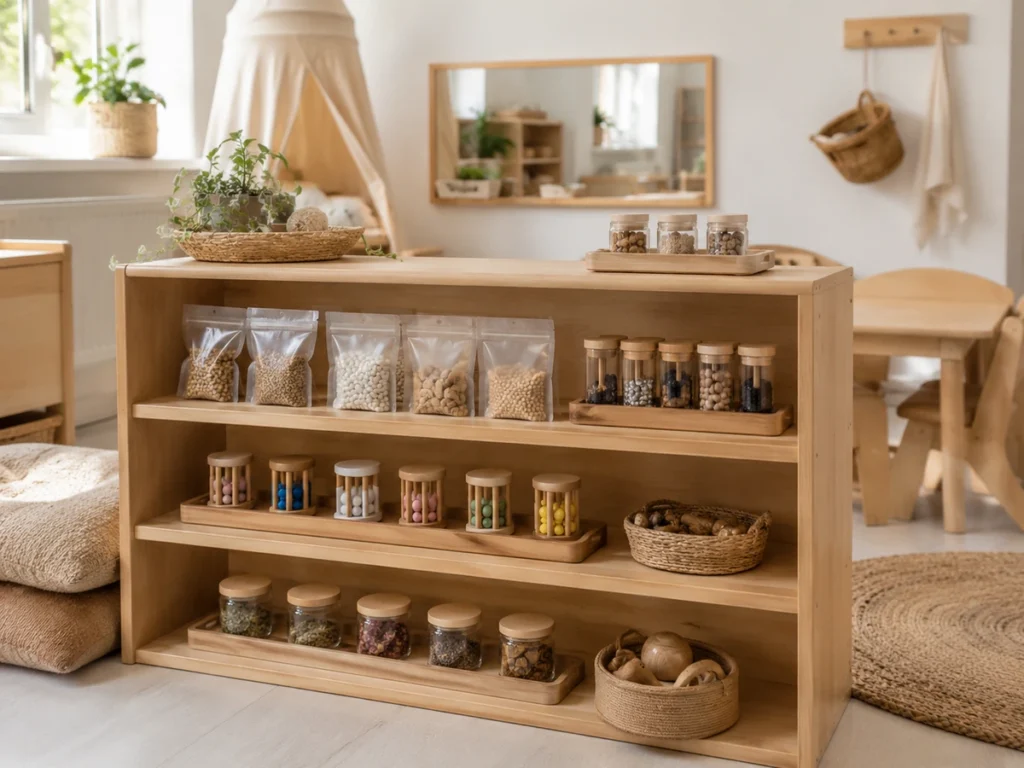
You don’t need expensive specialist kits. This basic set covers 90 per cent:
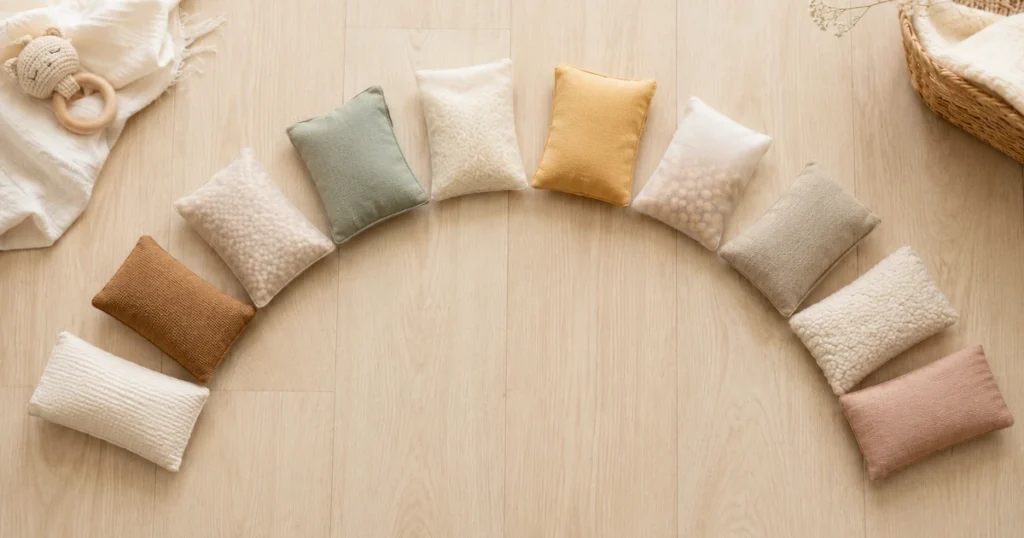
- Touch pouch set: Ten small fabric bags with different contents (wooden beads, wool balls, stones, pine cones, chestnuts, rice in a pouch, beans, wooden cubes, felt balls, sandbags).
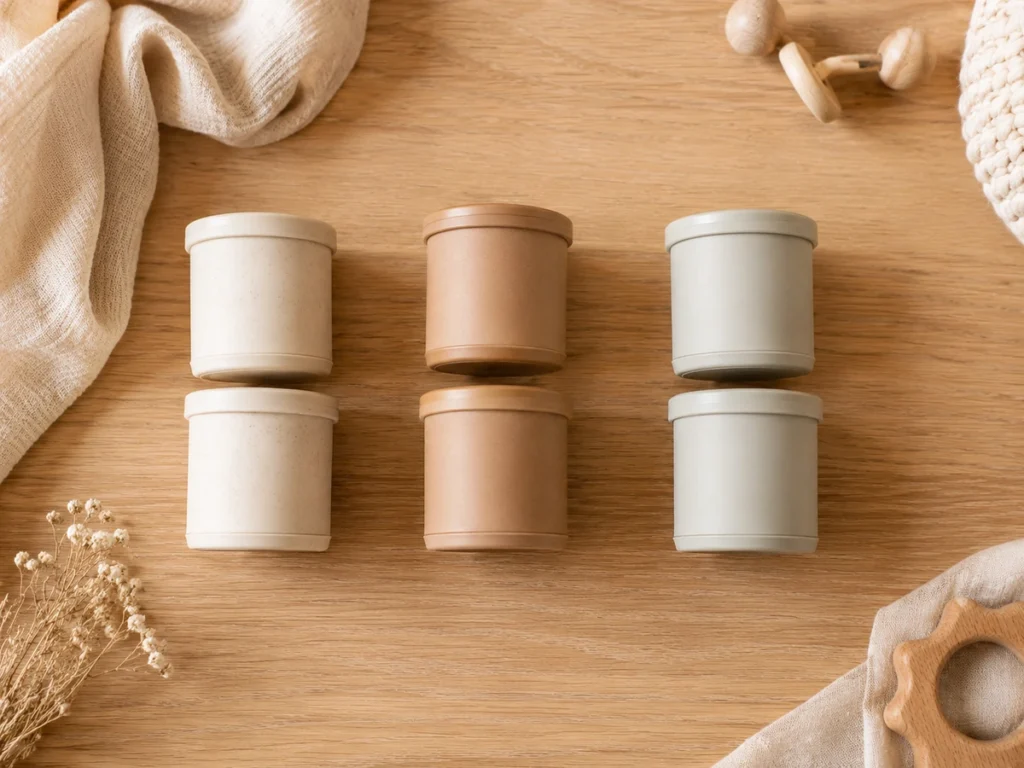
- Sound bottles: Film canisters or small jars, pairs matching each other — filled with rice, wooden beads, buttons, sand.
- Scent jars: Jam jars with cotton wool, scented (lavender, coffee, cinnamon, vanilla, peppermint).
- Wooden bead sorting set: Wooden beads in various sizes and colours — endlessly versatile.
- Wobble board or balance stones: For vestibular (balance) development.
- Heavy fabric pouches: Filled with sand or beans — for proprioceptive (body awareness) development.
Much of this can be made at home. If you prefer to buy complete sets, the Eduplay range offers nursery-sized quantities.
5. Making It Visible to Parents
Sensory development is often invisible to parents — children go home and say ‘we just played’. Make the learning visible:
- Weekly update in the entrance: What sensory activities did we do?
- Photo wall: Children engaged in sensory play — with a short explanation of the learning intention.
- Parent tips: ‘Try making a touch box at home’ — with simple instructions.
- In progress conversations: Share specific observations from sensory work.
FAQ
How often should I include sensory activities?
Daily if possible — even just five minutes. Consistency matters more than how long you spend.
What if I’m concerned a child has a sensory difficulty?
If you have concerns (unusual sensitivity to sound, constantly fidgety, avoiding touch) have a conversation with parents and suggest professional assessment (an audiologist, occupational therapist, or early years specialist).
How do I clean tactile materials?
Fabric pouches are washable. Wipe wooden beads with a damp cloth or rinse briefly under water, then dry thoroughly.
Complete Sets for Kindergartens: Touch pouches, sound bottles, sensory materials — EN-71-3 compliant, available in bulk, delivered on account with 14 days’ payment terms. Submit a kindergarten enquiry.