
1. What Exactly is Fine Motor Skill?
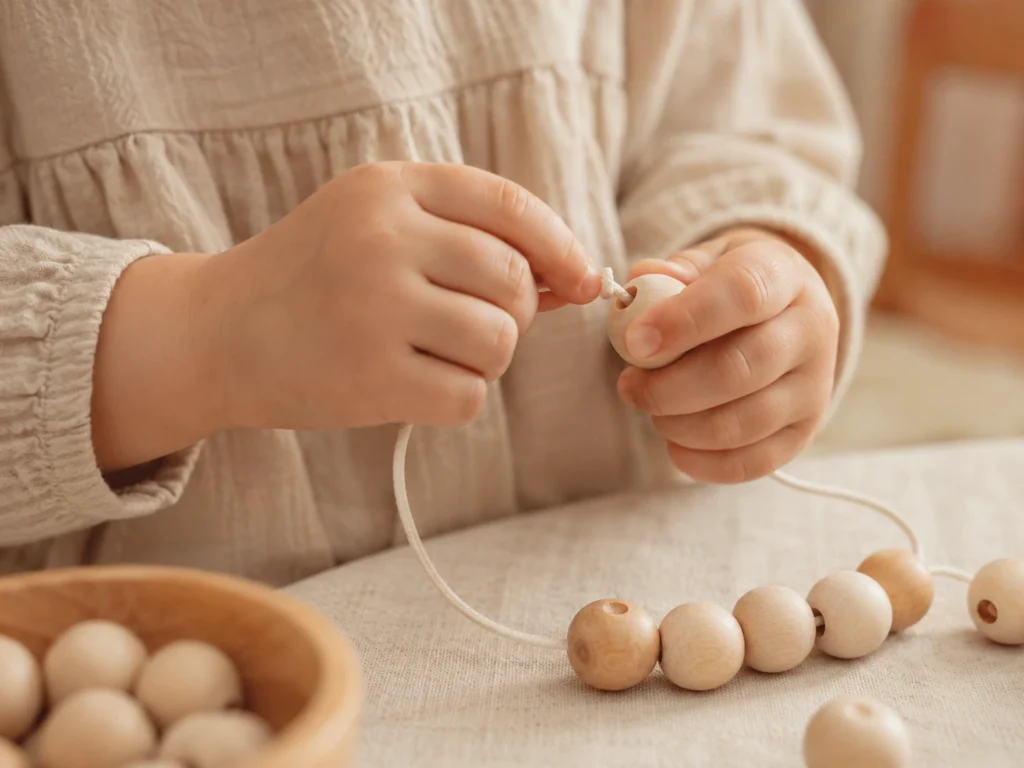
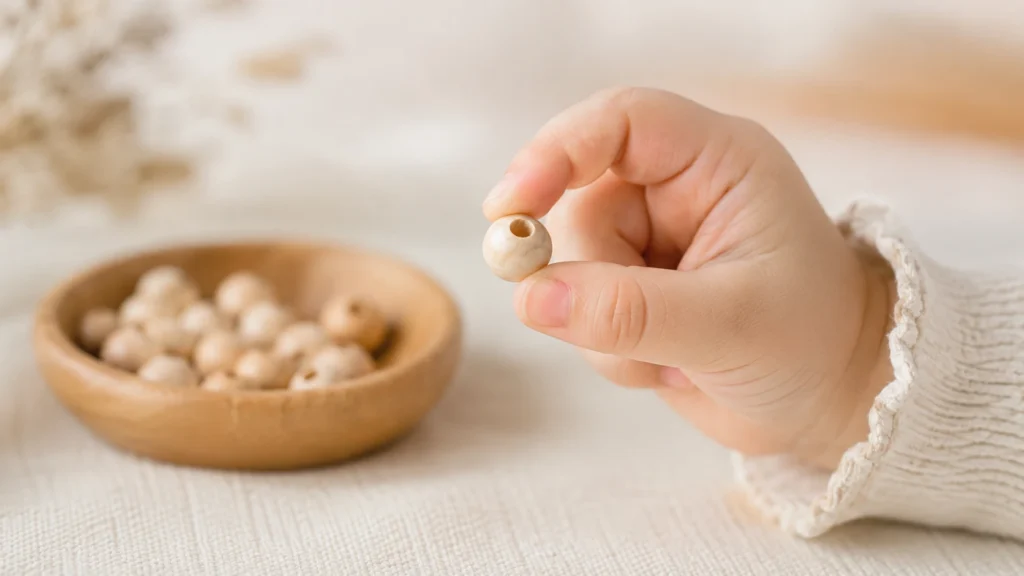
Fine motor skill refers to the coordinated movement of small muscle groups, mainly in the hands, fingers, face and eyes. It’s the opposite of gross motor skills (jumping, running, climbing) and develops later — babies grasp clumsily first, then with purpose. The “pincer grip” where thumb and forefinger work together doesn’t emerge until around 9 months.
Fine motor skill isn’t just about writing later on. It’s directly linked to concentration, spatial thinking, and even language development. Research shows: children with well-developed fine motor skills statistically have a better school start — across all subjects.
2. Motor Development Stages
| Age | Grasping Stage | What the Child Can Do |
|---|---|---|
| 0–3 months | Reflex Grasp | Grasps involuntarily — fingers close around touch |
| 4–6 months | Palmar Grasp | Grasps with whole hand, thumb not involved |
| 7–9 months | Scissor Grasp | Thumb begins to engage, but on the side of the index finger |
| 9–12 months | Pincer Grasp | Thumb and index finger work opposite — small objects possible |
| 1–2 years | Grasping and Release | Deliberate release mastered — stacking, sorting now possible |
| 2–3 years | Tool Grasp | Holds pencil, spoon, brush — still clumsy, power grip |
| 3–5 years | Three-Finger Grip | Pencil hold refines, writing readiness begins |
3. Why Wooden Beads Specifically?
Plenty of materials develop fine motor skills — but wooden beads combine advantages no other material quite manages:
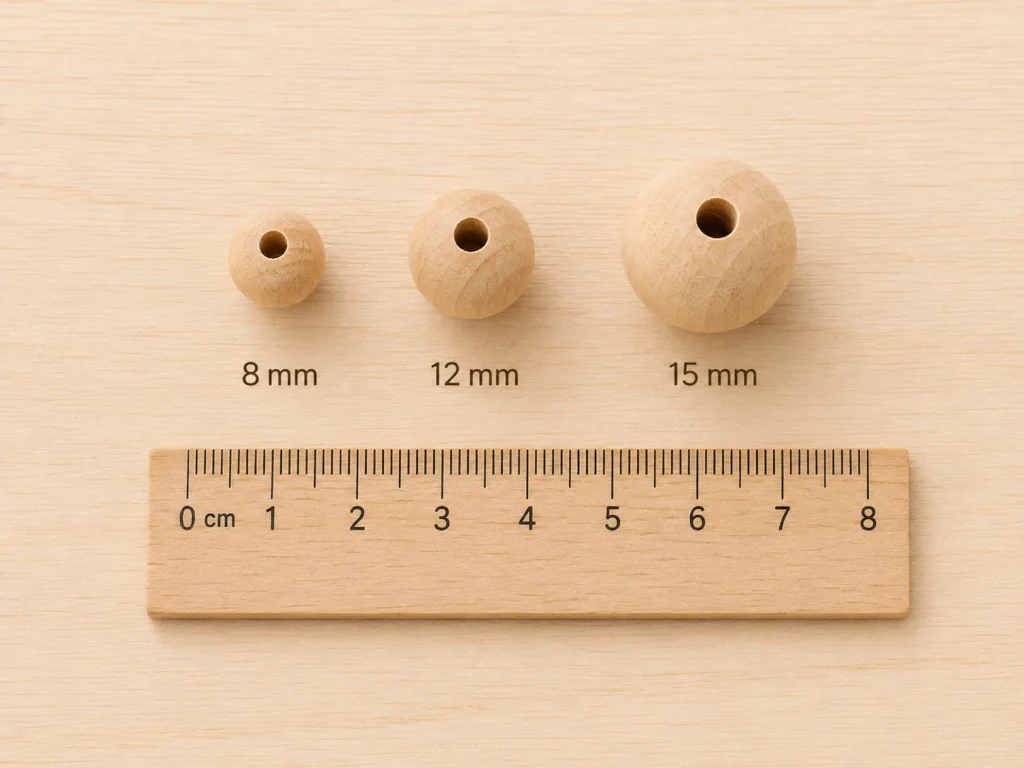
- Range of sizes: From 8 mm (for 5-year-olds) to 15 mm or larger for toddlers — one material type suits multiple age groups.
- Clearly defined hole: The opening demands precise hand-eye coordination when threading.
- Pleasant weight: Heavy enough to be felt, light enough to pose no risk.
- Natural surface: Grain and slight irregularities give tactile feedback.
- Durable: They survive thousands of activities — cardboard or plastic materials won’t.
4. Twelve Activities — Sorted by Age
Toddlers (1–3 Years)
- Transferring large beads: One bowl with beads 15 mm or larger, one empty bowl nearby. Transfer by hand, then with a spoon.
- Dropping beads into a bucket: Does it go in? Builds eye-hand coordination and the skill of releasing objects.
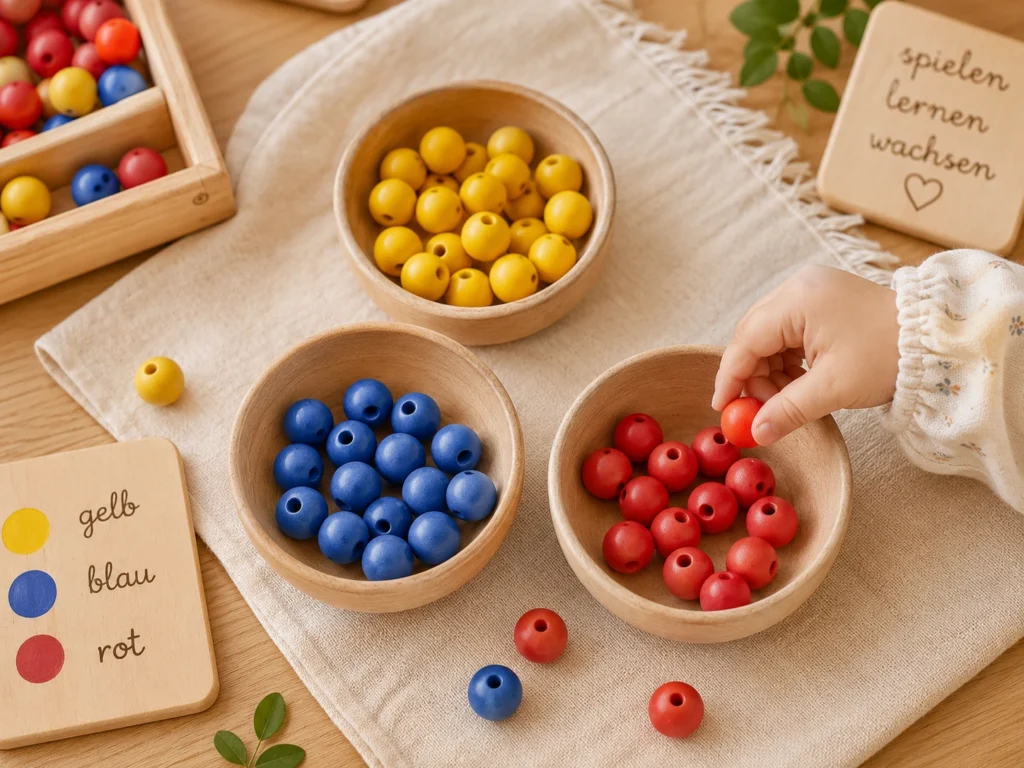
- Sorting by colour: Two or three colours, two bowls — that’s plenty.
- Threading onto a thick rod: Wooden beads with large holes on a wooden stick (easier than string at this age).
Nursery Age (3–5 Years)
- Threading onto string: The classic threading activity on firm thread. Start with large beads, use smaller ones as skill improves.
- Beads with tweezers: Child-friendly tweezers from craft supplies, moving beads from bowl to egg box.
- Copying patterns: Follow a given pattern (red-blue-red-blue) by threading beads onto string.
- Number threading: A card showing the number 3 — thread three beads.
Pre-School (5–6 Years)
- Creating patterns: Three colours, free composition. Talk about what it looks like.
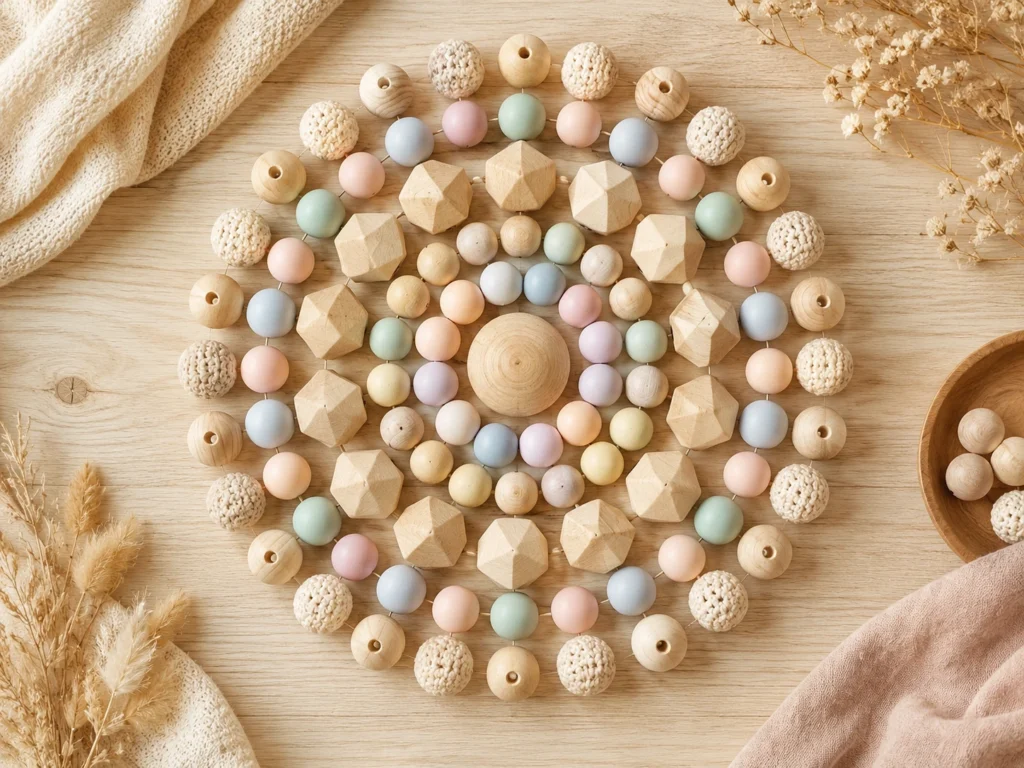
- Bead mandala: Arrange beads in a circular pattern on the table. Demands real concentration.
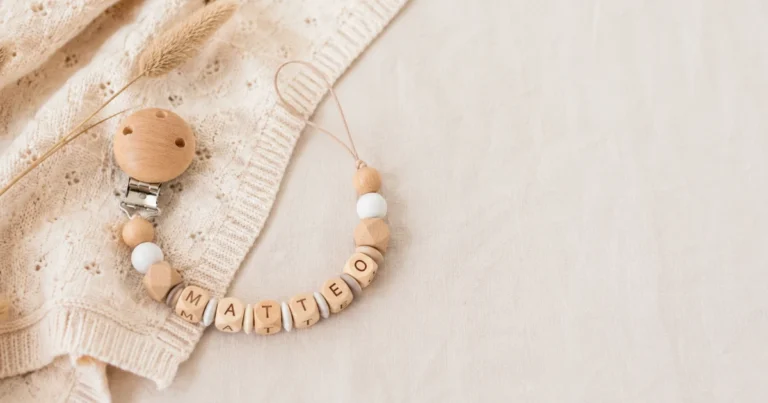
- Letter beads with decorative beads: Thread your own name, with wooden beads between the letters.
- Bead knots: Tie a knot in the string between two beads — trickier than it sounds!
5. When Development Isn’t on Track — When to Seek Help
Children develop at different speeds. Still, there are signs worth discussing with a professional:
- Still using only a power grip at age 2 — no pincer grasp visible.
- At age 3, no interest in pencils, brushes or scissors — consistently avoids fine motor activities.
- Noticeably clumsy when holding small objects — everything drops immediately.
- At age 5, hand preference still unclear (left/right not established).
In these cases, a chat with your health visitor and possibly an occupational therapy assessment is worthwhile. Early support is very effective.
FAQ
How often should we practise with wooden beads?
20–30 minutes daily, spread across several 5-minute sessions, works far better than one long hour. The key: keep it playful and fun.
Which size for which age?
Toddlers: 15 mm and larger. Nursery age from 3: 10–12 mm are perfect. Pre-school and school age: from 8 mm.
What if my child swallows a bead?
Safety first: under 3s should always be supervised, never left alone with beads in hand. If swallowed, call 999 immediately — don’t try to induce vomiting.
For Nurseries & Childminders: Bulk sets of wooden beads in different sizes and colours, EN-71-3 compliant, bulk discount from 10 units, invoice payment with 14-day terms available. Get in touch now.