
Nursery furniture is not disposable. A table will be crawled over, painted, splashed and cleaned by hundreds of children over its lifetime. A chair bears the weight of a toddler pushing themselves up 60 times a day. Buy cheap furniture and you’ll be replacing it every three years—whilst also compromising on safety standards. This guide explains what makes quality nursery furniture, which manufacturers are industry standard, and why investing in 5-year warranties pays off.
Contents
- What Distinguishes Professional from Consumer Furniture?
- Material Quality—Plywood, Melamine, Maple
- Standards and Warranty
- Example Range: Millhouse at Kiki-Ena
- Ergonomics and Seat Heights
- FAQ
- Enquiry and Advice
1. What Distinguishes Professional from Consumer Furniture?
Home furniture is designed for a few hours of daily use. Professional furniture for nurseries, crèches and schools must withstand eight to ten hours of daily use—over ten years or longer. The differences lie in the details:
- Material thickness: Professional furniture uses at least 18 mm plywood or melamine-coated panels—consumer furniture typically 12–15 mm.
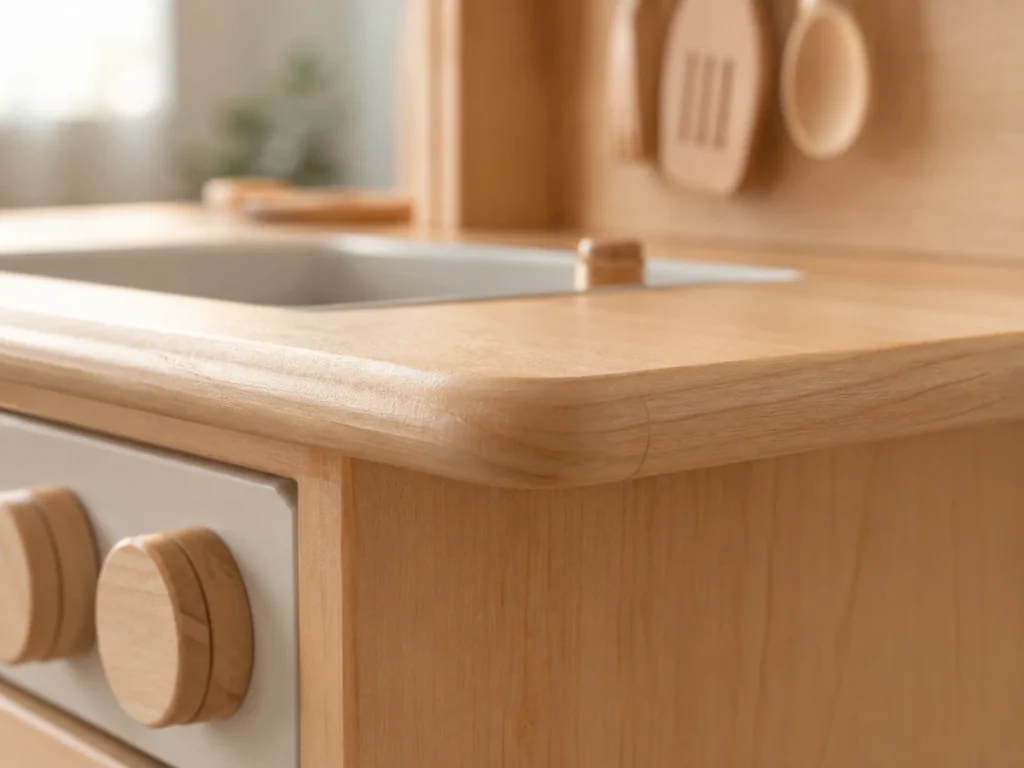
- Edge finishing: Professional furniture is fully glued and rounded for safety (often marketed as “finger guard”).
- Fixings: Professional furniture uses steel hardware instead of wooden dowels, as they withstand repeated loading and unloading better.
- Warranty: Consumer furniture comes with 2 years’ statutory protection; professional furniture typically includes a 5-year manufacturer’s warranty.
2. Material Quality—Plywood, Melamine, Maple
The three most common materials in professional nursery furniture are:
- Birch plywood: Highly durable, sturdy, warm appearance. Classic for tables, chairs and storage benches.
- Melamine-coated panels: Water-resistant, wipeable, scratch-proof. Standard for washing-up and dining tables, kitchen units.
- Maple effect: Light, neutral veneer that creates a calm room aesthetic when combined with colourful accent pieces.
Look for E1 emissions class—the strictest standard for formaldehyde emissions from wood-based materials. For nurseries, E1 is the minimum requirement.
3. Standards and Warranty
Nursery furniture must comply with DIN EN 1729 for “Furniture—Chairs and Tables for Educational Institutions”. This standard defines seat heights, table heights, stability and edge radii. Depending on the furniture type, toy safety standards (EN 71-1 to -3) also apply if the furniture has a play function—such as activity kitchens, play corners or play tunnels.
A manufacturer’s declaration of conformity is mandatory and should be filed in your materials folder upon receipt. Read more in the related guide Craft Materials for Nurseries: Safety under DIN EN 71.
4. Example Range: Millhouse at Kiki-Ena
Kiki-Ena stocks furniture from British manufacturer Millhouse—a brand that has specialised in professional nursery, crèche and pre-school furniture for decades. Key advantages at a glance:
- 5-year manufacturer’s warranty on most items
- Made in the UK with consistent EN compliance
- Maple melamine as standard finish—wipeable, durable, light
- Finger guards on all edges and flaps
Product examples from the Kiki-Ena range:
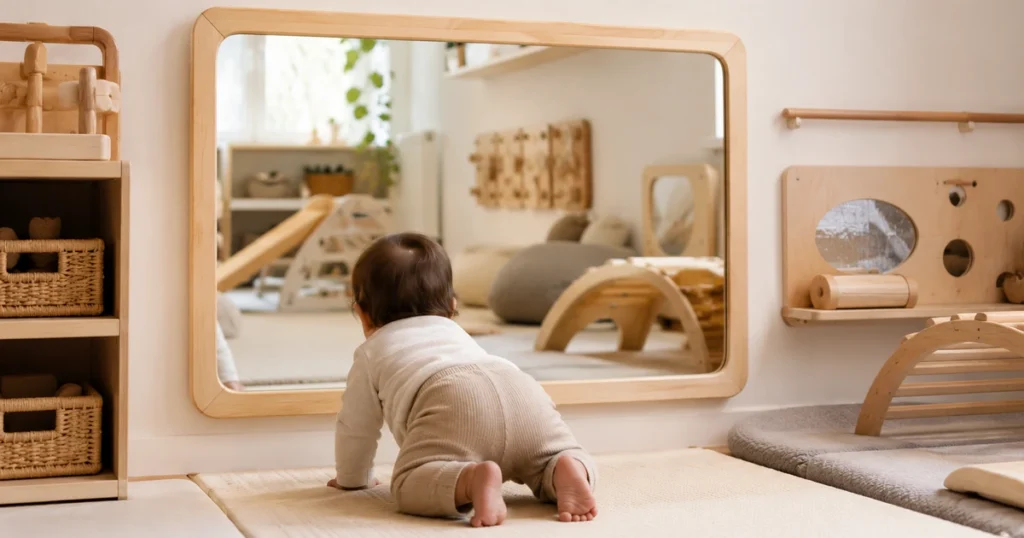
- Galaxy Mirror Maple—Wall and floor mirror with maple frame, ideal for sensory spaces.
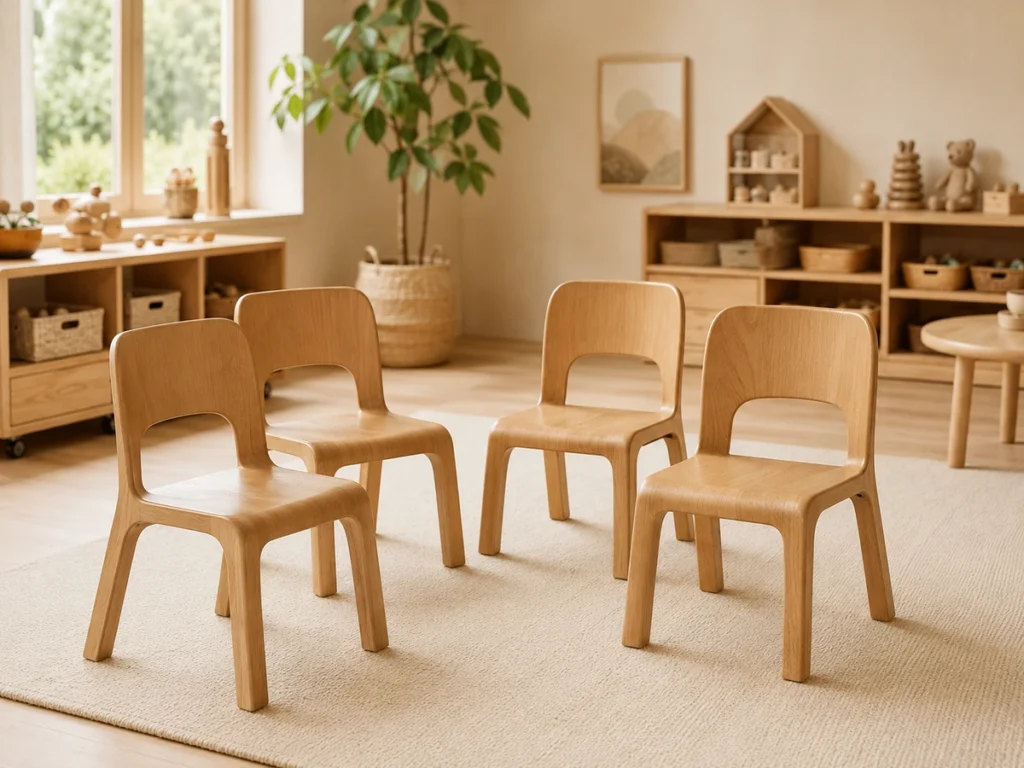
- One-Piece Chair 4-Pack—Stackable seating in a single seat height.
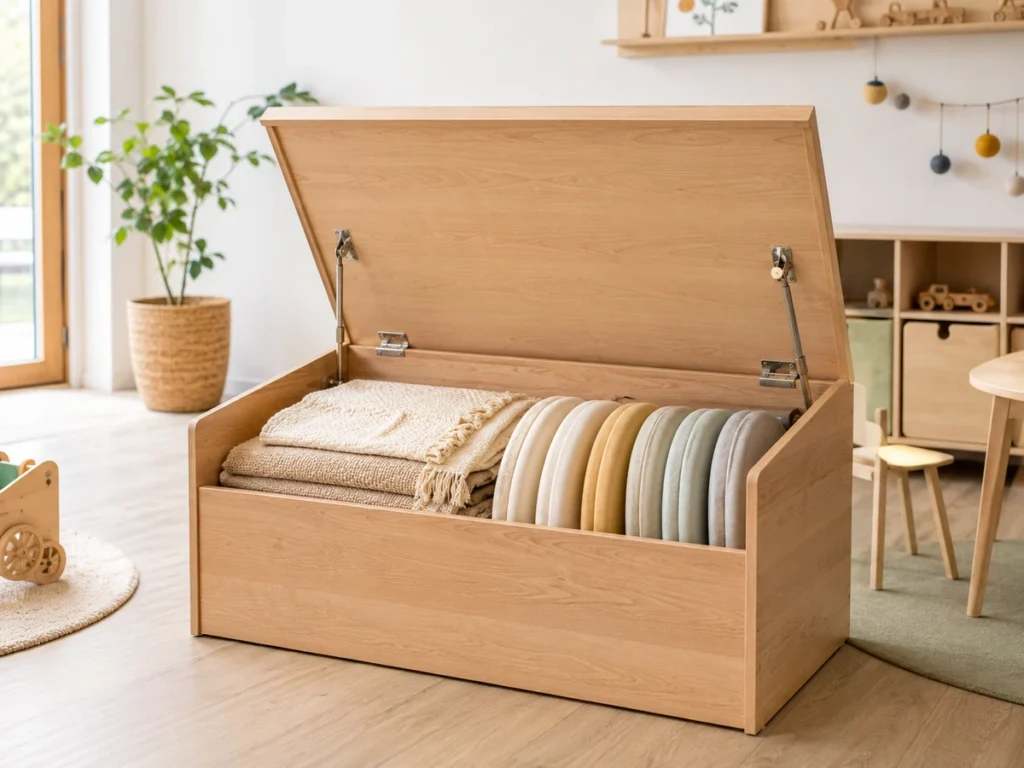
- Cushion Storage Bench—Combines seating with storage for cushions and blankets.
- Activity Kitchen for Under 2s—40 cm height, with hob, sink and mirror.
- Cosy Cove Play Tunnel with Aztec Accessory Set—Retreat space with washable covers.
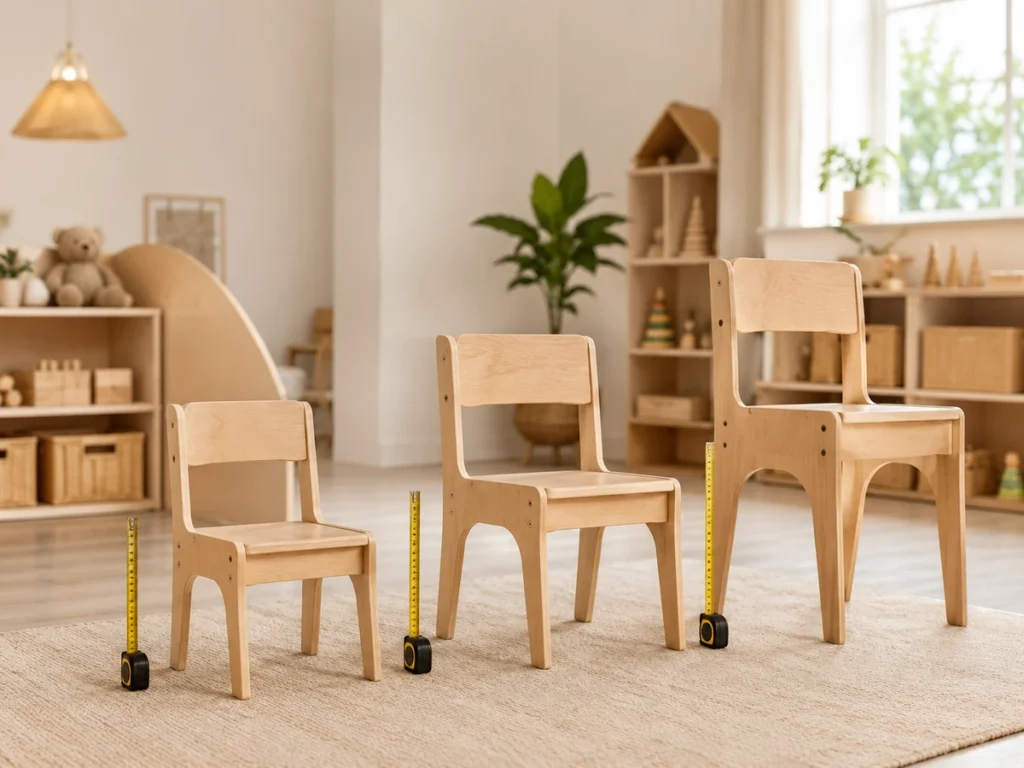
5. Ergonomics and Seat Heights
Poor seat ergonomics often go unnoticed in the nursery setting—only becoming apparent through tension or tired children. This table helps with planning:
| Age | Approx. Height | Seat Height | Table Height |
|——-|—————–|———-|———–|
| 1–2 years | 80–95 cm | 20–22 cm | 40 cm |
| 2–4 years | 95–115 cm | 26 cm | 46 cm |
| 4–6 years | 115–130 cm | 30 cm | 52 cm |
| Pre-school | 130+ cm | 34 cm | 58 cm |
Ideally, a nursery group should have two different seat heights available so that larger and smaller children can sit ergonomically.
FAQ
How long do quality nursery furniture pieces last?
With proper use, 10–15 years. The 5-year warranty on brands like Millhouse covers the first lifecycle.
Is professional furniture significantly more expensive?
Initially, yes—but over ten years it’s more economical because you won’t need to replace items every three years.
Can I order furniture in smaller quantities?
Yes, individual chairs or tables are available. For bulk orders, an enquiry is worthwhile for volume discounts.
What safety documentation must the manufacturer provide?
Declaration of conformity under EN 1729 and, where applicable, EN 71. Both are standard for Millhouse.
Enquiry and Advice
Kiki-Ena advises nurseries on furniture planning—from individual orders to complete group room outfitting. Submit your enquiry via Nursery Enquiry or explore the Eduplay Range and Nursery & Kindergarten category.
Image Concepts
- Photo: Galaxy Mirror Maple in a sensory space with a child viewing their reflection.
- Photo: One-Piece Chair 4-Pack stacked and ready to use.
- Photo: Cushion Storage Bench with open lid showing blankets and cushions.
- Detail photo: Finger guard edge of an activity kitchen in close-up.
- Graphic: Seat height table by age with silhouettes of children.