
Anyone who’s tried ordering craft materials for four nursery groups through a standard consumer shop knows the real work happens not at the craft table but at goods receipt, invoice management and handling partial returns. Bulk ordering needs planning—from stock checks to volume discounts to invoice payment. This guide shows nursery managers step-by-step how professional bulk craft ordering works, what terms you can expect, and how to keep your procurement organised long-term.
Contents
- When Does Bulk Ordering Make Sense?
- Planning Your Stock Structure
- Volume Discounts and Terms
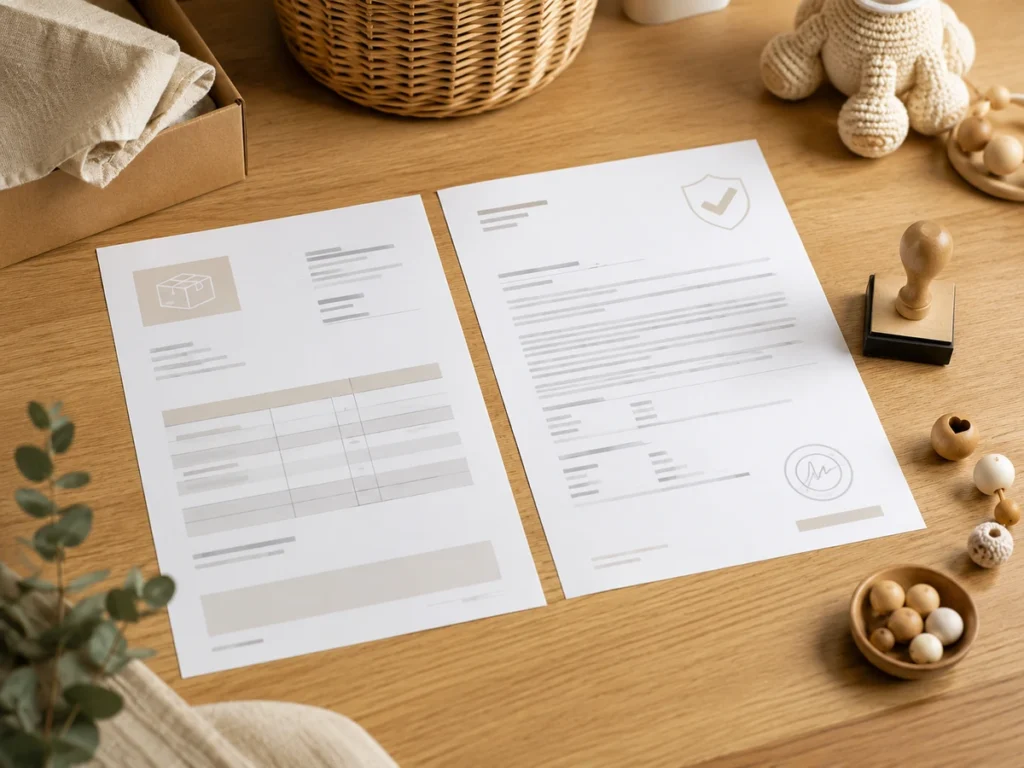
- Invoice Payment—Requirements
- Goods Receipt and Documentation
- FAQ
- Submit an Enquiry
1. When Does Bulk Ordering Make Sense?
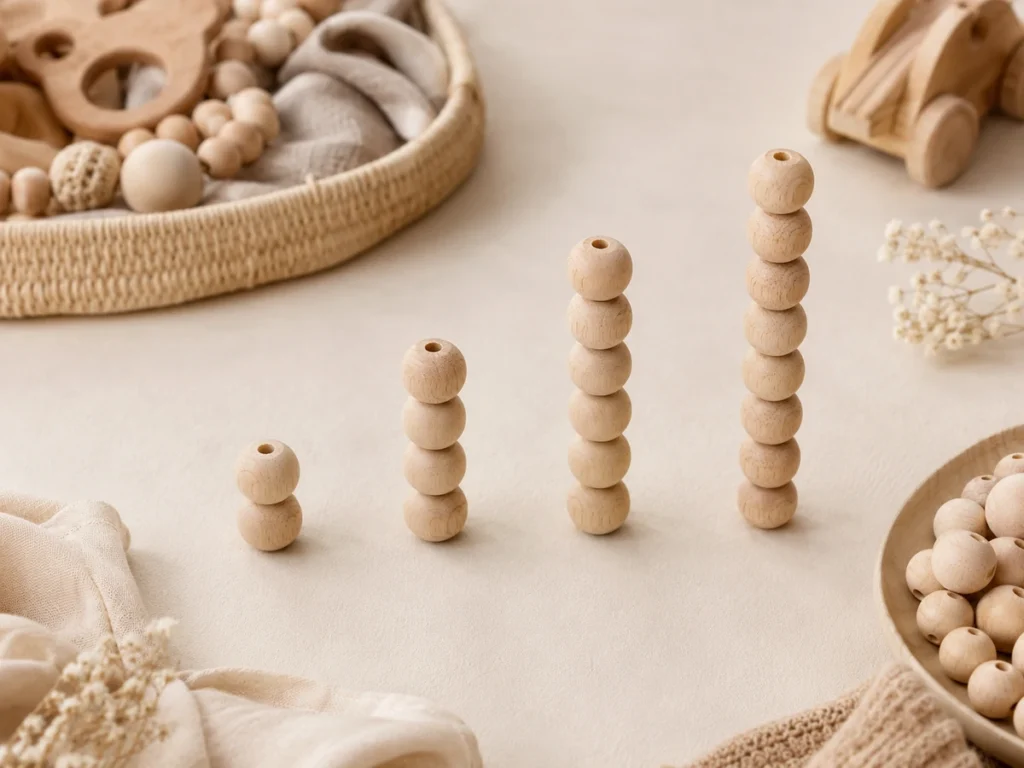
Bulk ordering makes sense once you’re buying for more than one group or a longer craft project. The rule of thumb is around €100 worth of goods—at that threshold most specialist shops drop shipping costs, and you can start building economical stock in your materials store. Placing small reorders every three weeks, by contrast, means paying twice over through repeated shipping costs and admin overhead.
Typical reasons for bulk orders are end-of-nursery-year, spring start-up, major projects like summer fêtes or advent season, and buying for complete concepts—such as “dummy chains for parent-and-child groups” or “grasping toys for baby sensory shelves”. Having a clear focus makes it easier to identify the right range and quantities.
2. Planning Your Stock Structure

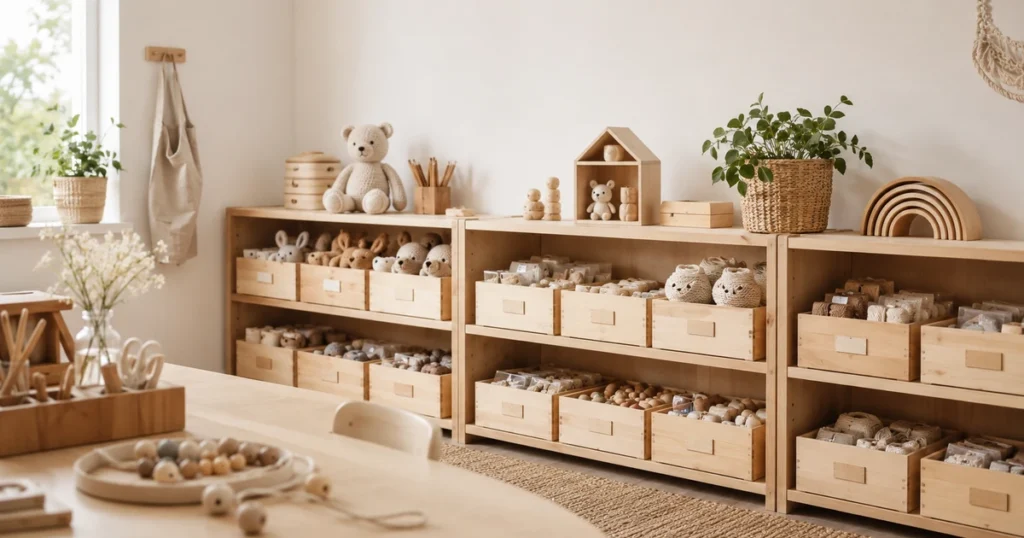
Before placing an order, it’s worth doing a quick stock check. What materials are used and how often? By experience, craft materials fall into three consumption categories:
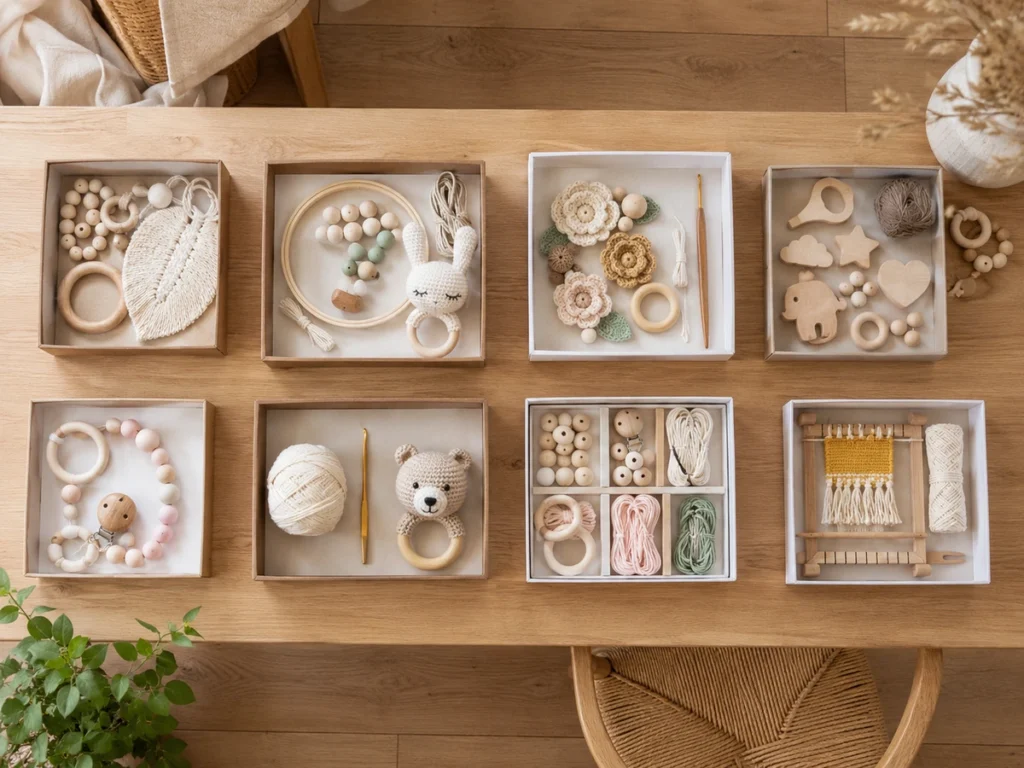
- Fast-moving: Craft sets, crochet figures, string, adhesives—typically restocked every four to six weeks.
- Medium-term: Wooden and patterned beads in standard sizes 10–14 mm, wooden rings, letter beads.
- Slow-moving: Specialist items like oversized beads, safety dummy clips, larger wooden discs.
A simple spreadsheet of current stock is enough. It protects you from two classic mistakes: duplicate orders when there’s already a box in the storeroom, and running out mid-project because the supposedly available material is actually empty.
3. Volume Discounts and Terms
With specialist suppliers like Kiki-Ena, unit prices drop in tiers—the larger your order, the cheaper each item. Large customers often also get a welcome discount: at Kiki-Ena, for example, you get 20% off your first order over €50.
The most economical approach is usually to plan one bulk order per quarter and combine as many of these advantages as possible in a single order:
- Volume discounts on individual items
- Free shipping on orders over €100
- Invoice payment with 14 days to pay
- Possible special pricing on complete sets or bundles
4. Invoice Payment—Requirements
For many nursery organisations, invoice payment is essential because internal approval and accounting procedures don’t allow upfront payment or PayPal. Reputable B2B shops offer invoice payment for public institutions, schools, authorities and educational bodies with 30 days to pay.
What you typically need for invoice payment setup:
- Organisation name with full address
- Contact person with official email
- Where applicable, brief confirmation of status (association register, local authority status)
Setup is a one-time process—after that you can order easily and receive your delivery note and invoice with the shipment.
5. Goods Receipt and Documentation
Once goods arrive, you should routinely check three things:
- Completeness: Check the delivery note against box contents. Report any shortfalls within 14 days.
- Safety markings: CE mark, DIN EN 71-3 compliance and saliva fastness (DIN 53160) should be visible on the product or label. Read more in our guide Safe Craft Materials under DIN EN 71-3.
- Documentation: A simple spreadsheet recording delivery date, supplier and quantities saves questions later from accounting or management.
File the manufacturer’s declaration of conformity in your materials folder—it’s the key safety document during inspections by child protection or health and safety authorities.
FAQ—Frequently Asked Questions
What are shipping costs on bulk orders?
Most specialist shops offer free shipping on orders over €100. The same applies at Kiki-Ena.
What payment options are available for nurseries?
Prepayment, PayPal, instant bank transfer, Klarna, and invoice payment with 14 days to pay—particularly important for nurseries.
Can I return leftover stock?
Standard items can be returned within 14 days. Bespoke items with names or custom packaging are excluded from returns.
How long does delivery take within Germany?
Usually one to three working days. Very large bulk orders may take an extra day as they need additional processing.
Submit an Enquiry
If you’re planning a specific order as a nursery or organisation, a quick quotation is often worthwhile—especially for bundles. Use the form at Nursery Enquiry to reach the B2B team directly to clarify invoice payment and volume discounts. Browse the Nursery & Kindergarten section or Craft Sets to build your order.