
1. Why test at all?
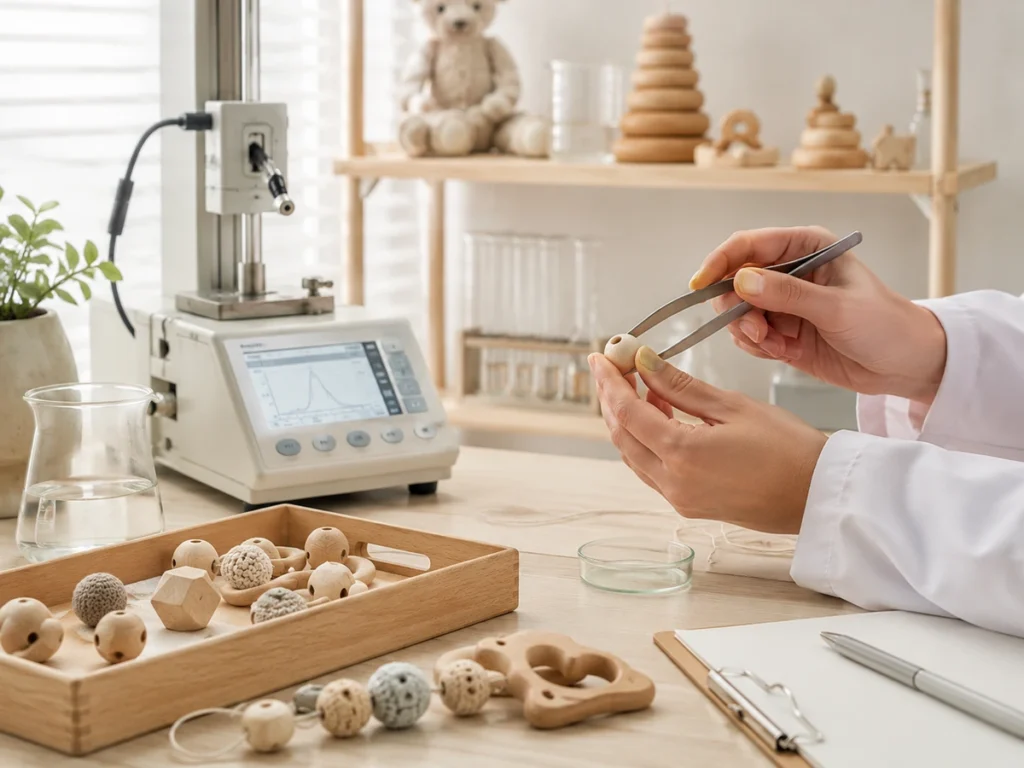
If you buy craft materials from a German manufacturer with clearly documented certificates (DIN EN 71-1 and 71-3, PEFC, food-grade lacquer certification), you don’t really need to do a home test. The professional lab testing has already been done, and the data sheet is on file.
It’s different when you have clearance stock, bulk packs from unknown brands, or materials from online marketplaces with no manufacturer information. There’s no reliable assurance that they’re free from harmful substances. This is exactly where four simple home tests help you spot signs of poor craftsmanship. They’re not a substitute for lab testing — but they help you rule out obvious risks before the material goes into children’s hands.
2. Test 1: The Smell Test
The simplest — and often underrated — tool is your nose. High-quality maple wood beads have a very subtle, slightly sweet wood smell. Beeswax-sealed beads have a fine honey scent. Food-grade lacquer-sealed beads are almost odourless. High-quality food-grade silicone is completely odourless.
Warning signs when doing the smell test:
- Chemical or solvent-like smell: a sign of cheap lacquers with a high proportion of volatile organic compounds (VOCs). These materials release harmful substances into the air for weeks and are not suitable for baby toys.
- Sweet, fruity, plastic-like smell: a sign of phthalate softeners in plastic parts. These substances are banned in the EU for toys, but appear in non-certified imports.
- Rubber or sulphur smell in silicone: a sign of peroxide cross-linking with residual components rather than platinum-cured silicone (see our article Food-Grade Silicone).
Important: fresh lacquer smell can sometimes appear briefly on legitimate products straight out of the box and disappear within 24 hours. However, a persistent, pungent smell after several days is a clear warning sign.
3. Test 2: The Water Test
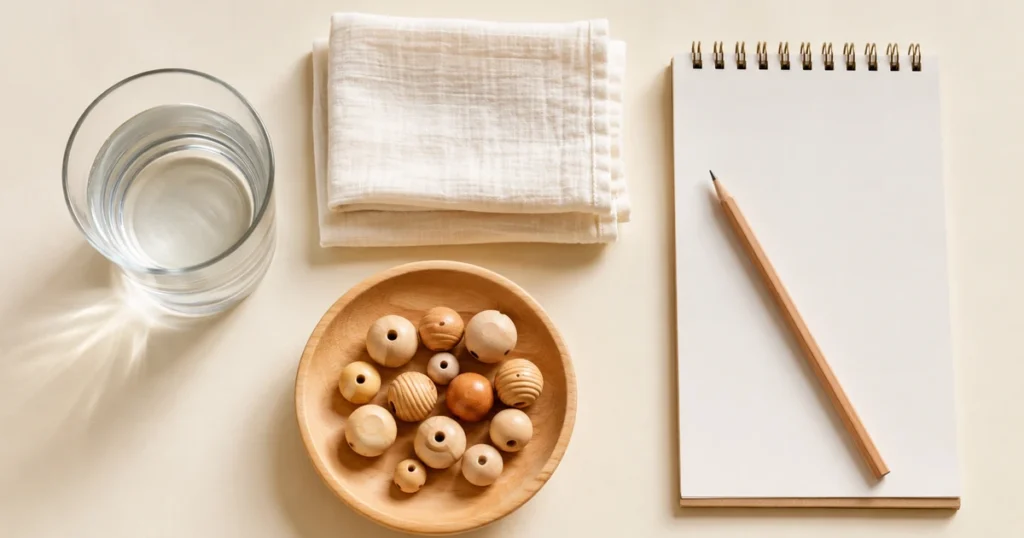
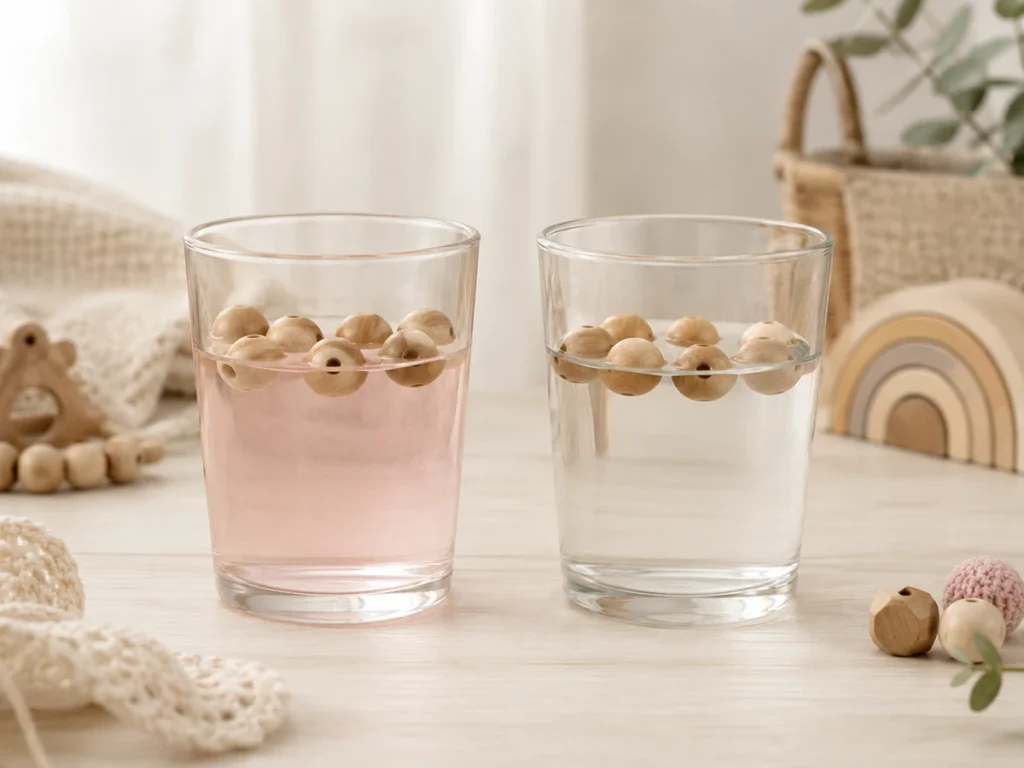
Put three to five wooden beads in a glass with about 100 millilitres of lukewarm, clear water. Place the glass in bright but indirect sunlight and wait two hours. Then observe two things:
Discolouration of the water: If the water visibly changes colour after two hours — pink, blue, yellow — pigments are leaching from the seal. This shouldn’t happen with saliva-resistant beads. Any discolouration is a clear warning that the colour layer isn’t stable.
Smell development: take a sniff of the water. If it smells chemical, sweet, or musty, solvents or other volatile components have leached out. This is also a sign of poor craftsmanship.
High-quality beads with food-grade lacquer seal pass this test without any visible change. Beeswax-sealed natural wood beads may tint the water slightly honey-yellow (from leached wax) — this is fine. However, any pink or blue tinting is a stop signal.
4. Test 3: The Rub Test
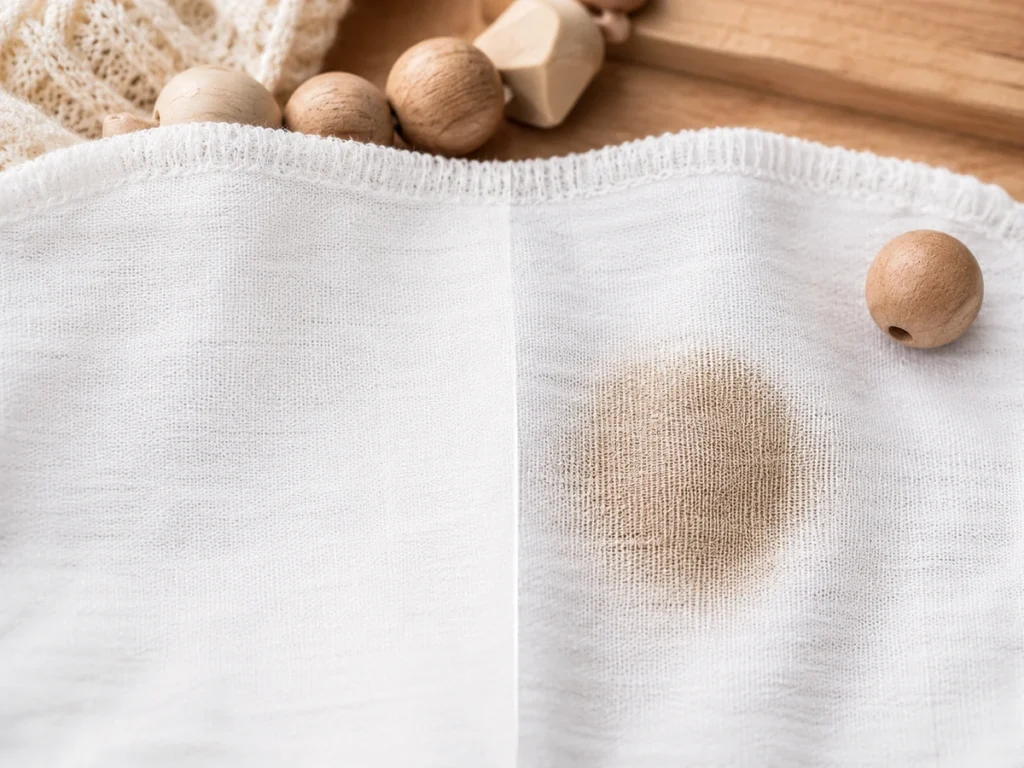
Take a white cotton cloth or cotton pad. Rub it firmly over the surface of a wooden bead for ten to twenty seconds. Then look at the cloth:
Clean spot with no colour transfer: the seal is stable. The pigments are firmly bound — this is the behaviour DIN EN 71-3 requires.
Light colour transfer: a sign of a compromised or poor-quality seal. With intense saliva exposure, pigments would migrate into the mouth.
Clear colour transfer: a definite warning sign. This bead should not go near children, especially not in their mouths.
Important: with brand new, freshly painted beads, a slight amount of colour powder may transfer — this is production residue. Rinse the beads quickly and let them dry before testing. Only then is the test reliable.
5. Test 4 and Lab Testing: When Professional Testing is Worth It
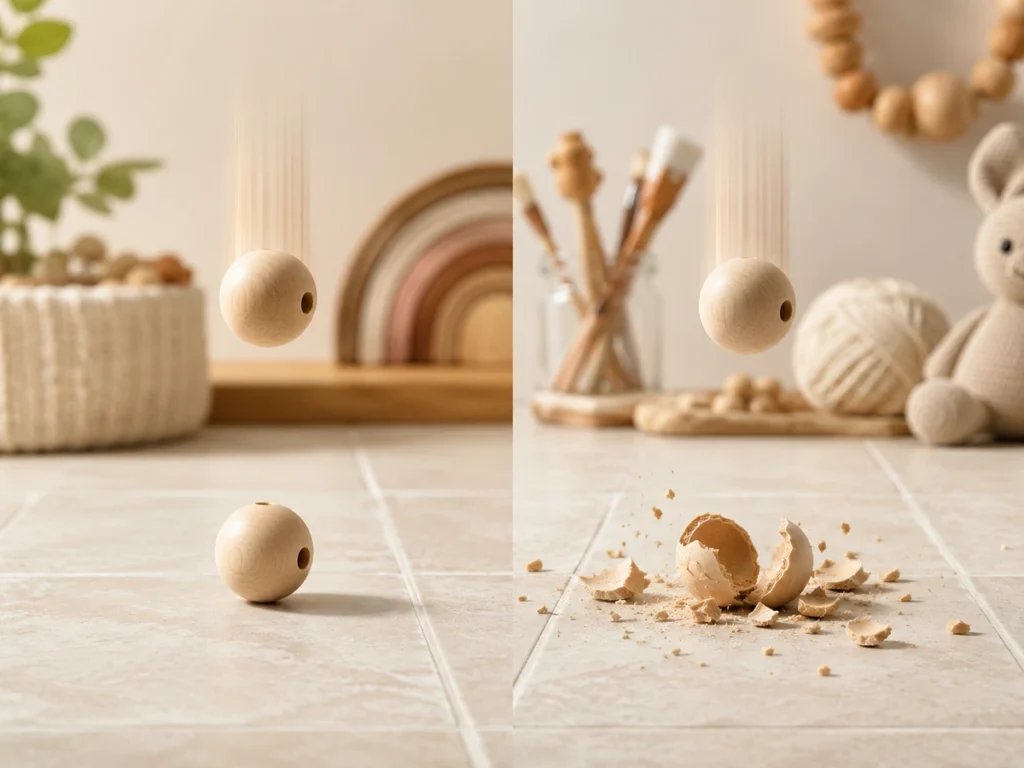
A fourth home test is the drop test: drop a wooden bead from 80 to 100 centimetres onto a hard surface (tile, concrete). High-quality maple beads will stay intact. If the bead splinters or the lacquer cracks, it’s not suitable for use as a baby toy (it wouldn’t pass the DIN EN 71-1 drop test).
If the home tests reveal any issues or you want to test a larger batch for a nursery order, professional lab testing is worth considering. In Germany, several accredited testing institutes conduct complete DIN EN 71-3 migration testing for around £150–£250 per batch. Well-known providers include TÜV Rheinland’s toy testing laboratory in Cologne, LGA in Nuremberg, and the Hohenstein Institute.
For nurseries and larger facilities, the investment is almost always worthwhile. For individual parents who just need ten wooden beads for their own dummy chain, buying directly from a certified German manufacturer is the simpler and cheaper option. Read more in our guide Craft Materials for Nurseries.
FAQ — Harmful Substance Testing for Craft Materials
Are home tests really reliable?
They don’t replace lab testing. But they provide reliable negative indicators — if a material fails the water test, it’s likely to fail in the lab too. Home tests are a safety layer, not a substitute for certificates.
Can I test silicone with home tests?
To a limited extent. The smell test and the pinch test (see our article Food-Grade Silicone) give some indication. But true migration testing is only possible in a lab.
How much does lab testing cost?
A complete DIN EN 71-3 test costs £150–£400 per batch depending on scope. Some labs offer reduced packages for craft material testing (covering just the most relevant elements: lead, cadmium, chromium).
What do I do if a batch shows problems?
Don’t use it with children. Contact the retailer — reputable sellers will take back suspect items. With online marketplaces where you can’t reach the manufacturer, disposal is your only option.
Are there quick home screening tests for toys?
There are rapid heavy metal tests (such as lead test strips from hardware stores) that can give an initial indication. However, they’re not lab-accurate and only detect very high concentrations. For a reliable result, there’s no way around proper lab testing.
Want to skip the home tests? Buy from a manufacturer that documents its compliance. Our wooden beads, dummy clips and silicone products are made in Germany and tested to DIN EN 71-1/71-3 standards. For nurseries: check out our nursery guide.