
Selling dummy chains is more than a pretty Etsy photo. EU law is clear — and unforgiving. Anyone putting a handmade dummy chain on the market takes on legal responsibility for baby safety. Here’s everything you need to know, concisely, before your first delivery.
1. DIN EN 12586: The standard for dummy chains
DIN EN 12586 is the European safety standard for dummy holders and dummy chains. It mandates three things every seller must comply with:
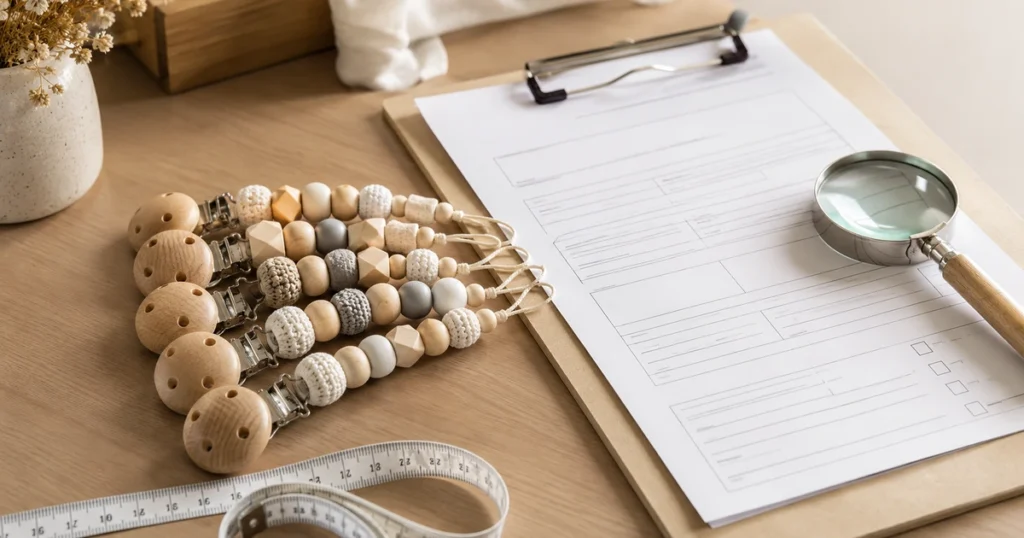
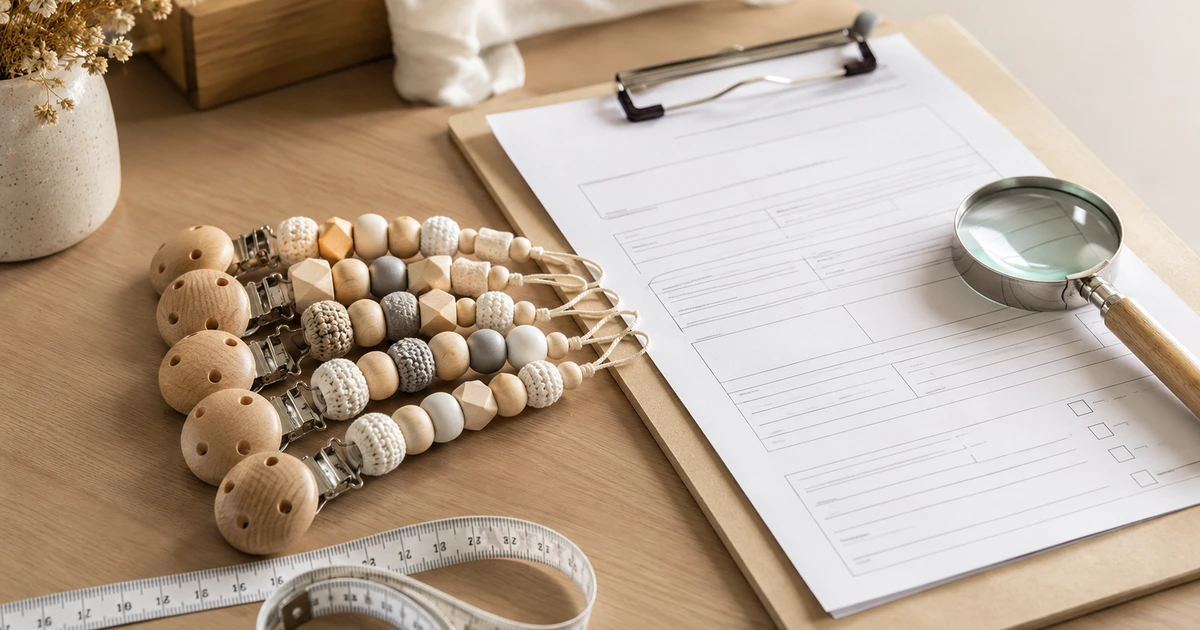
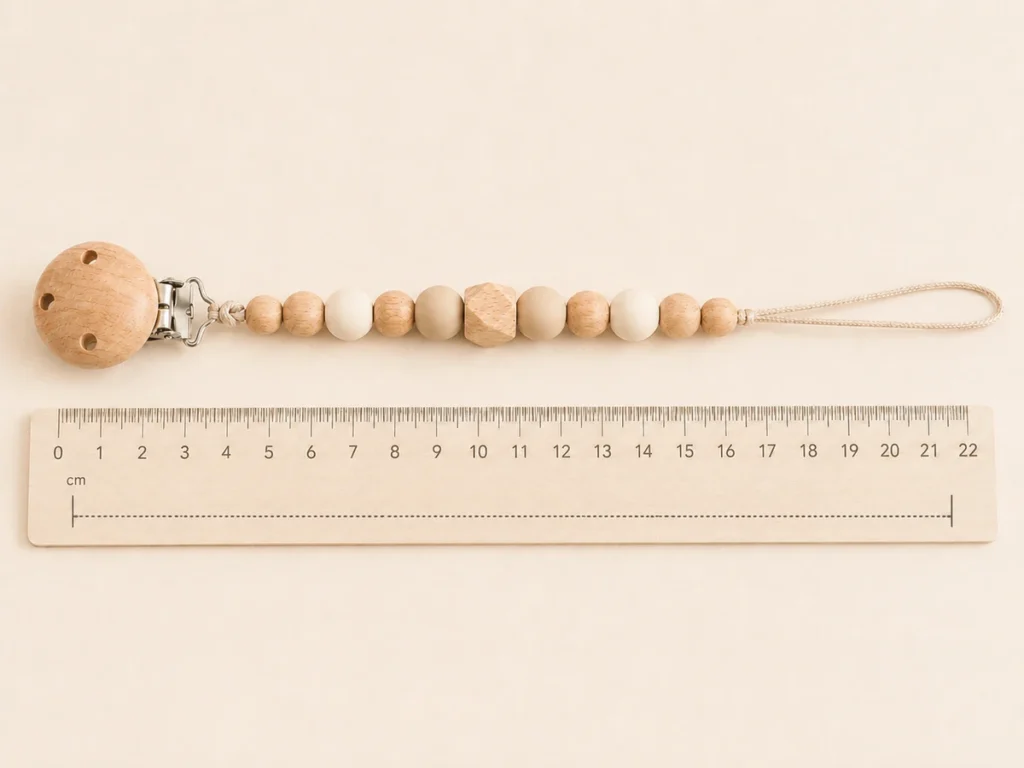
- Maximum length 22 cm — measured from the end knot to the fastening hole. Longer chains are considered a strangulation hazard and are not permitted on the market.
- Pull force test 90 Newton — every connection (knot, clip attachment) must withstand a pull force of around 9 kilogrammes without coming loose.
- No crushing or cutting function on the clip — the wood or plastic clip must be designed so that a baby’s fingers cannot be trapped. Ventilation holes in the clip are mandatory.
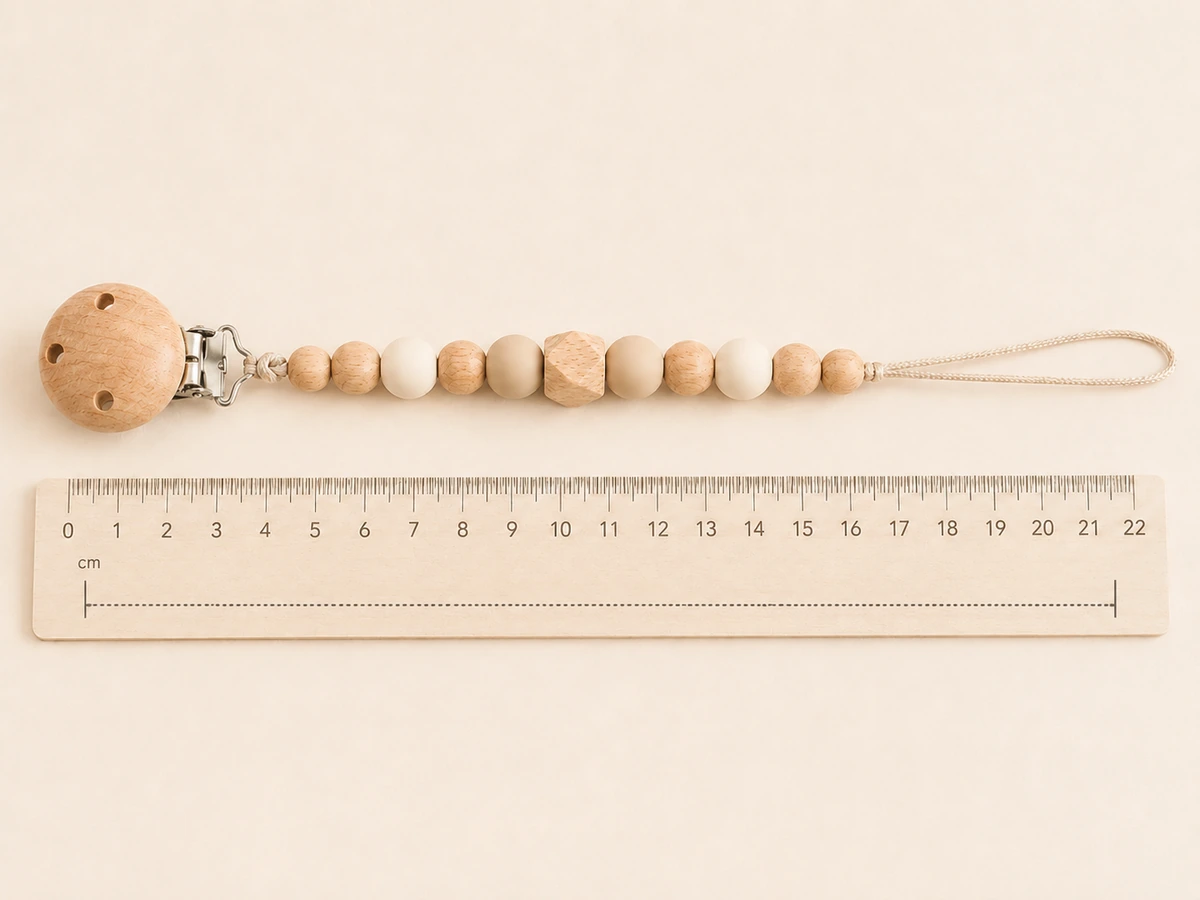
Tip: Measure every single dummy chain before dispatch. The 22 cm limit is not a recommendation, it’s a hard ceiling.
2. CE marking: Mandatory, not optional
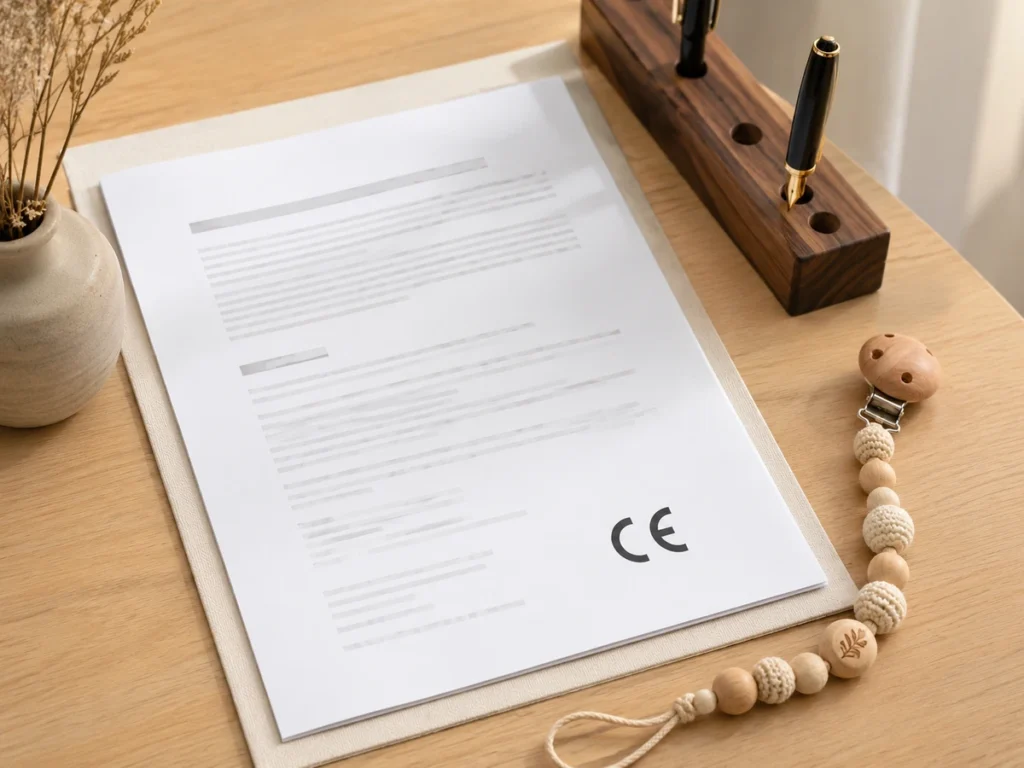
Every dummy chain you sell in the EU requires CE marking. The CE symbol is not a certification by a regulatory body, but a manufacturer’s self-declaration. You yourself confirm that your product complies with all applicable EU directives.
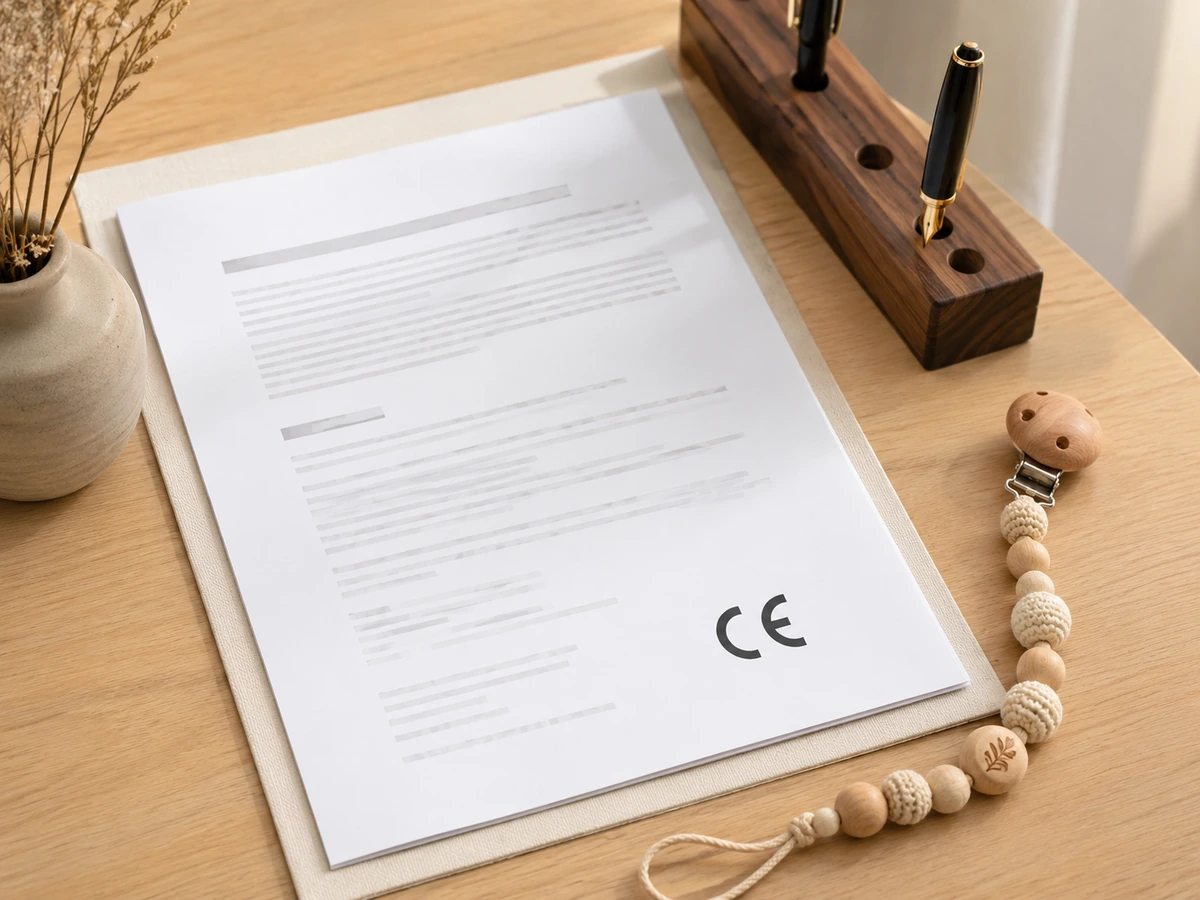
What you need for this:
- Declaration of Conformity (DoC) — a one-page document with manufacturer name, product description, standards applied (EN 12586, EN 71-1, EN 71-3) and your signature.
- Technical documentation — product description, materials used, risk analysis, test reports from your supplier (e.g. EN 71-3 saliva-resistance certificate for wooden beads).
- 10-year retention requirement — you must keep both archived for 10 years after the last unit is sold.
Whether you need a third-party laboratory (e.g. TÜV Süd, SGS) depends on risk profile. For standard dummy chains made from certified components, self-declaration usually suffices. For custom wooden blanks from unknown sources, external testing is recommended — budget €600 to €1,500.
3. Warning labels on packaging and product
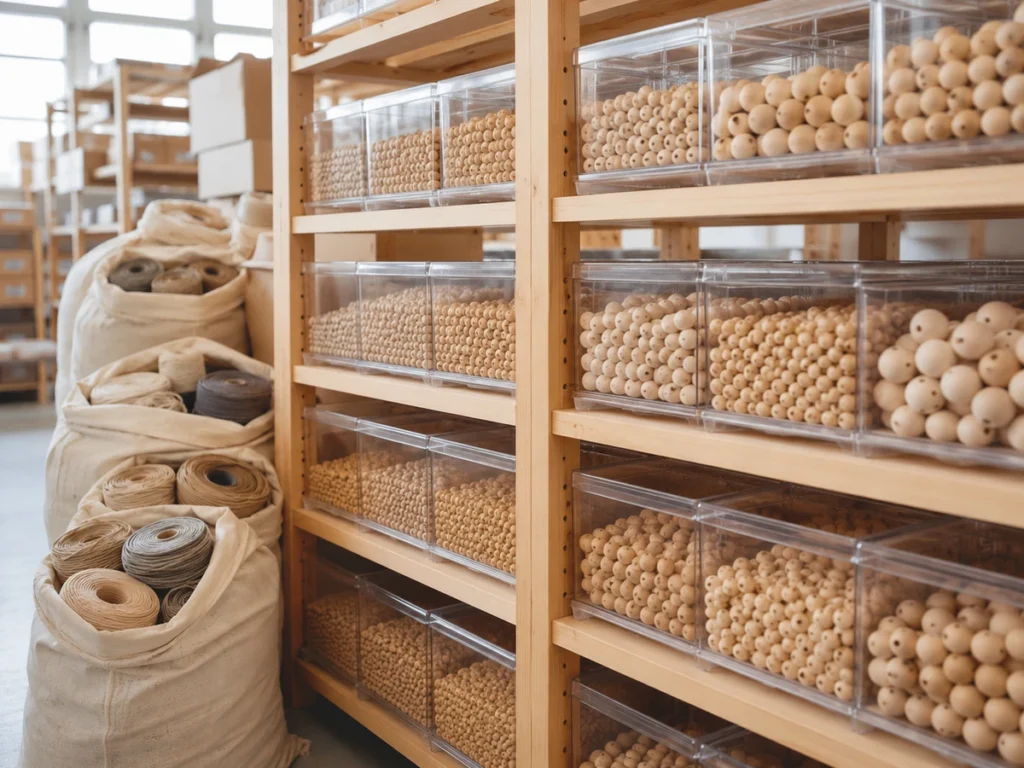
Mandatory warnings per EN 12586 — word for word on the packaging of every dummy chain:
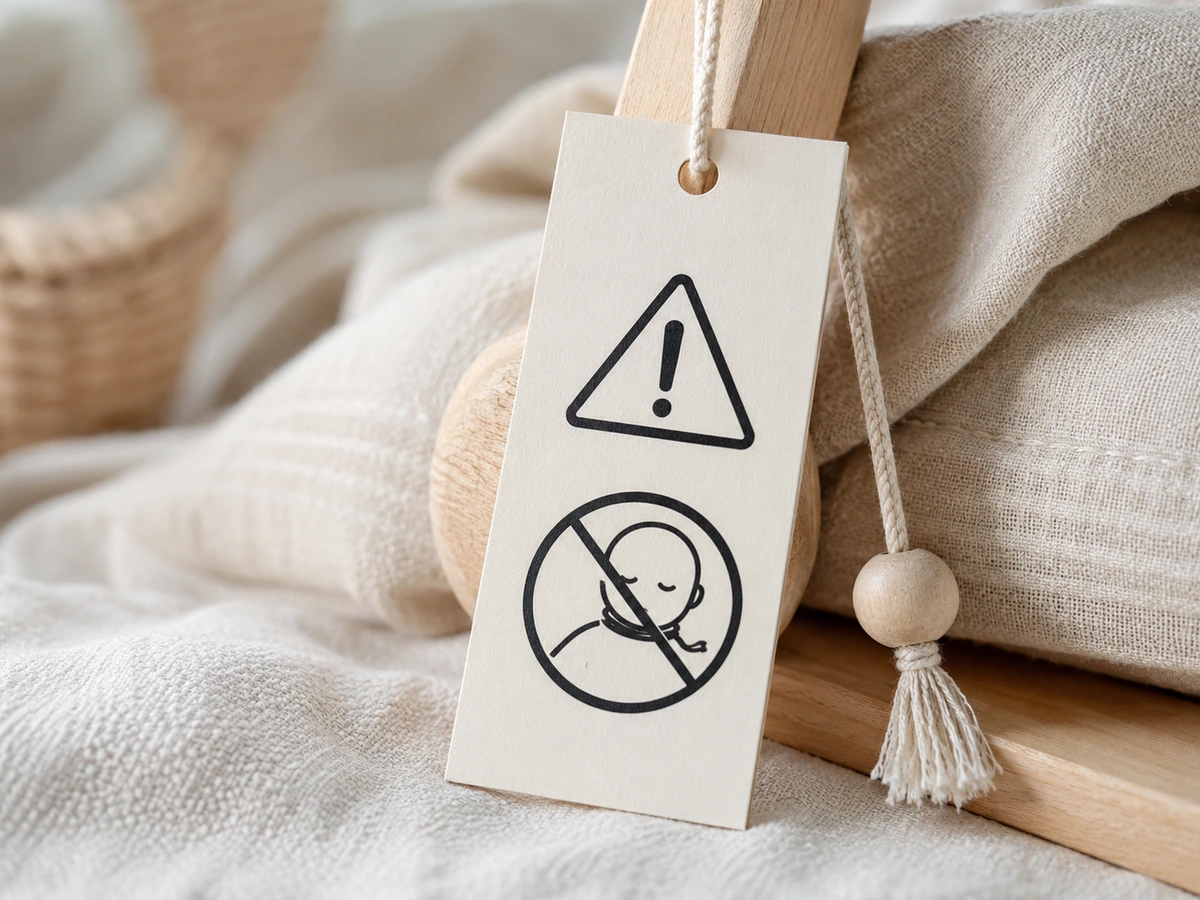
Warning! Never attach this dummy holder to ribbons, strings, cords or loose parts of clothing. The child could strangle. Never use longer than 22 cm. Inspect the product before each use by pulling in all directions. Discard at the first sign of damage or weakness.
Additional requirements:
- Manufacturer name and address on the packaging — no PO boxes, a valid business address.
- Age marking — dummy chains are approved from birth, provided all components meet EN 71-3.
- Care instructions — cleaning, maximum temperature, note that not dishwasher-safe (wood).
- Material declaration — e.g. “Beech wood, food-grade silicone, polyester fabric”.
4. Toy Directive 2009/48/EC — explained in practical terms
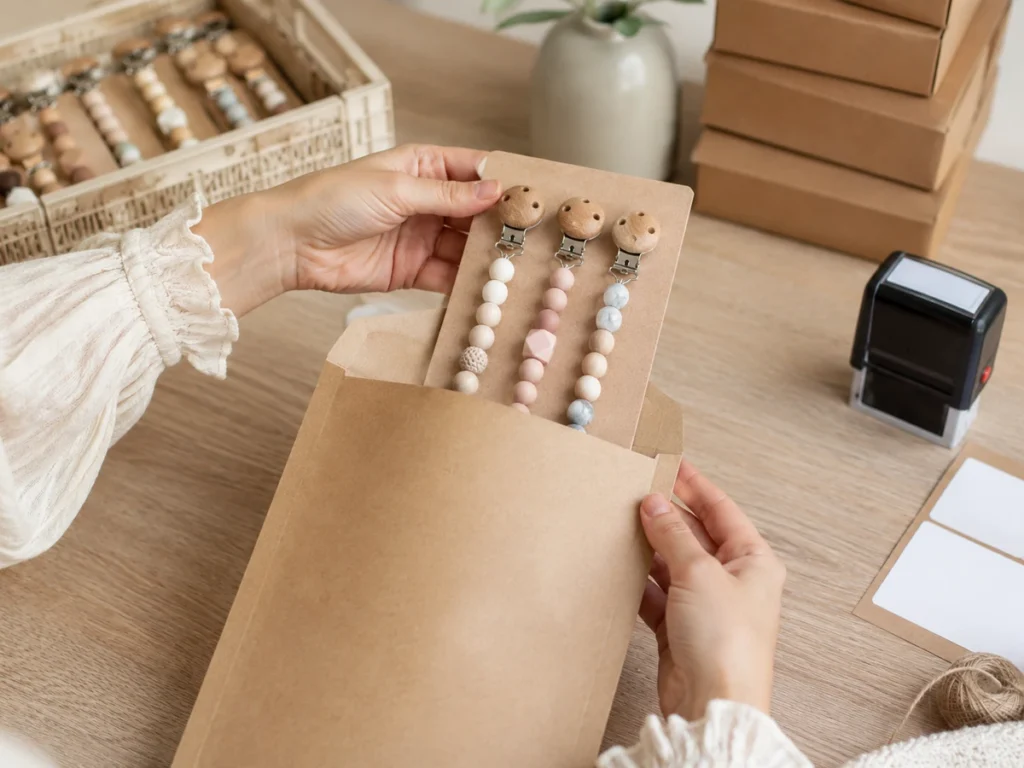
A dummy chain is legally classified as a toy. That means: EU Toy Directive 2009/48/EC applies in full. In practical terms, for you this means:
- Manufacturer identification — every package must clearly show who manufactured it. For imports from non-EU countries, the importer is liable.
- Traceability — you must be able to demonstrate which batch came from which supplier. A simple spreadsheet with date, supplier, and batch number suffices.
- Safety issue reporting — if you later discover that a supplier provided substandard material, you’re obliged to recall the product from the market (product recall).
- Warning label language — all mandatory warnings must appear in the language of the sales country. Selling to France requires French warnings; to Italy, Italian.
5. Material requirements: What you can purchase
Saleable dummy chains need saleable components. Here are the mandatory certificates every supplier must provide:
| Component | Standard | What to check |
|---|---|---|
| Wooden beads | EN 71-3 | Saliva-resistant, screened for harmful substances, element migration below threshold |
| Silicone beads | EN 71-3, BfR Recommendation XV | Food-grade, BPA-free, approved for mouth contact |
| Polyester cord | EN 71-1 | Tensile strength min. 90 N, tear-resistant, non-fraying |
| Wooden clip | EN 12586 + EN 71-3 | Ventilation holes, no sharp edges, nickel-free metal spring |
| Letter beads | EN 71-3 | As wooden beads, plus saliva-resistant laser marking/printing |
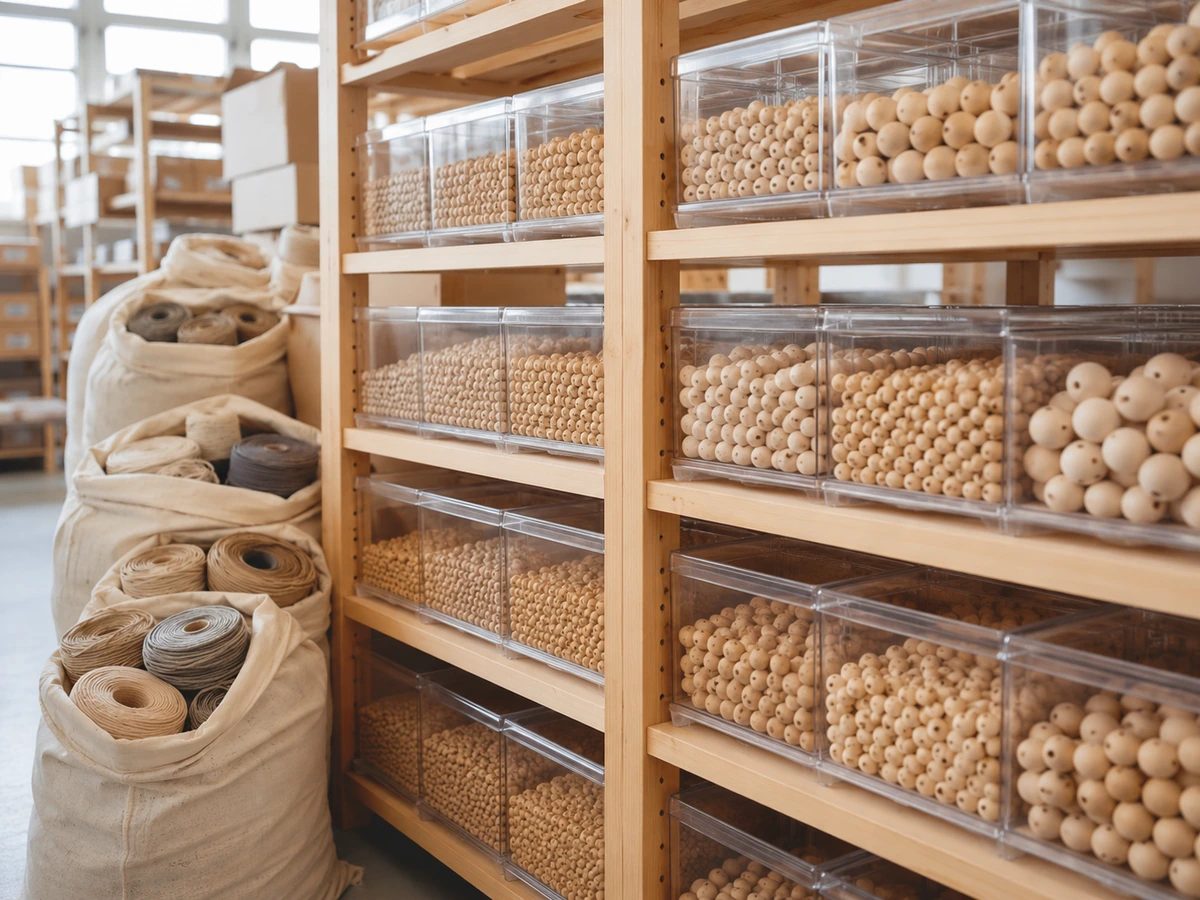
Don’t rely on verbal assurances. Get written test reports from your supplier — ideally as PDF, dated, with batch number. These reports form part of your technical documentation (see point 2).
6. Insurance & liability — what if something goes wrong?
Even with careful work, things can happen. A loose bead, a knot that breaks, a baby putting the chain in their mouth. What then?
- Product liability insurance — available from around £65 per year for small businesses. Cover amount ideally £2.4 million. The insurance covers personal injury caused by your product.
- Business registration — for Etsy sales, you need to register as a sole trader or set up a business (even if you’re claiming small business exemption from VAT up to a certain threshold).
- Terms & conditions and right of withdrawal — when selling to consumers, a 14-day withdrawal right applies, even for handmade dummy chains without personalisation. Personalised chains with names are exempt from withdrawal rights, but must be clearly marked as “custom-made” before purchase.
- Data protection — GDPR applies as soon as you process customer data. Encrypted data storage, disclosure obligations, privacy notice on your shop.
7. Small business vs. limited company — which legal structure?
To start out, sole trader registration is usually sufficient — register with tax authorities via a straightforward questionnaire and register your business with your local council (around £20).
Moving to a limited company (Ltd) makes sense when:
- Annual turnover over £40,000 — personal liability becomes a genuine risk.
- You’re employing staff — payroll and National Insurance become simpler in a limited structure.
- You’re bringing in investors or business partners — a limited company can be divided more clearly.
Private company limited by shares (Ltd) is the standard: Minimum capital £1, straightforward setup through Companies House, incorporation costs around £200.
8. Kiki-Ena as wholesale supplier for sellers
We supply craft materials to makers, Etsy sellers and small manufacturers — with volume discount and invoice payment for trade customers:
| Quantity | Discount |
|---|---|
| 10 units | −5 % |
| 50 units | −10 % |
| 100 units | −15 % |
| 500 units | −20 % |
What you get from us:
- EN 71-3-certified wooden beads in 10 / 12 / 15 mm
- EN 71-1-certified polyester cord in 100 m rolls
- Certified wooden clips with ventilation holes
- Ready-made craft kits for resale
- Safety certificates on request as PDF
- Invoice payment for trade customers (after verification)
FAQ — What dummy chain sellers most often ask
Can I sell dummy chains without registering a business?
No. Once you’re selling regularly (even just occasionally for payment), it counts as a business activity. Even a single sale on Etsy or Instagram counts. Registration requirements: business registration + tax authority registration.
Do I need third-party lab certification or is self-declaration enough?
For standard dummy chains from certified components, self-declaration suffices. Third-party testing (TÜV, SGS, etc.) is worthwhile for custom wooden blanks, unusual materials or high sales volume. Cost: £500–£1,200.
How much does product liability insurance cost?
From around £65 per year for small businesses with turnover up to £20,000. Cover ideally £2.4 million. Compare with Hiscox, Helvetia or professional associations.
Must I print warnings in every sales language?
Yes. EU-wide rule: warnings always in the language of the sales country. For Etsy with international shipping, you should include at minimum English, German and French.
Can I sell personalised dummy chains without withdrawal rights?
Yes — personalised dummy chains with names are made-to-order items and exempt from the 14-day withdrawal right under consumer law. Important: The customer must clearly agree to this exemption before completing their order.
What if I sell bulk quantities exclusively to nurseries?
B2B sales have their own rules: withdrawal rights don’t apply, terms can be less strict, invoice payment is standard. However, CE and EN 12586 still apply — nurseries expect certified products.
Ready to launch your own dummy chain business?
We supply certified components — you create your product. Volume discount from 10 units, wholesale prices on request.
View wholesale range
Submit B2B enquiry
Further reading: Our dummy chain guide explains the product from a customer perspective — perfect as a template for your own product descriptions. Plus: DIN EN 71-3 for nursery materials explained.