
For a teacher, the first day of school isn’t a beginning—it’s a logistics project. Name tags, small gifts, welcome packs, class guides — every detail needs planning and ordering well in advance. This guide shows class teachers how to put together a thoughtful back-to-school pack for 20–30 children efficiently, which components are genuinely useful, and where the common pitfalls lie when ordering in bulk.
Contents
- What goes into a back-to-school pack?
- Personalising with Names
- Materials and Safety
- Order Planning — Timing and Lead Time
- Budget and Group Ordering
- FAQ
- Get in Touch
1. What goes into a back-to-school pack?
A well-thought-out pack serves three purposes: it welcomes the child, it’s useful in everyday life, and it builds a small connection between teacher and pupil. Tried and tested components:
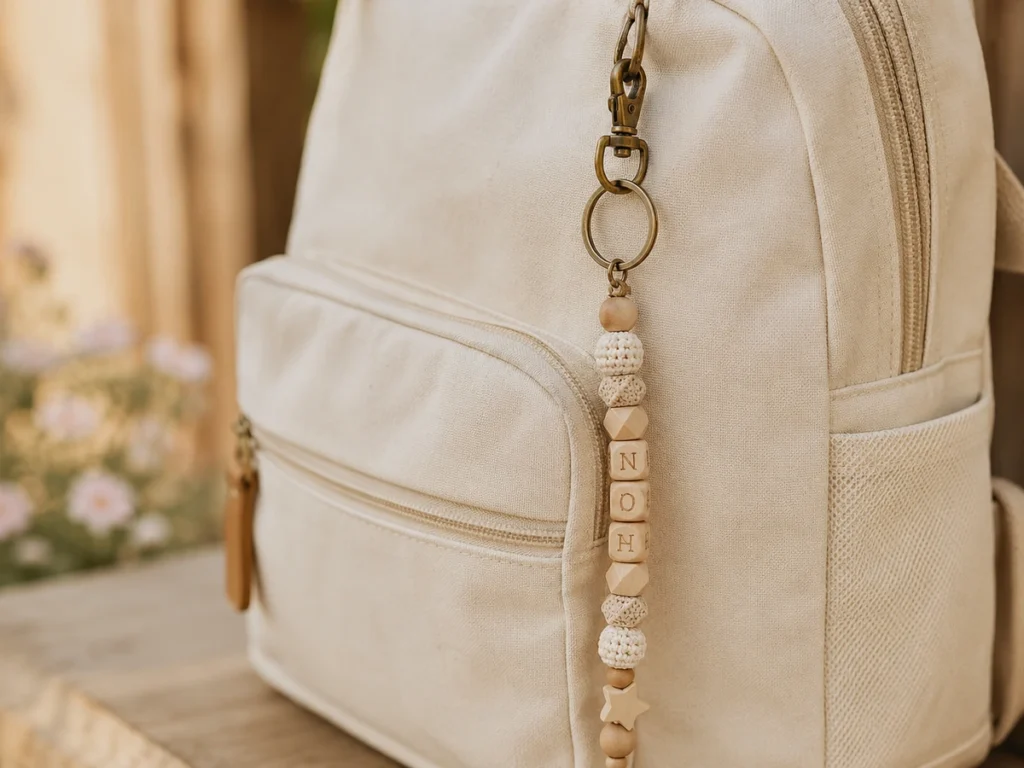
- Key ring or bag tag with the child’s name: instantly recognisable, helps on the playground.
- Wooden grasping toy or small mobile for younger siblings — a detail that surprises many parents pleasantly.
- Mini craft kit for the first few weeks, perhaps for a small class mascot.
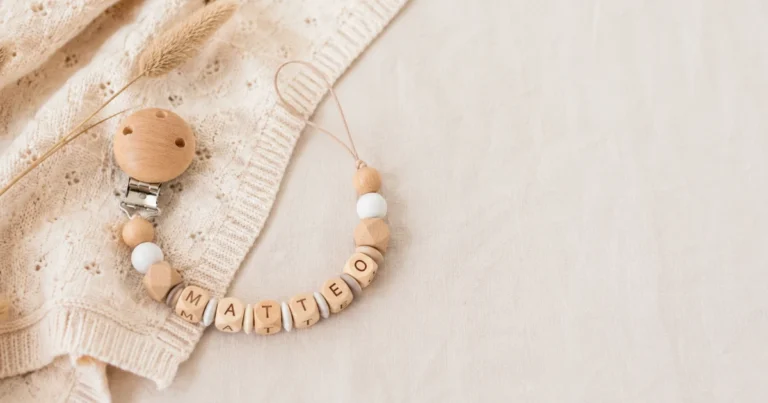
- Wooden letter chain with the child’s own name, to hang in the classroom or on their coat peg.
- Optionally, a small welcome booklet with class rules and timetable.
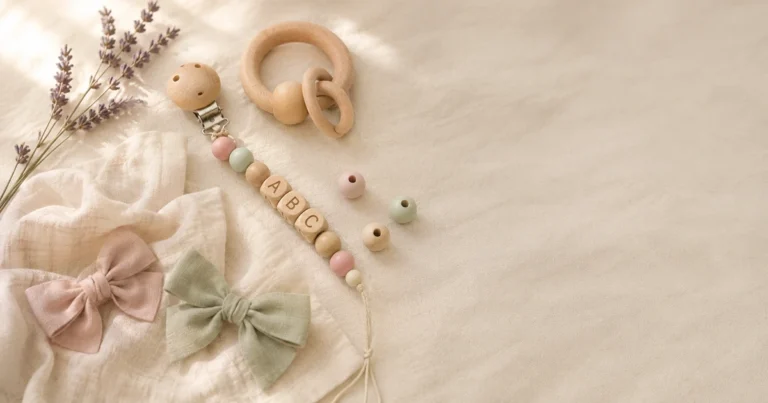
Most of these components are found in Craft Sets and dummy chain ranges from specialist shops — even though letter chains are often listed under dummy chain materials.
2. Personalising with Names
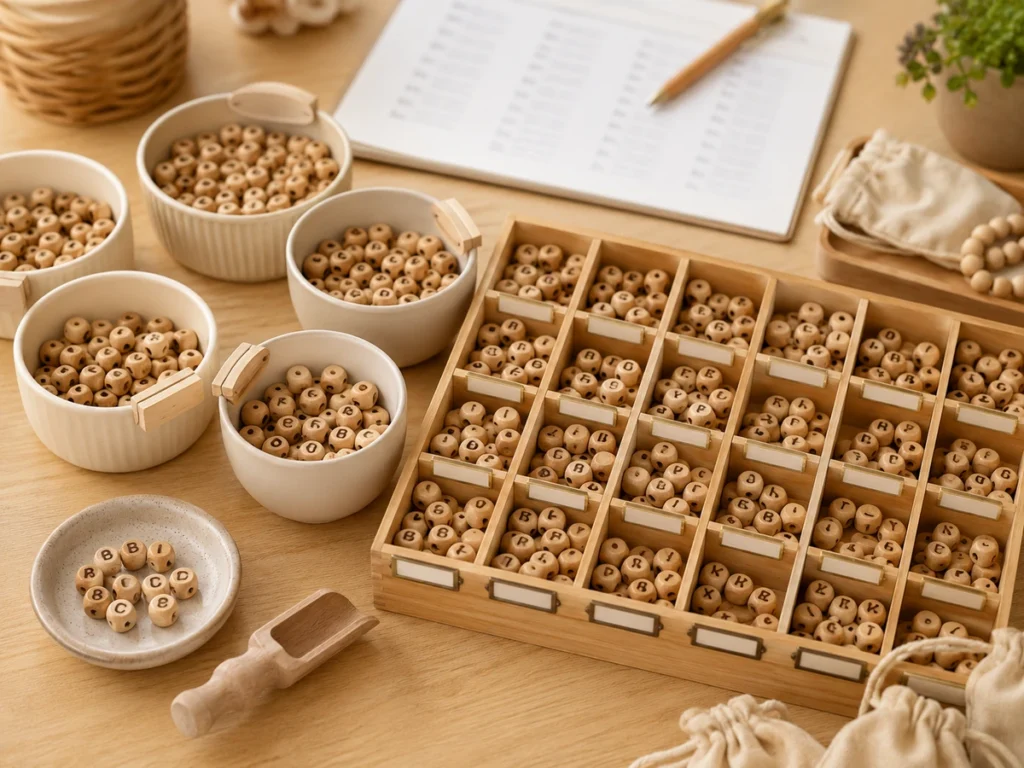
The real difference between a generic gift and a genuine welcome pack is the name. Wooden letter beads are perfect: they’re drool-proof, durable, and come in many colours. For school children, standard 10–12 mm beads are fine; for younger siblings, safety beads from 30 mm are recommended.
Key when ordering: request letter beads not as a general assortment but specifically for individual children’s names. A class of 24 might need 18 A’s and 14 L’s, but only 2 Y’s. Good specialist shops supply quantities individually and let you calculate exactly what you need.
3. Materials and Safety
Even though these gifts are for Year 1 pupils, they often pass through younger siblings’ hands. So: all components must comply with DIN EN 71-3, be drool-proof, and contain no loose small parts that could be swallowed. For more background, see Craft Materials: Safety Standards for Childcare Settings (DIN EN 71-3).
If a key ring or tag is made with cord, pay attention to cord length: 25–30 cm is standard for school children; anything over 50 cm isn’t advisable as it increases strangulation risk when the tag is attached to a schoolbag.
4. Order Planning — Timing and Lead Time
Back-to-school packs need planning ahead. Rules of thumb:
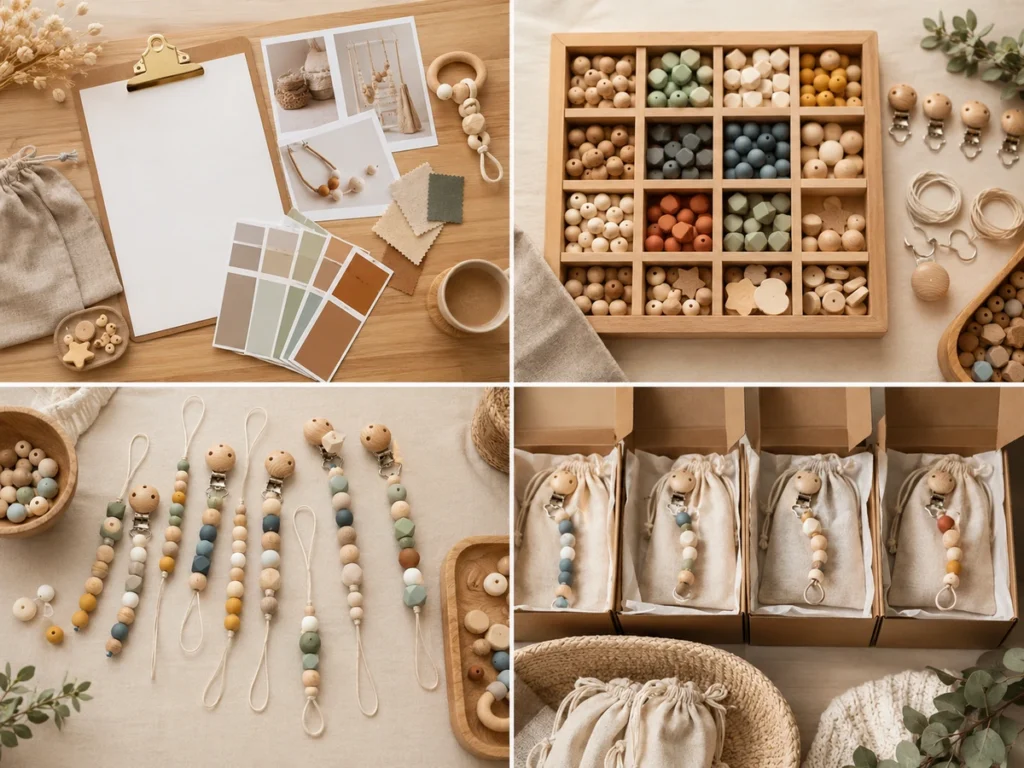
- 8 weeks before school starts: Finalise your class list with names, select your materials.
- 6 weeks before school starts: Place your order with a specialist retailer, ideally with a brief enquiry about volume discounts.
- 3 weeks before school starts: Delivery arrives; check everything is complete.
- 1 week before school starts: Assemble items into gift bags and label them.
Order late and you’ll hit peak season (August/September), when many retailers have supply shortages. Ordering early guarantees availability and saves stress.
5. Budget and Group Ordering
Experienced class teachers budget around £3.30–6.60 per child for materials. For 24 children, that’s roughly £80–160 — enough that most specialist retailers waive delivery costs and offer volume discounts. Group ordering makes sense if:
- you’re supplying several parallel classes,
- the whole school (multiple Year 1 classes) orders together,
- a parent association places the order through their account.
Parent associations can usually be set up for account payment — the same process as for nurseries.
FAQ
How many letter beads do I need per child?
On average, 5–7 beads per name. For 24 children, budget 140–170 beads plus 20% extra for breakages or corrections.
Are the wooden beads machine-washable?
No. Wipe wooden beads with a damp cloth. Fabric and soft toys can be washed separately in the machine.
What if a new child joins the class after I’ve ordered?
Order an extra 10% or request a small reorder. A good specialist shop can turn this around quickly.
Can you assemble the packs for me?
Some specialist shops offer custom assembly for an additional fee. Ask specifically when you make your enquiry.
Get in Touch
If you’re planning a bulk order as a class teacher or parent association, a quick enquiry via /kita-anfrage/ is the best way forward. Meanwhile, browse Craft Sets to see individual components.