
1. What Is Beeswax?
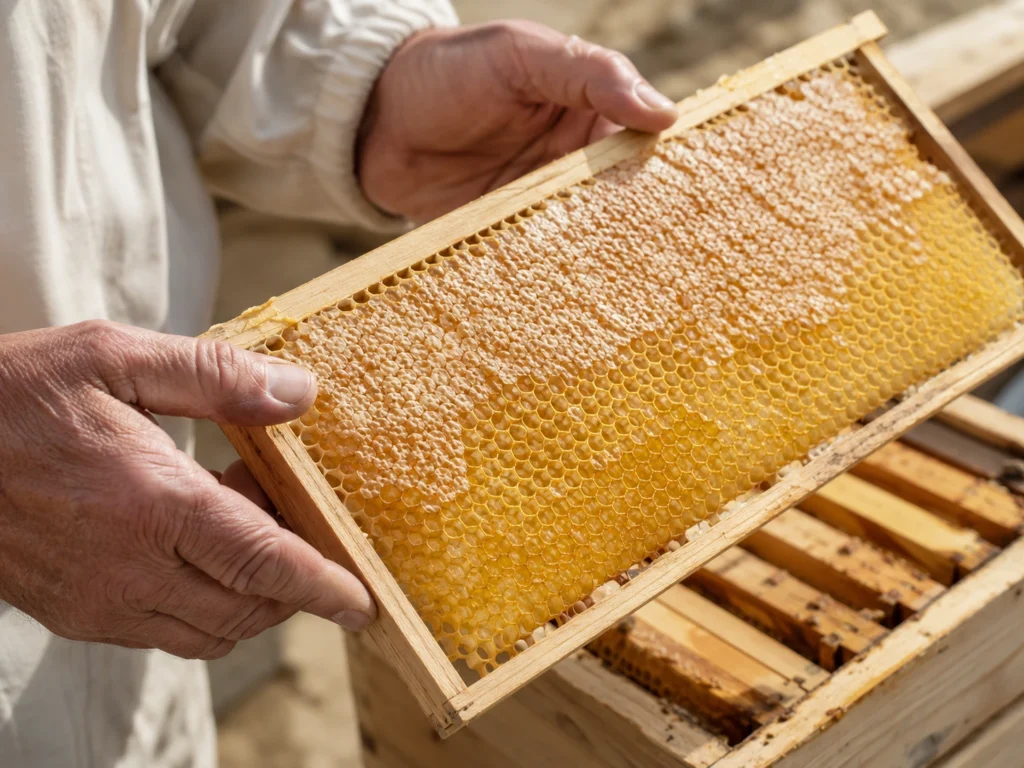
Beeswax is produced by honeybees. Female bees have eight wax glands on their abdomen, which secrete a wax-like substance from honey and pollen that’s soft at body temperature, solid at room temperature, and liquid from around 62 degrees Celsius. The bees use this wax to build the hexagonal cells of their hive. Beekeepers recover the wax after harvest by melting down the empty combs, filtering them and casting into blocks or pellets.
Chemically, beeswax is a complex mixture of around 300 different substances — mainly esters of long-chain fatty acids and long-chain alcohols. The exact composition varies by region, the plants the bees feed on and how it’s processed. For use on baby toys, reputable manufacturers use only filtered, food-grade beeswax (E901), which is also approved for use in the food industry — such as a coating on cheese rinds or as a release agent in chewing gum.
2. How Beeswax Works on Wood
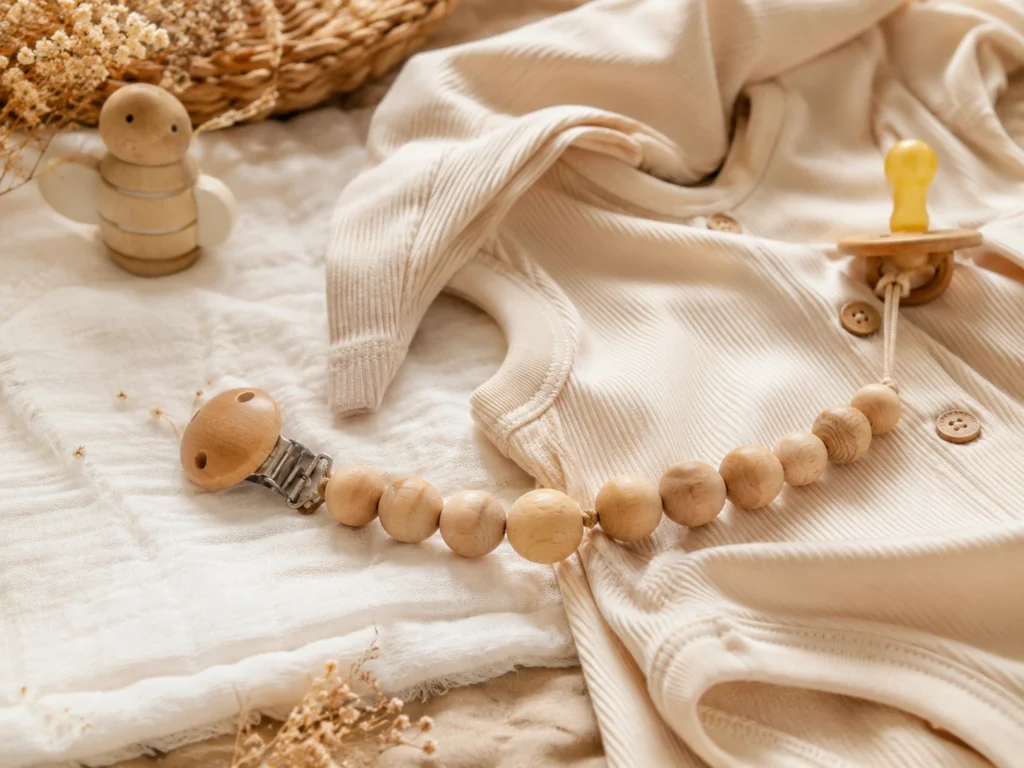
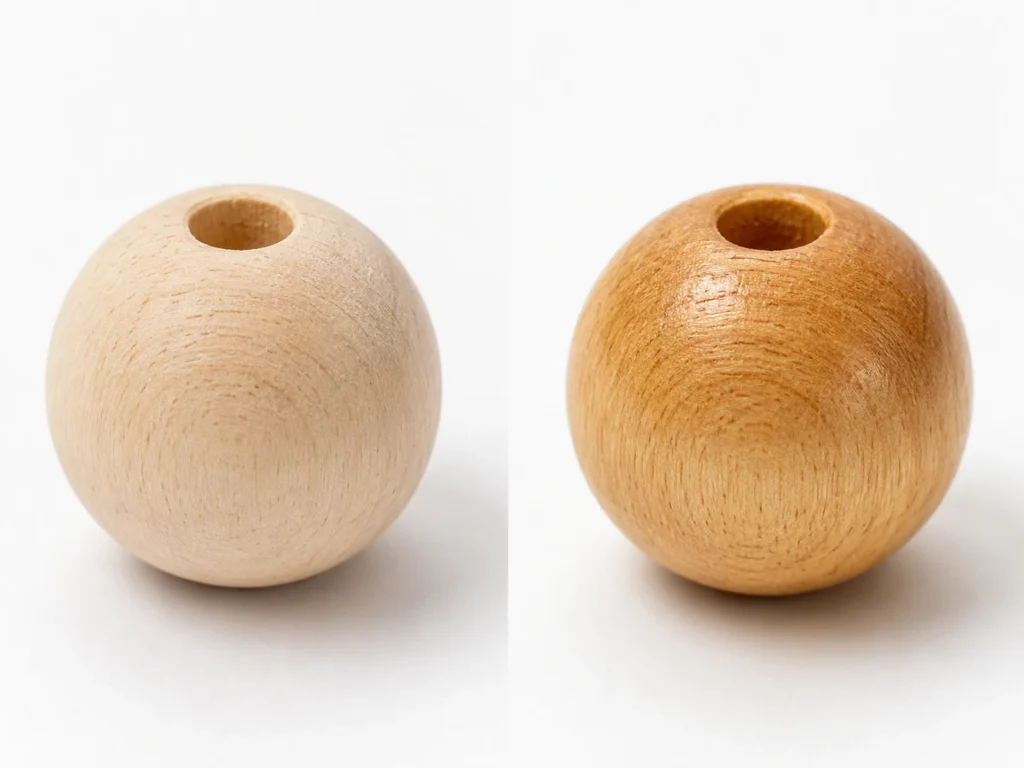
When liquid beeswax is applied to a warm wooden bead, it penetrates the topmost wood fibre layers. This works especially well with open-pore woods like maple or birch. After application, the wax cools and crystallises in the pores. The result: the wood surface becomes hydrophobic — water-repellent — without creating a visible layer. The wood grain remains completely visible and the wood’s natural feel is preserved.
The wax impregnation serves three functions at once. Firstly, it protects the wood from moisture absorption. An untreated wooden bead would start to swell after hours in a baby’s mouth and develop cracks over time. The wax impregnation prevents this. Secondly, it seals in harmful substances — any pesticide residues or natural wood components like tannins remain trapped. Thirdly, it gives the bead a pleasant, slightly silky feel that many babies naturally enjoy.
3. Benefits for Baby Toys
Beeswax has five concrete advantages over synthetic varnish:
- Food-safe straight from the factory: Beeswax is approved as food additive E901. There are no migration concerns because it’s almost identical to the wax used in many foods (cheese, sweets).
- Fully biodegradable: A wooden bead sealed with beeswax can be composted when it’s no longer needed — you can’t do that with any varnish seal.
- Natural wood feel is preserved: The grain, the subtle texture, the warm character of the wood remain tactile. For babies exploring the world through their mouths, this is a sensory bonus.
- Easy to refresh yourself: Unlike varnish, which needs professional removal and reapplication if damaged, beeswax can be refreshed at home in five minutes.
- Hypoallergenic: Pure, filtered beeswax causes virtually no allergic reactions. Even children with sensitive skin tolerate it without issue.
4. Limitations and Drawbacks
Beeswax isn’t a miracle solution. There are three drawbacks to know about:
Firstly, temperature sensitivity. In direct sunlight in a car or on a hot radiator, a beeswax seal can start to soften. The bead becomes slightly tacky for a while and can attract dust. At normal room temperatures this isn’t an issue — but baby toys shouldn’t be left in a hot car in summer.
Secondly, lower colour intensity. Beeswax-sealed wood looks warm, natural and muted. If you want bold, high-contrast colours (neon pink, turquoise, bright yellow), food-safe varnish is a better choice — see our article Saliva-Resistant Wood Colours Explained.
Thirdly, maintenance. Beeswax needs refreshing every 12 to 24 months with intensive use. If you’d rather not do that, a food-safe varnish seal requires less maintenance. Still, maintenance is straightforward — see Section 5.
5. Refreshing Beeswax Seal Yourself
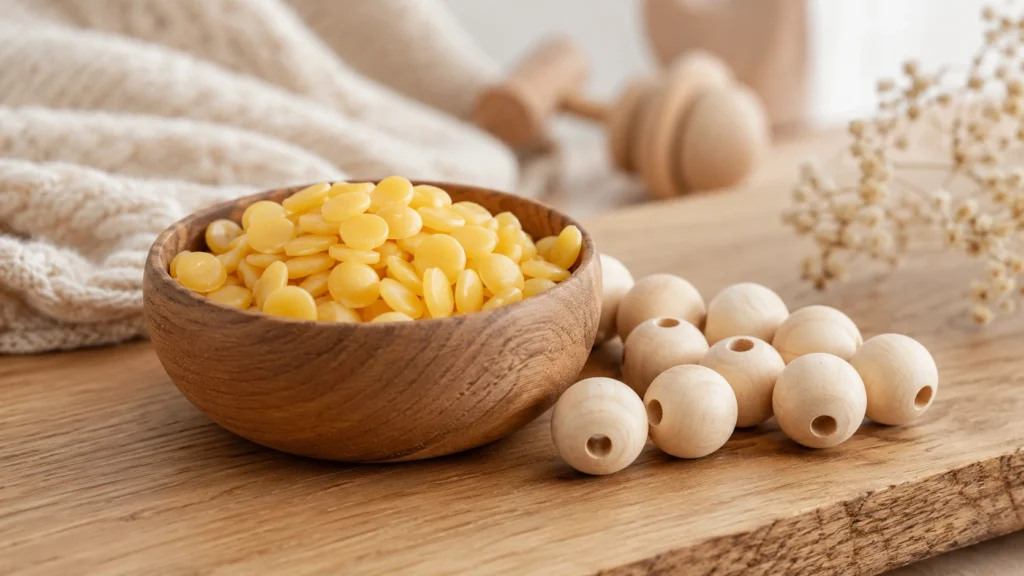
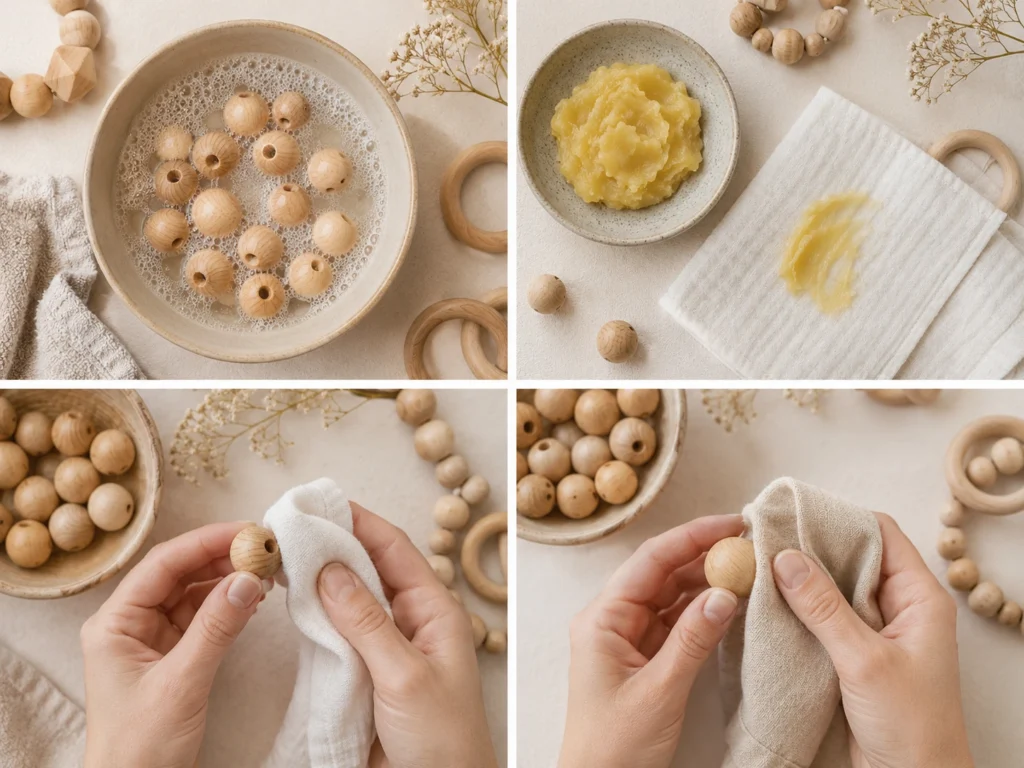
You’ll need: a piece of pure, filtered beeswax from a beekeeping supplier or chemist (pellets are most practical), a soft cotton cloth and about five minutes per finished chain.
Step 1: Gently wash the wooden beads in lukewarm water and let them dry completely (at least two hours at room temperature). Dry wood takes up the wax better.
Step 2: Rub a small amount of beeswax onto the cotton cloth. A pea-sized amount is enough for about ten beads. Don’t heat the wax in a pan — friction heat is enough.
Step 3: Rub each bead individually with the wax-laden cloth. Turn it between your fingers as you do. The friction heat helps the wax seep gently into the wood, leaving a thin, even layer.
Step 4: Let the beads rest for 30 minutes so the wax hardens. Then polish with a clean cotton cloth until the surface has a silky shine.
The result lasts about 12 to 24 months — depending on how much the baby chews on the dummy chain. If you’re sealing beads for your own use, you don’t need any DIN certification — you’re using food-grade beeswax E901, which is already approved for direct food contact.
FAQ — Beeswax on Wooden Toys
Is Beeswax Safe for People with Allergies?
Pure, filtered beeswax is considered hypoallergenic. True beeswax allergies are extremely rare — usually reactions are to propolis residues that can be found in commercial beeswax. Manufacturers of baby toys use only pharmaceutical-grade filtered wax with no propolis.
Does Beeswax Smell?
Yes, slightly. Freshly applied beeswax has a very subtle, honey-like scent that fades after a few days. Some parents find this pleasant, others prefer the odourless nature of food-safe varnish.
Can I Use Regular Beeswax Candles?
We’d advise against it. Candle wax often contains blends of other waxes (paraffin, stearin) and wick residue. Use only pure, filtered beekeeping beeswax or food-grade E901 wax from a chemist.
How Do I Know When the Seal Needs Refreshing?
Three signs: the bead feels rougher than it used to, it discolours slightly (such as darkening where saliva has contact), or water droplets soak into the wood instead of beading up.
Can I Use Beeswax on Silicone Beads?
No. Silicone doesn’t absorb wax — it would just stick to the surface and look unpleasantly greasy. Beeswax is suitable only for open-pore materials like wood or cork.
Building Your First Dummy Chain with Natural Wooden Beads? You’ll find both beeswax-sealed and food-safe varnish options in our Wooden Beads category. Our Dummy Chain Guide helps you choose the right beads.