
1. Why Christmas crafting is more than just keeping busy
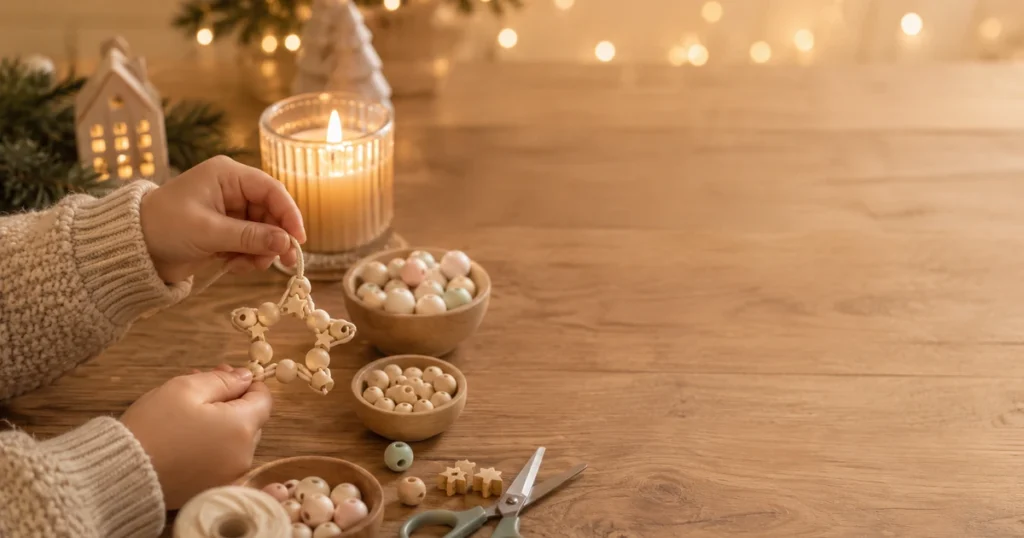
When a child makes a star for the Christmas tree themselves, fills an Advent calendar with little wooden charms or creates a nativity figure from beads, there’s more happening than meets the eye. The child experiences that they can create something beautiful themselves — and that this something is valued by the family, praised and even brought out year after year from the decoration box.
This builds confidence in a way few other activities can. Add to that the fine motor benefits: threading, gluing, tying — all of this develops concentration, patience and dexterity. Unlike shop-bought decorations, there’s a story behind the handmade star: “I made that when I was four.” That’s priceless.
For parents, crafting together is a space where you can talk without pressure. Whilst hands are busy, the most honest conversations often happen — about school, about friends, about wishes. Christmas craft sets are in this sense not just gifts for children, but gifts for the whole family.
2. The right sets by age — from 3 to 10 years
The right set depends on the child’s age and craft experience. Here’s a clear overview.
3 to 4 years — Gross motor skills and threading
Sets with large wooden beads of at least 15 mm diameter and thick, sturdy cord. Perfect are themes like “Christmas tree charms” with three to five beads per charm. The child can thread the beads themselves, and parents tie the knots at the end. Check out our Beads selection with large holes.
5 to 6 years — First own projects
Here you can already go for more delicate sets: stars, angels, little trees. Children now combine different materials for the first time and develop a feel for colour harmony. A typical set contains wooden beads, feature beads like stars or trees, a mini felt figure and craft cord.
7 to 8 years — Their own designs
Children this age don’t want to follow instructions anymore, they want to create their own ideas. Open sets with a wide range of colours and shapes work well. Alphabet beads let them spell their own name or friends’ names as charms.
9 to 10 years — Demanding handwork
More complex projects like a mini mobile, an Advent calendar with decorated bags or a Christmas decoration chain for the door. Children can now independently tie knots, cut cord and combine materials.
3. Five craft projects with real appeal
3.1 Christmas tree charms
From 8 to 12 green wooden beads in descending sizes, a little Christmas tree appears on the cord, with a star at the top as the point. Craft time: 15 minutes per charm. Perfect as a little gift for granny and grandpa.
3.2 Star chain for the window
Seven to nine star beads with little wooden beads in white and gold in between. Threaded onto organic cotton cord and hung on the window frame — the chain looks especially magical when daylight shines through. Craft time: 25 minutes.
3.3 Personalised Advent calendar charm
Use alphabet beads to create 24 little charms — each with a number or the first letter of a wish. Attach the charms to a branch bow or wooden cross. Craft time: two to three afternoons.
3.4 Angel as place card holder
A large wooden bead as the head, a smaller one as the body, two felt wings — and you’ve got a little angel. The place card for dinner goes into the gap at the bottom. Craft time: 10 minutes per angel.
3.5 Christmas dummy chain for the baby in the family
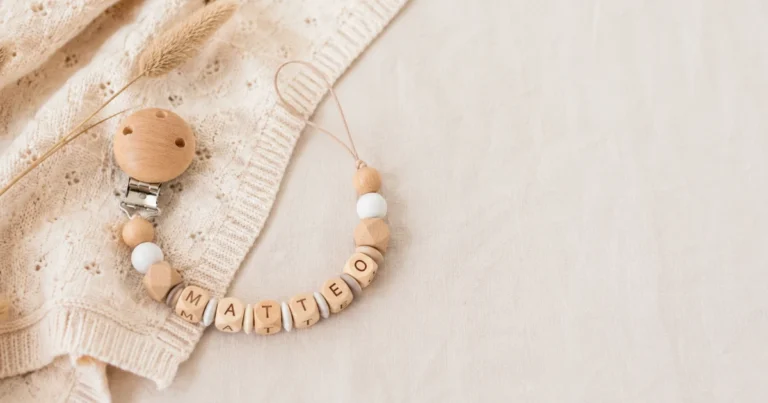
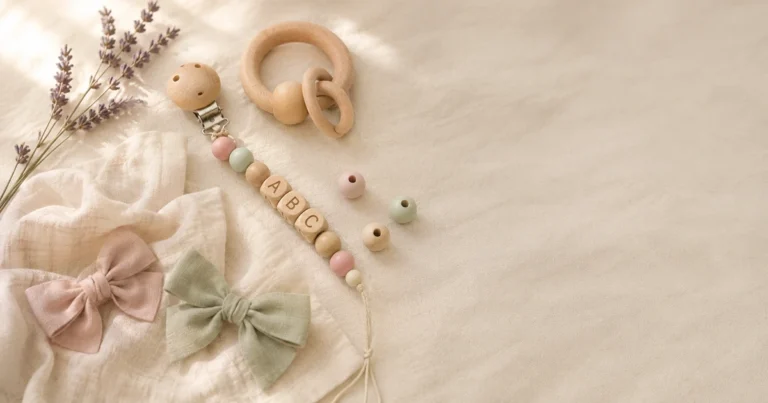
Older children design a dummy chain in Christmas colours (forest green, berry red, natural wood) with a star bead. A gift from an older sibling that brings real pride. You’ll find instructions in our Dummy Chain Guide.
4. Wrapping a craft set as a Christmas gift
Giving a craft set means giving an experience — and that deserves to be shown in how you wrap it. Rather than an anonymous parcel under the tree, a little effort pays off.
- Wooden box instead of cardboard. A simple wooden box with a sliding lid makes any set feel like a quality gift and can later serve as craft storage.
- Prettily presented instructions. Print the craft instructions on recycled paper and tie with a ribbon. Include a photo or drawing of the finished result.
- A personal touch. Write a little card suggesting you make the set together — perhaps on the first Sunday of Advent or on 6 December.
- Bundle with hot chocolate. Tuck in a bag of quality hot chocolate powder. “Crafting together and hot chocolate” is an unbeatable gift combo.
5. Safety when crafting with little children
Even though Kiki-Ena craft materials are tested to DIN EN 71-3, certain rules apply when crafting with little children.
- With children under three, always stay within reach — small beads are a choking hazard.
- Cut cord to 25 to 30 cm beforehand to prevent strangulation risk.
- Tie knots in pairs and check them after each crafting afternoon.
- Use only child-safe adhesives (craft glue instead of super glue).
- Attach finished charms only at stable points — never on curtains above a bed.
FAQ
From what age are Christmas craft sets suitable?
From about three years with large beads and supervision. More delicate sets from five years.
How long do children typically need for a Christmas craft project?
Between 15 minutes (single charm) and several afternoons (complete Advent calendar).
Are the materials safe for children?
All Kiki-Ena materials are certified to DIN EN 71-3, saliva-resistant and tested for harmful substances.
Can finished charms be washed?
Yes, wipe with a damp cloth. Remove felt or crocheted parts first.
How much does a good Christmas craft set cost?
Quality sets range from £12 to £25 depending on scope and theme.
Plan your crafting afternoon now
Discover our festive Craft sets and combine them with feature beads from our Beads category. You’ll find instructions for making teething rings as gift ideas in the post 5 Teething Ring Craft Sets.