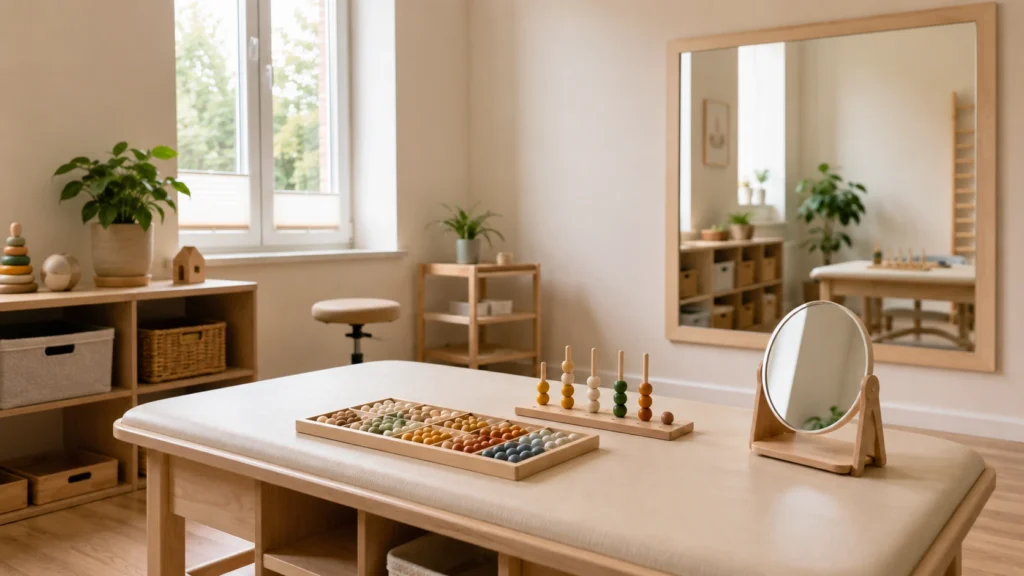


In an occupational therapy practice, materials aren’t decoration — they’re tools. A wooden bead isn’t “pretty and colourful” — it serves fine motor development with a defined grip size. A mirror on the wall isn’t a “nice touch” — it’s sensory input for children with perceptual difficulties. This guide shows practice owners how to buy materials with specific therapeutic goals in mind, which product categories suit which conditions, and what to look for when sourcing.
Contents
- Therapeutic Conditions and Matching Materials
- Fine Motor Development — Wooden Beads and Stringing
- Sensory — Mirrors, Play Caves and Darkening Sets
- Grip and Tactile Development
- Sourcing and Terms
- FAQ
- Submit an Enquiry
1. Therapeutic Conditions and Matching Materials
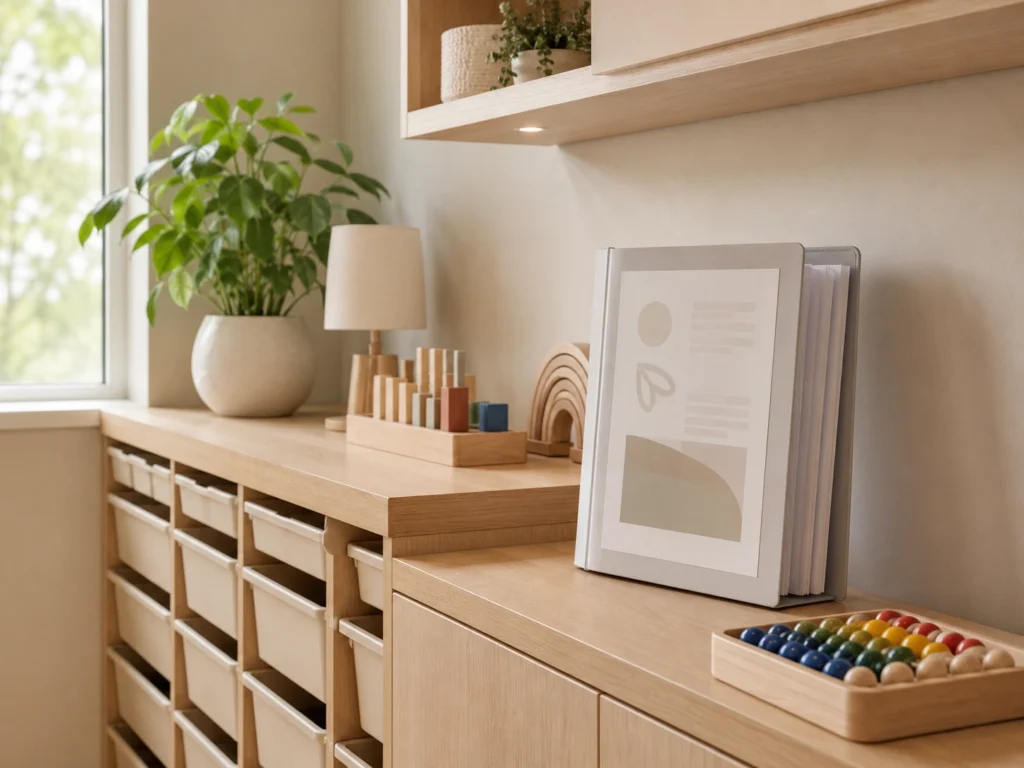
Materials in occupational therapy are typically selected based on these conditions:
| Condition | Suitable Material Category | Example Products |
|————|————————–|——————|
| Fine motor development | Wooden beads, stringing materials | Wooden beads 10–14 mm, strings, alphabet beads |
| Sensory / Perception | Mirrors, play caves, darkening | Galaxy Mirror Maple, Cosy Cove play cave, sensory darkening set |
| Grip and tactile development | Grasping toys, teething rings | Wooden grasping toys, crocheted animals, silicone teething rings |
| Concentration / Calm | Retreat spaces, cocoon furniture | Play caves with fabric covers, cushion storage benches |
| Speech facilitation | Picture cards, mouth/tactile materials | (outside classic craft ranges) |
The first four categories can be well covered through Kiki-Ena’s B2B section, as both craft materials and Eduplay and Millhouse products are available there.
2. Fine Motor Development — Wooden Beads and Stringing
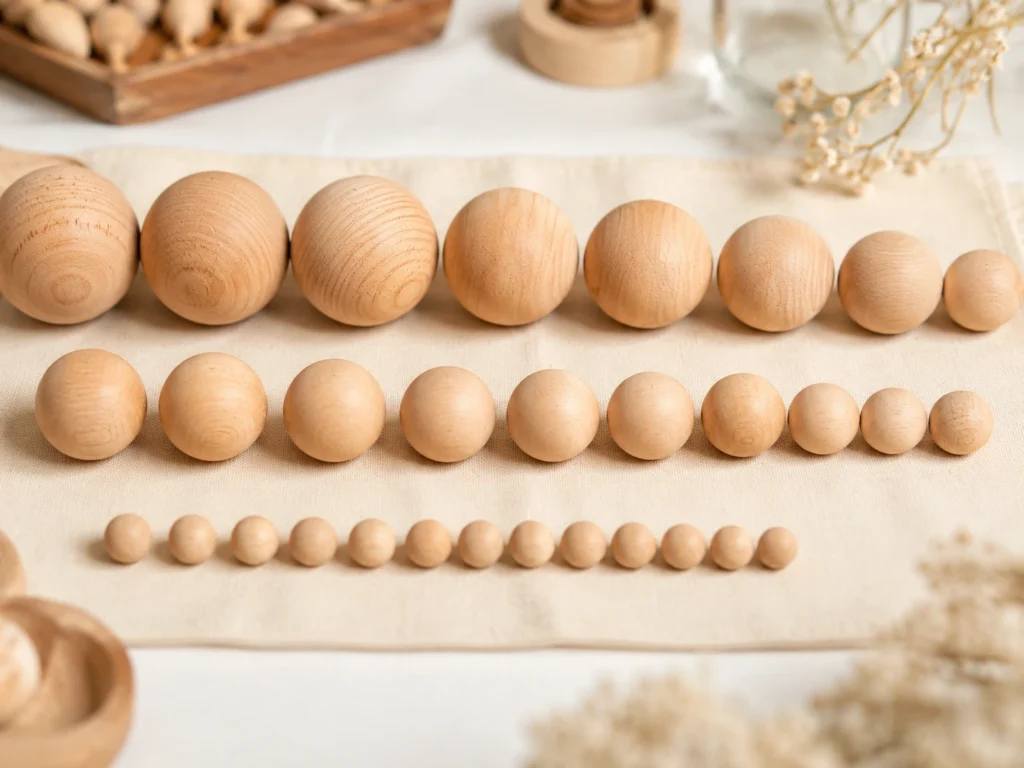
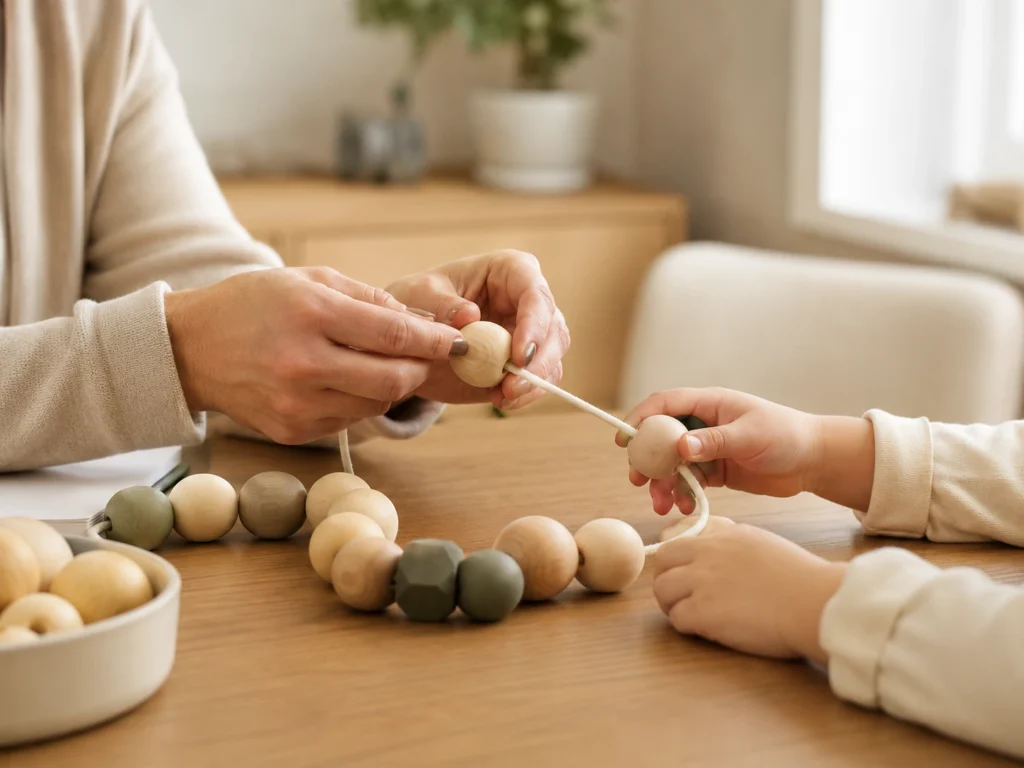
Wooden beads are the standard tool for fine motor work. When sourcing, you should cover these sizes:
- 22–25 mm: Starting level, for children with gross motor skills or sluggish grip function.
- 14–16 mm: Intermediate level, standard grip size for 3–5-year-olds.
- 10–12 mm: Advanced level, precise pincer grip.
Add alphabet beads for therapy goals that work with names or simple words — for instance, with children who need writing initiation. Browse the craft sets for a full overview.
3. Sensory — Mirrors, Play Caves and Darkening Sets
Sensory materials are durable and investment-intensive — but essential for many conditions. Three product categories from Kiki-Ena’s Millhouse range that are widely used in occupational therapy practices:
- Galaxy Mirror Maple: A mirror framed in maple in several sizes, ideal for self-awareness activities. Shatterproof with rounded edges.
- Cosy Cove play cave with Aztec accessory set: A retreat space for children with sensory overload. Washable covers, maple melamine, 5-year guarantee.
- Sensory darkening set for play cave: An add-on module with wipeable mat and washable cover that creates a calm, darkened atmosphere.
Read more about the role of mirrors in infant care and therapy in our guide Sensory Mirrors in Early Years Settings.
4. Grip and Tactile Development
Grasping toys aren’t just for babies — they’re also suitable for older children with motor difficulties who need to practise controlled gripping. Choose:
- Wooden grasping toys with safety beads: robust, hygienic, easy to clean.
- Crocheted and plush animals: for tactile variety — different yarn weights offer different sensations.
- Silicone teething rings: for oral sensory development and with conditions related to mouth motor skills.
When switching materials between therapy sessions, all parts should be wipeable. Wood and silicone meet this requirement; textile components need a regular cleaning schedule.
5. Sourcing and Terms
Practice owners typically benefit from B2B terms that specialist retailers offer to nurseries:
- Invoice payment with 14-day payment terms (after activation)
- Volume discounts at set quantities
- Free delivery on orders over £100
- Possible new customer discounts on first orders
Keep all invoices and declarations of conformity on file at your practice. In audits and practice inspections, these documents are your crucial proof that therapy materials meet safety standards.
FAQ
Are Kiki-Ena craft materials certified for occupational therapy use?
Craft materials carry a declaration of conformity under DIN EN 71. There’s no special “therapy certification” — but the toy standard applies to therapy use as well.
Can I order furniture on trial?
Standard items are returnable within 14 days. For larger furniture (play caves, mirrors), it’s worth enquiring in advance about availability and warranty.
What sizes does the Galaxy Mirror come in?
The Galaxy Mirror Maple range comes in several sizes from single mirrors to multiple configurations. Check availability details via nursery enquiry.
What’s a realistic budget for an initial sensory room setup?
Realistically £1,500–3,500 for a complete space with play cave, mirror, cushion bench and supporting materials.
Submit an Enquiry
For initial setup or expanding your practice, submit an enquiry via /kita-anfrage/. The B2B team will advise on availability, delivery times and terms. Browse the Eduplay range in parallel for therapy-relevant furniture.