
1. What does ‘sensory play’ really mean?
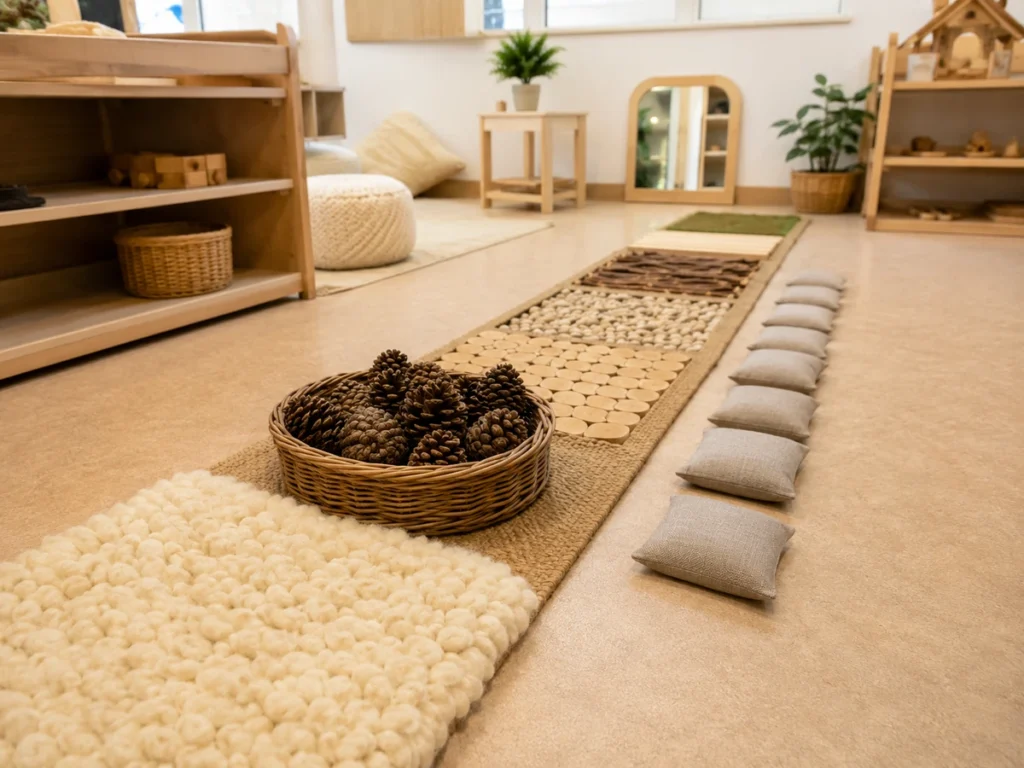
Sensory play is any activity that deliberately engages a child’s senses — touch, sight, hearing, smell, taste, as well as movement (vestibular) and body awareness (proprioceptive). The concept originated in occupational therapy and is now a core part of modern early years practice.
The key point: perception isn’t innate in the sense that it just ‘works’ automatically. It needs to be developed. A child who’s never held a rough cloth, a smooth stone and a soft wool ball will find it hard to describe these differences later. Sensory play lays the foundation for language, concentration and even maths — because understanding numbers also comes from literally grasping them.
2. Seven senses — and why they all need feeding
In early years education today, we talk about seven sensory systems. Natural materials engage all of them, often several at once:
| Sense | What’s engaged? | Natural material example |
|---|---|---|
| Sight | Colour, shape, contrast | Wooden beads in natural and coloured wood |
| Hearing | Sound, volume, rhythm | Wooden beads in a container, bells |
| Smell | Natural scents, plant fragrances | Lavender touch pouches, cedarwood |
| Touch | Surface texture, temperature, weight | Wood, wool, stone, chestnuts |
| Taste | Flavour — edible materials only | Integrate into cooking, not play |
| Movement (vestibular) | Balance, spinning, acceleration | Wobble boards, swings |
| Body awareness (proprioceptive) | Muscle and joint tension | Heavy wooden blocks, fabric pouches |
3. Natural materials vs plastic — the crucial difference
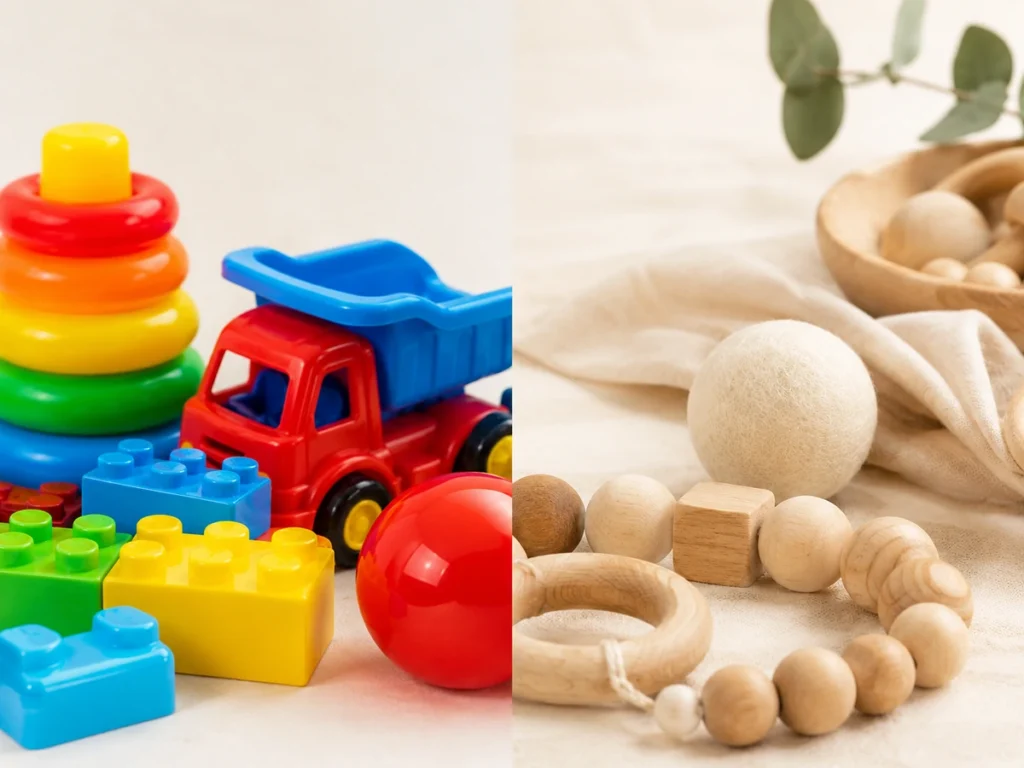
Plastic isn’t ‘evil’ — it’s just sensorily limited. A plastic ball feels the same everywhere: smooth, cool, light. A wooden ball varies: warm in the hand, slightly rough grain, a bit of weight to it. This variation is exactly what a child’s brain picks up as information.
Natural materials have five advantages that plastic simply can’t offer:
- Thermal variation: Wood feels warm, stone feels cool. Children learn temperature differences without burn risk.
- Texture variety: Grain, grooves, fibre direction — each piece of wood is unique. This develops touch discrimination.
- Sound quality: Wooden beads sound different from plastic. The tone is richer and more pleasant for children’s ears.
- Weight and inertia: Natural materials have ‘honest’ weight — children learn about gravity and inertia accurately.
- Ageing gracefully: Wood develops a beautiful patina, fabric grows softer. Plastic just gets worn and shabby.
4. Ten natural material play ideas — ready to go
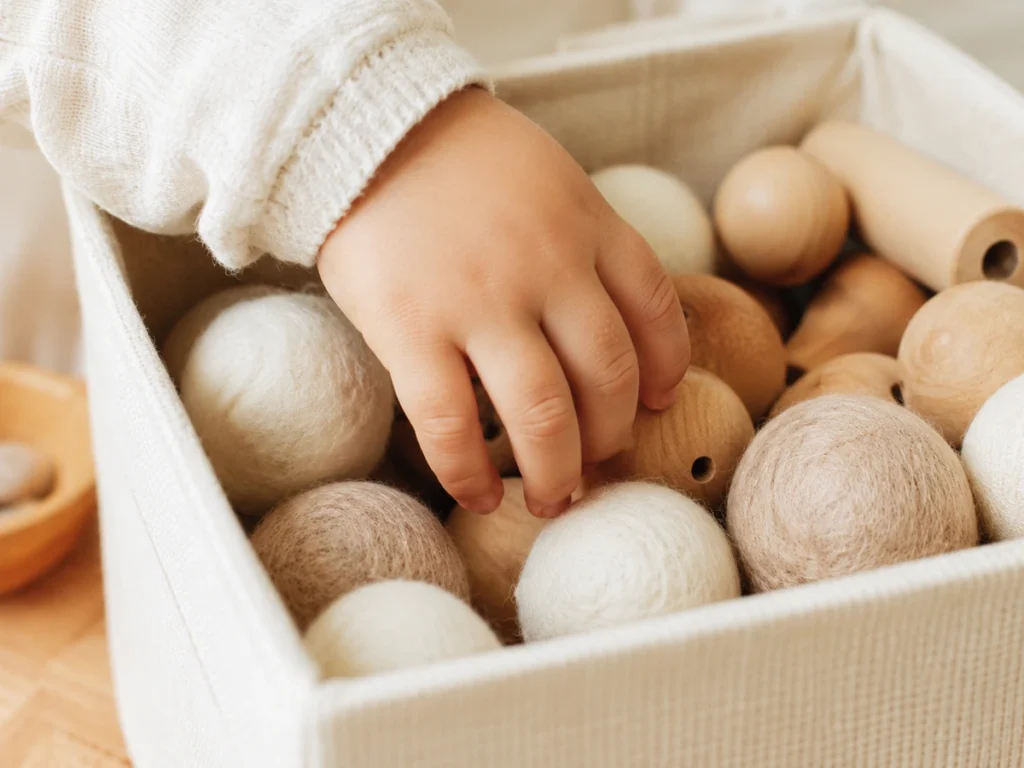
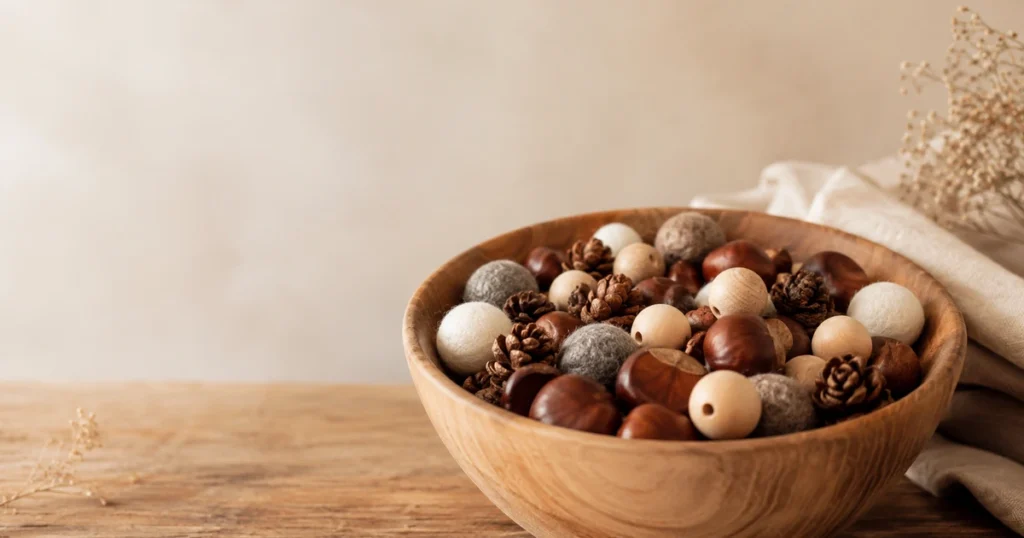
- Touch box: Shoebox with a hole, filled with chestnuts, wooden beads, pine cones, wool balls. Child puts their hand in and names what they feel.
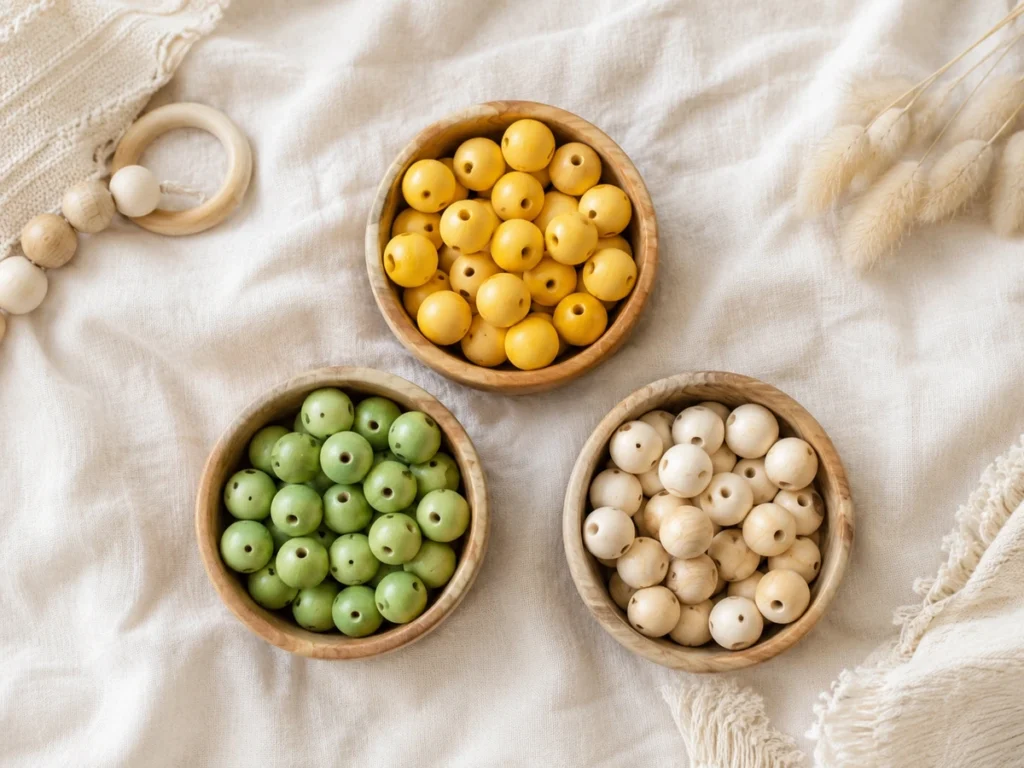
- Sorting bowls: Three wooden bowls, a mix of wooden beads in three colours or sizes. Children sort them out.
- Sound pairs game: Six film canisters, each pair filled with rice, wooden beads, sand, lentils. Children match pairs by sound.
- Sensory path: Stations on the floor made from wool rug, sand pouches, pine cones, wood slices. Walk barefoot along it.
- Water scooping: Bowl of water, small wooden beads floating — fish them out with a ladle.
- Bead tweezers: Pick up small wooden beads with tweezers and place them in egg box compartments.
- Nature mandala: Create a circular pattern on the table or floor using stones, chestnuts and wooden beads.
- Smell jars: Six jam jars filled with lavender, coffee, cinnamon, pine twig, apple, lemon. Sniff and name them.
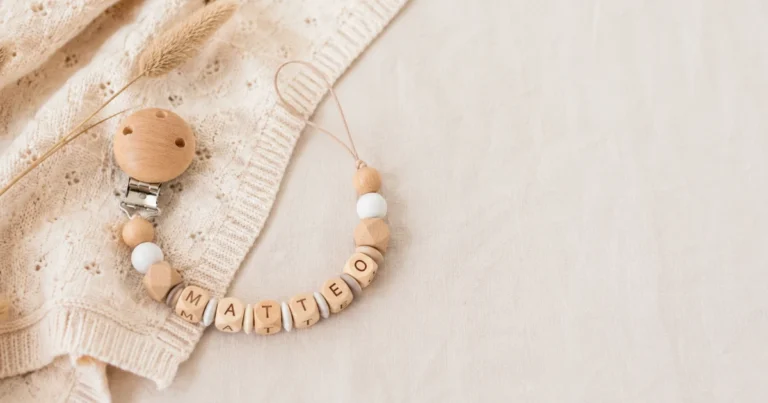
- Threading wooden beads: Thread chunky wooden beads on string — builds concentration and fine motor skills.
- Peg clipping: Clip wooden pegs around the edge of a bowl — strengthens thumb and index finger.
5. Safety & hygiene — what you need to know
Natural material doesn’t automatically mean ‘safe’. Three rules apply especially in baby rooms:
- Size check: Anything under 32 mm diameter can be swallowed by children under 3. Use 20 mm beads or larger for under-3s — or keep it under close supervision.
- Safety testing: Home-collected pine cones must be baked in an oven at 100°C for 30 minutes before use (to kill insects). Bought materials must comply with EN 71-3.
- Cleaning: Wooden beads and wood slices can be wiped with a damp cloth. For heavier soiling, a quick rinse under running water then dry well (otherwise wood swells).
FAQ
What age can children start sensory play with natural materials?
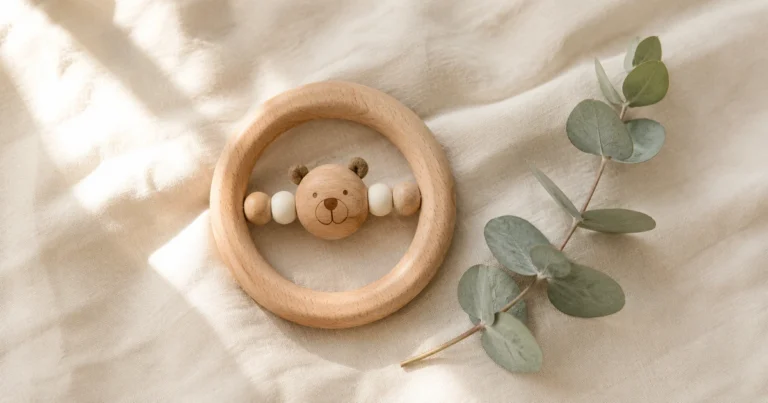
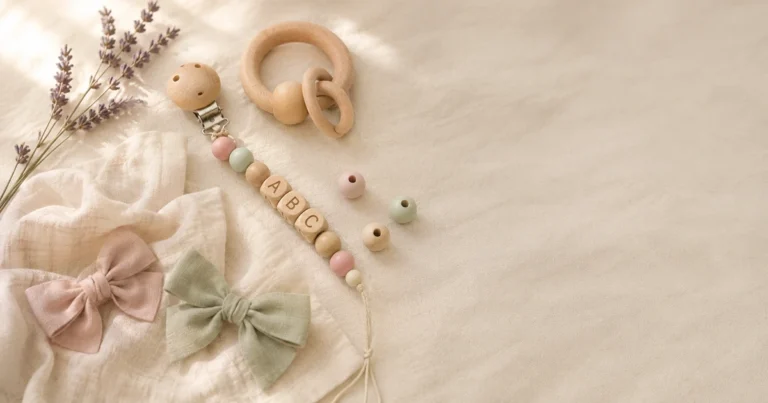
From birth — with supervision. Babies explore wool cloths and wooden rings by touch. From 6 months, larger wooden beads and teething rings are fine. From 3 years, the full range of materials is open.
Are natural materials enough on their own?
Absolutely, for the first three years. Later you can add books, coloured pencils and simple tools. Battery-powered toys with light shows can stay gone for good.
Where do I find good natural materials in bulk?
Chestnuts and pine cones are best collected yourself. Wooden beads, wooden rings and shaker sets are available in the Eduplay range in nursery sizes.
For nurseries & baby rooms: Our natural material sets are EN 71-3 tested, available in bulk packaging and on invoice terms with 14 days to pay. Ask about nursery bundles.