
1. Why letter beads work better than ABC books
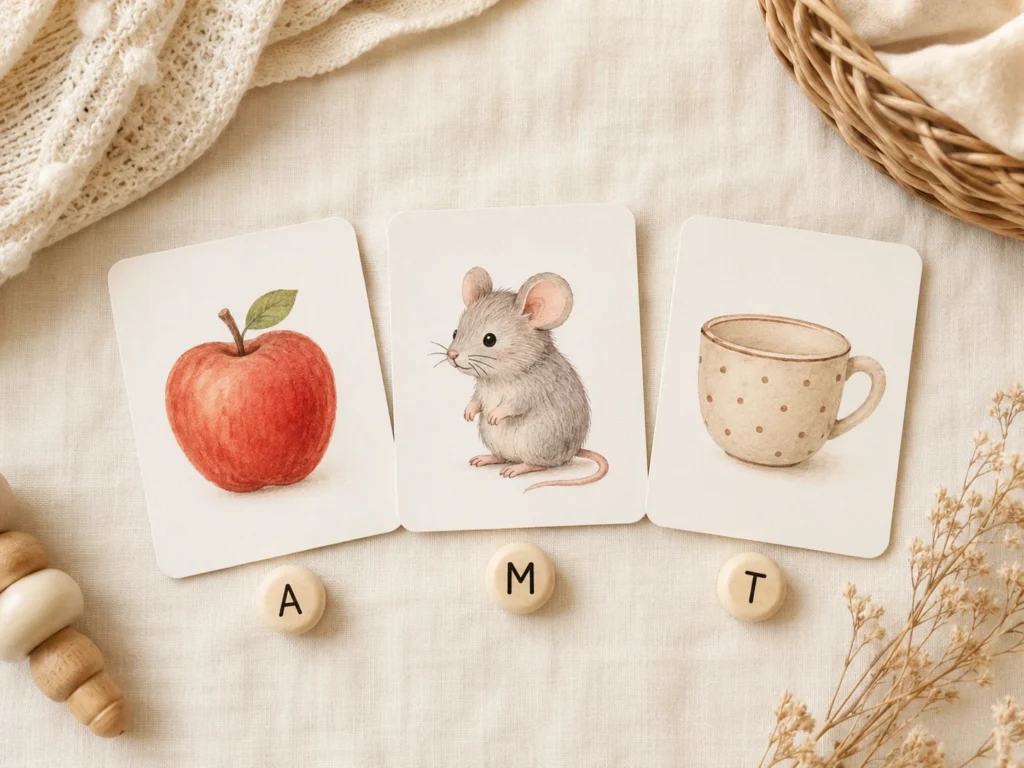
Letters on paper are abstract. They don’t move, they have no weight, you can’t hold them in your hand. For pre-school children, that means: they have to take a relatively big cognitive leap to understand ‘A’ as a symbol that stands for a sound.
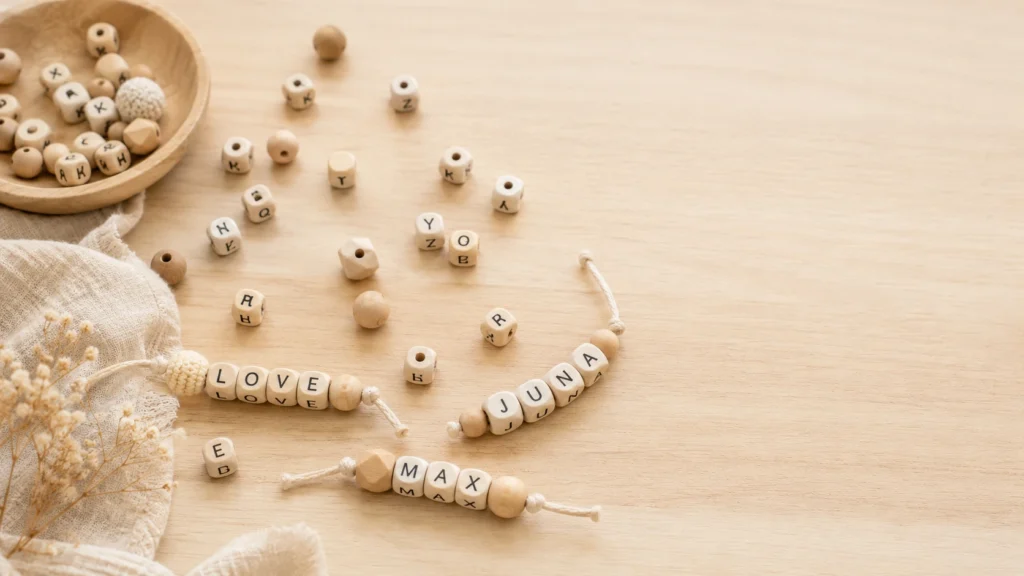
Letter beads flip this on its head. Your child holds the ‘A’ in their hand before they even know it’s called A. They can turn it around, sort it, combine it with other beads. They experience the letter shape physically — and this hands-on experience anchors knowledge far more deeply than any PowerPoint presentation in pre-school.
Three learning benefits make letter beads so valuable:
- Multisensory: Sight, touch and (when threading) even hearing are engaged at the same time.
- Child-led: Your child decides whether today they’re spelling their sister’s name or threading ‘Mummy’.
- Repeatable: Unlike pen on paper, beads can be rearranged endlessly — mistakes don’t cause frustration.
2. What age are letter beads suitable for?
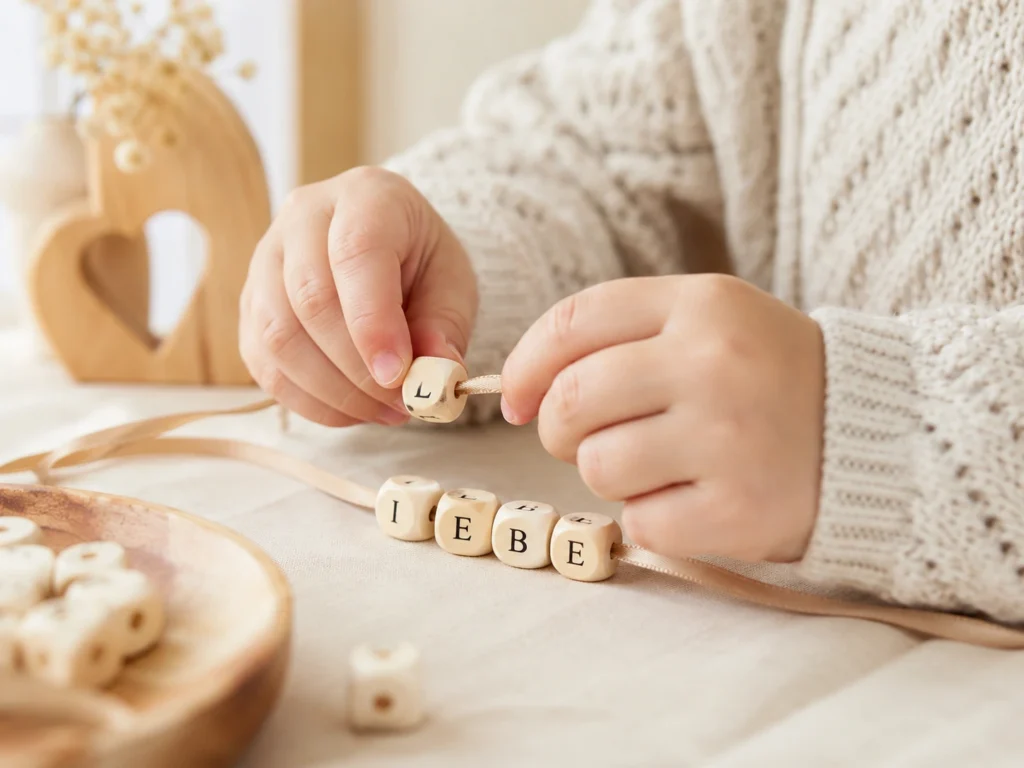
Here’s a rough guide — though children rarely follow the textbook exactly:
| Age | What works? | What to watch for? |
|---|---|---|
| 1–2 years | Exploring letter beads by touch, sorting into bowls | Supervision only — choking hazard |
| 2–3 years | Naming first letters (A, M, O), recognising their name’s first letter | Use beads 10 mm and larger |
| 3–4 years | Threading their own name (with a template), first sound analysis | Show the name, don’t quiz them |
| 4–5 years | Spelling Mummy, Daddy, Grandma — short words from initial sounds | Be patient and use plenty of praise |
| 5–6 years | Threading their own sentences, first reading texts | Preparing for school transition |
3. Five stages of letter bead language development
In practice, this approach has proved effective — you don’t have to work through every stage, but the sequence helps as a guide:
- Recognition: Your child holds an A in their hand and you say: ‘That’s an A.’ That’s all. Repeat this over weeks.
- Discrimination: Place A and O in front of your child. ‘Which one is the A?’ As they practise consistently, add more letters.
- Matching: First-sound games: Which letter is for ‘apple’? Your child finds the matching bead.
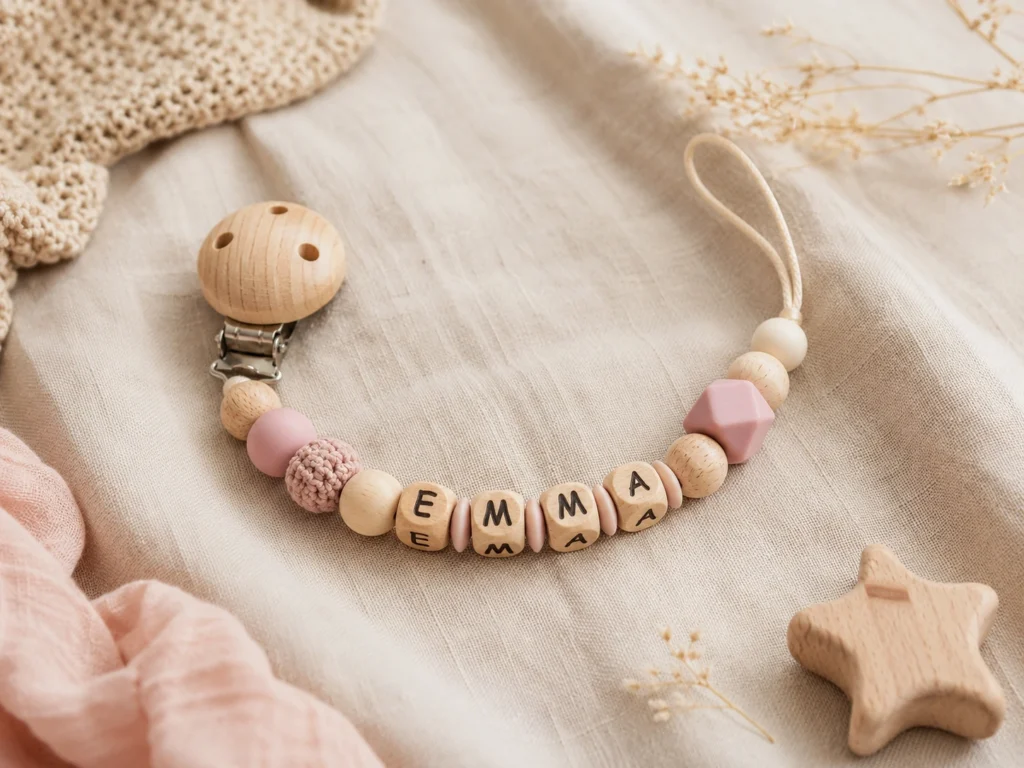
- Building: Building their own name from a template, then ‘Mummy’, ‘Daddy’. First copying, then finding letters independently.
- Writing: Moving to pencil — their hand already knows the letter shape from threading practice.
4. Twelve hands-on play ideas for nursery and home
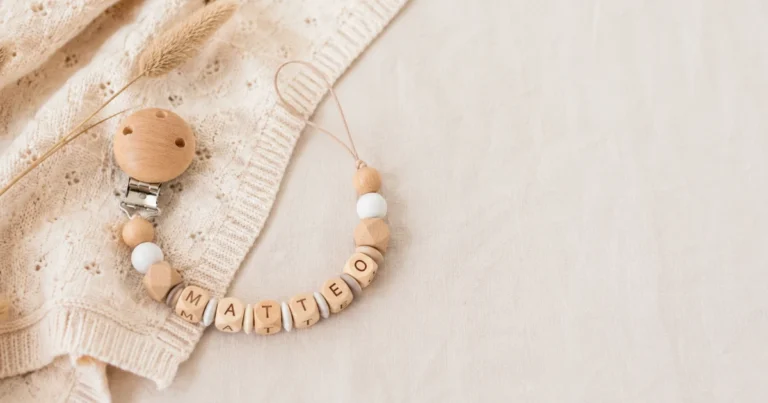
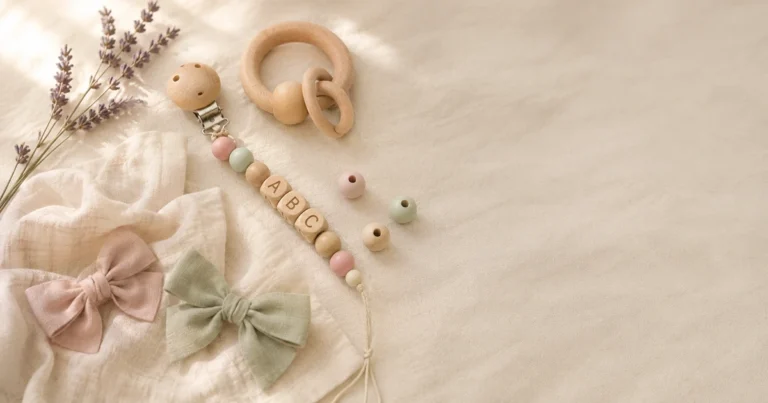
- Name dummy chain: Thread the baby’s name with letter beads. A brilliant way for older siblings to help.
- Letter pairs game: Two beads per letter. Hide them face-down on a table — find the matching pairs.
- First-sound sorting: Pictures of apple, mouse, cup. Which letter goes with each?
- Guess the name: Thread a staff member’s name on a string — who is it?
- Letter treasure hunt: Hide ten letter beads around the room — find them and place them in the right order on the table.
- Word of the week: Every Monday, the group spells out a new ‘word of the week’ together.
- Birthday name: On their birthday, the child spells their name with beads — as table decoration.
- Letter yoga: Draw a letter and shape your body to match it (A = legs wide apart, M = two crouches side by side).
- Name label for beds: Who sleeps in which bed? Mark it with letter beads.
- Treasure hunt: Hide the letters ‘G O L D’ and search for them.
- DIY name dummy chain: For newborns in the group — all children help thread the name.
- Whispered secret word: You whisper a short word to a child, they spell it with beads — the others guess.
5. Practical tips for early years educators and childminders
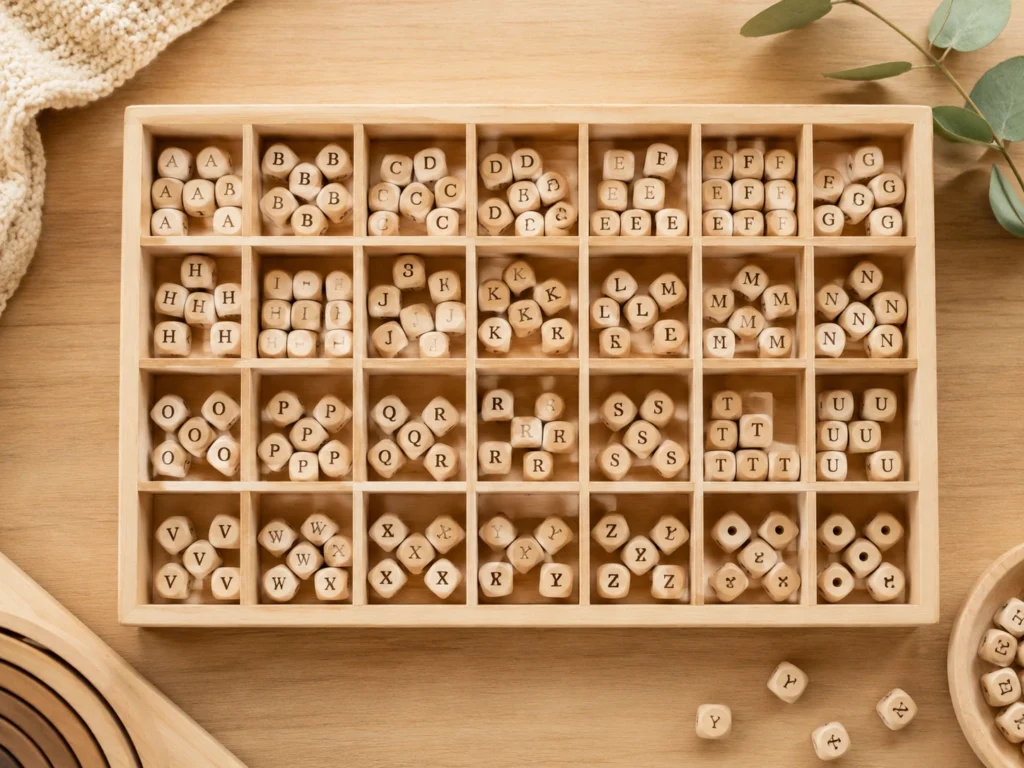
- Invest in a larger set: At least 5 beads per vowel, at least 2 per consonant. This covers most names in a group.
- Clear organisation: Use a flat box with compartments (an egg box works too) where each letter has its own spot. Otherwise finding letters takes forever.
- Name templates: Laminate a few cards with common names from your group — children copy first, then find letters independently later.
- Don’t push it: Even if a child can already spell their name, don’t push them every day. Letter beads should be fun, not a chore.
- Link to craft activities: Make a named teething ring for a new sibling — educationally valuable and a gift with real meaning.
Find letter beads in EN-71-3 quality as sets or individual letters. For complete name craft kits, we stock ready-made boxes.
FAQ
Are letter beads enough to learn reading?
No, they’re one piece of the puzzle. Learning to read is a process that needs formal teaching at school. But letter beads lay the foundation: a child who knows the shape and sound of 15 letters before starting school has a real head start.
Should I use print or cursive letters?
Print letters — they’re what children see in books, on signs, and in everyday life. Cursive comes later at school, when they have the motor skills for it.
What if the child isn’t interested?
Then don’t. It’s fine to leave it alone. Letter beads don’t become valuable by forcing them. Better to quietly place them in the sensory corner and wait — often the spark comes naturally later on.
For nurseries & childcare: Letter bead sets in group sizes, EN-71-3 certified, available on invoice terms with 14 days to pay. Ask about sets for your setting.