
1. Why Natural Materials Are the Best Craft Materials
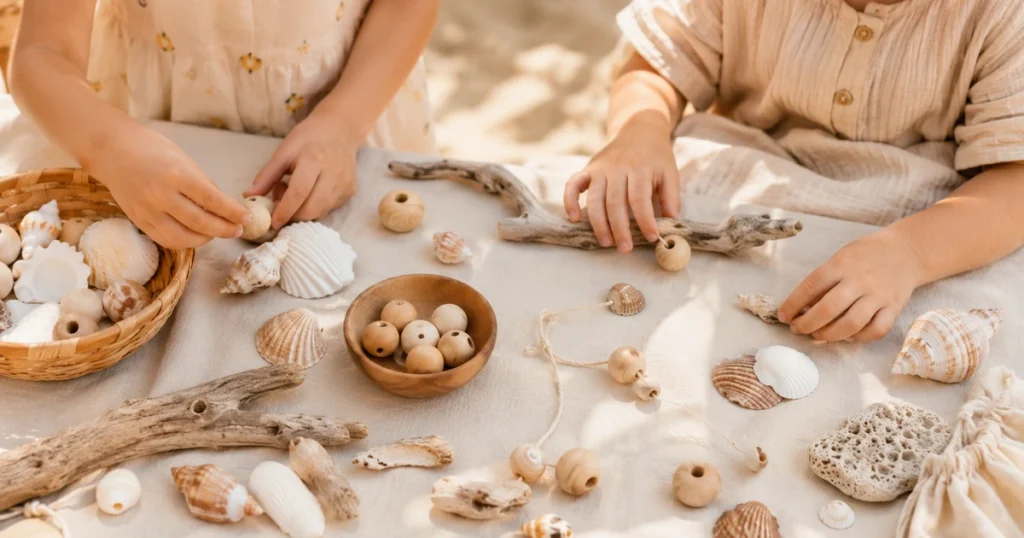
Natural materials aren’t just free — they also have an educational depth that no plastic can match. When a child finds a shell on the beach, distinguishes between a smooth shell and a rough one, and decides which suits which project, they’re learning perception, sorting and assessment — not from a book, but hands-on.
Then there’s the emotional element: a handmade mobile from driftwood and wooden beads will forever remind you of that holiday. A necklace made from shells your child found themselves is worth more than any shop-bought piece of jewellery. Natural materials carry stories — and that’s what memories are made of.
Finally, natural materials are sustainable. They use no resources, don’t need to be manufactured and find their way back into the cycle when the project is eventually discarded. Crafting with natural materials is environmental education at its best.
2. What to Collect — and What to Leave Behind
Not everything in nature is suitable for crafting. Here’s a clear list.
Do Collect These
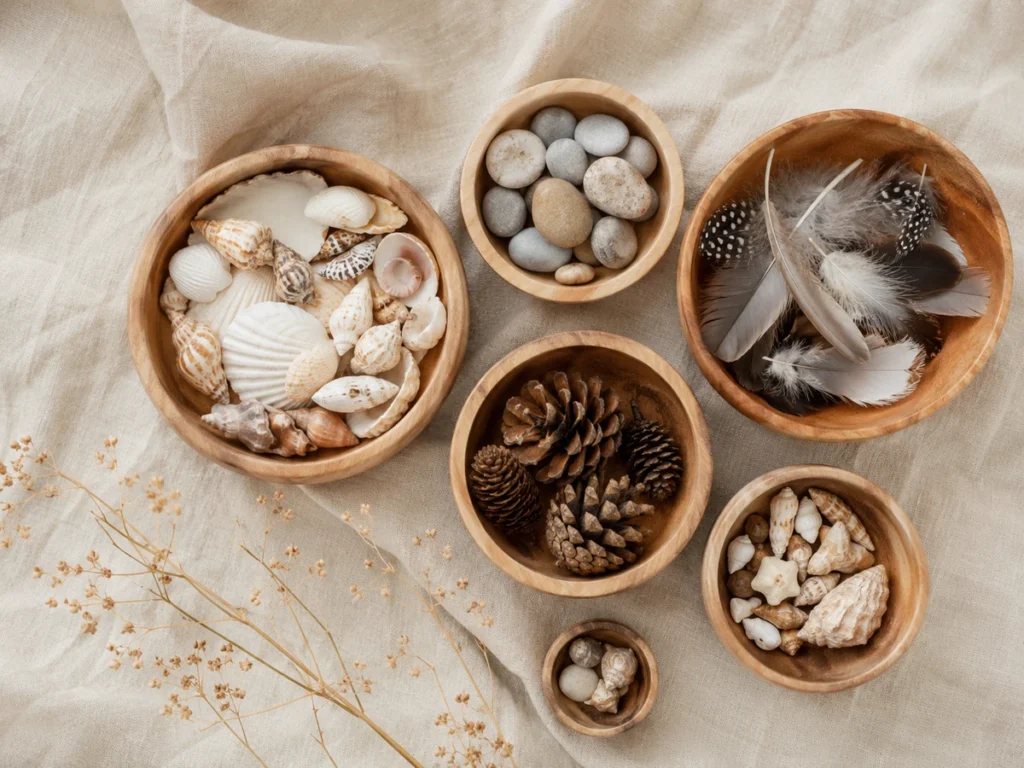
- Smooth stones and pebbles in different colours — perfect for painting or as weights for mobiles.
- Shells and snail shells — from delicate mussels to large heart shells. Choose clean, undamaged pieces.
- Driftwood — pieces of wood washed ashore by the sea or river, smoothed and naturally bleached.
- Pine cones, acorns and conkers (more of an autumn thing, but possible in late summer).
- Feathers — only clean, well-preserved feathers (note: don’t collect feathers from birds of prey).
- Dried flowers and grasses — plant parts that are already dried.
Don’t Collect These
- Protected plants (e.g. Edelweiss, orchids — varies by region).
- Materials from nature reserves — collection is often prohibited altogether.
- Fresh animal droppings, dead animals — for hygiene and safety reasons.
- Glass shards, rubbish — even if they look nice.
3. How to Prepare and Clean Natural Materials Properly
Before you start crafting with collected materials, they need to be clean and dry. Here are the key steps.
Shells: Rinse with clean water, then soak for 30 minutes in a bowl of water with a splash of vinegar. Afterwards, gently brush with an old toothbrush and leave to dry on a cloth.
Stones: Wash with water and washing-up liquid, then dry thoroughly. If you want to intensify the colour, you can spray them with clear varnish.
Driftwood: Leave to dry in the sun for several days. If needed, smooth with sandpaper.
Feathers: Rinse with a little water and a drop of washing-up liquid, gently reshape and leave to dry.
Dried Flowers: Air-dry for two to three weeks before crafting — best done upside down in a dark room.
4. Seven Summer Craft Projects with Instructions
4.1 Shell Mobile for the Children’s Room
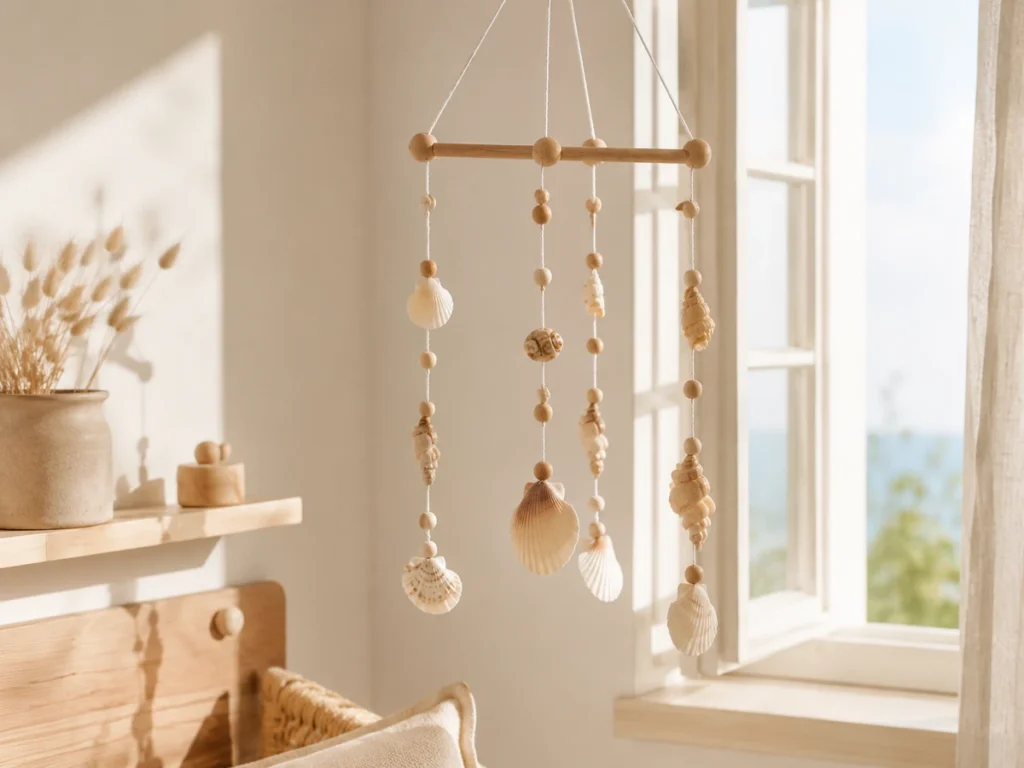
A piece of driftwood serves as the hanging structure. Attach three to five strings with shells and wooden beads threaded alternately on them. Craft time: 45 minutes. Materials from our Beads Category.
4.2 Pebble Good-Luck Charm with Wooden Bead
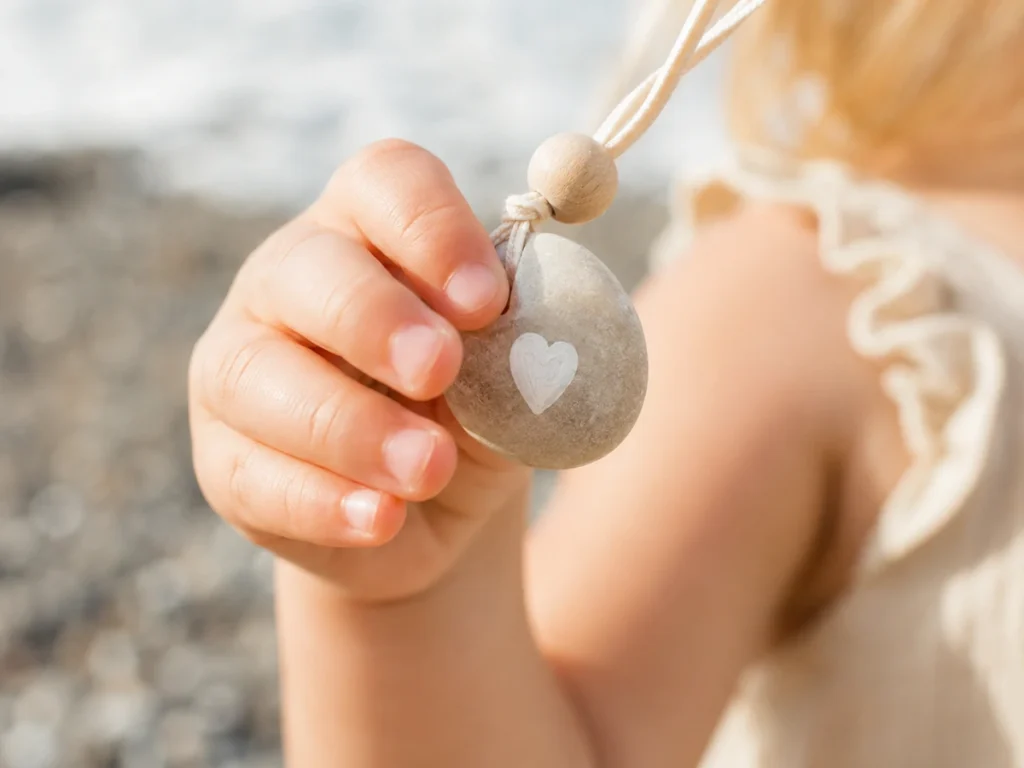
Paint a flat pebble (smiley face, small animal), then turn it into a hanging decoration with a small wooden bead and string. Craft time: 20 minutes.
4.3 Feather Mandala
Arrange feathers, small wooden beads and dried flowers into a circular mandala on a piece of card or wood, then fix in place with craft glue. Craft time: 30 minutes.
4.4 Driftwood Picture Frame
Join four pieces of driftwood to form a frame, decorate with wooden beads and add a holiday photo. Craft time: 60 minutes, from age 8.
4.5 Nature Necklace for Your Pocket
A string with small snail shells, wooden beads and a stone as a pendant. Take it with you and add to it on your next collecting trip. Craft time: 25 minutes.
4.6 Sand Jar with Wooden Bead Lid
Fill a small jar with sand from your holiday and decorate the lid with wooden beads. A memory that won’t fade. Craft time: 20 minutes.
4.7 Hiking Stick with Wooden Beads
Clean a straight stick, smooth it with sandpaper and decorate it with wooden beads. It’ll accompany your child on the next hike. Craft time: 40 minutes.
5. Beach and Hiking Crafts — the Mobile Craft Box
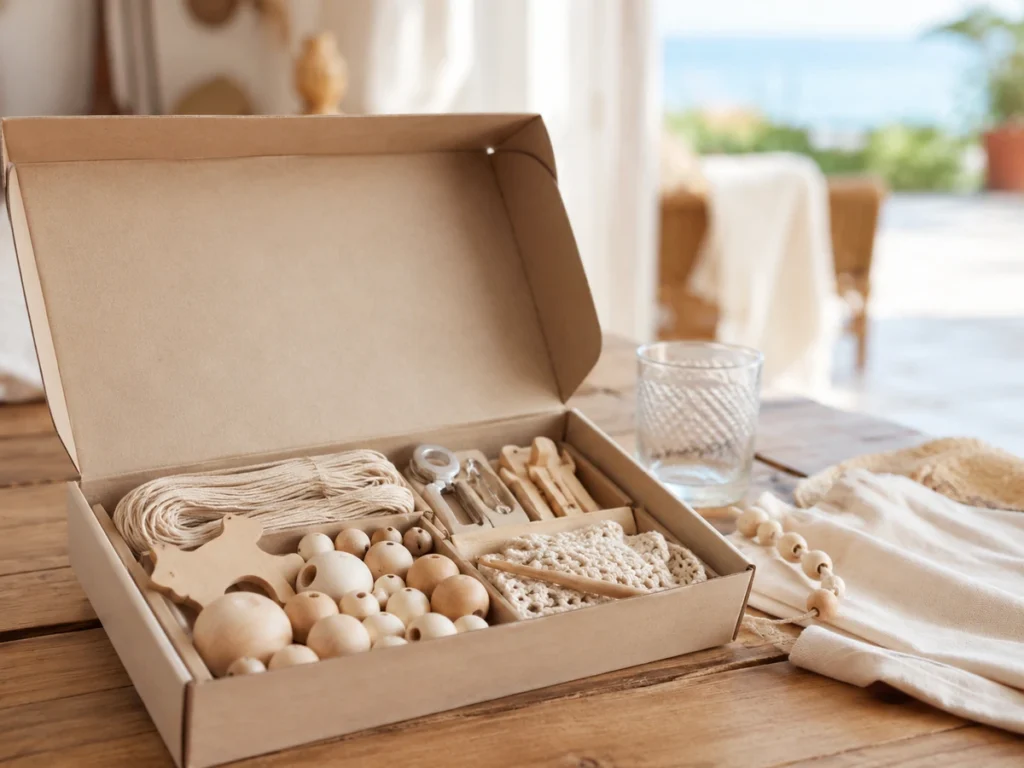
If you want to craft spontaneously on holiday, pack a small travel box with the following:
- A bag of sorted wooden beads (various sizes)
- Organic cotton string, roughly 5 metres
- Child-safe scissors
- Small paintbrush and one or two acrylic pens
- A small tube of glue
- A fabric pouch for collecting
It all fits in a shoebox and can be pulled out of the boot anytime. A rainy afternoon in a holiday home becomes a craft workshop, and a beach day gets a creative highlight.
FAQ
Are natural materials safe for small children?
Yes, as long as they’re clean and have no sharp edges. Always stay within reach of children under three.
How do you stop crafted pieces from getting mouldy?
Dry materials thoroughly and store them in a dry place. For moisture-prone materials (acorns), optionally seal with clear varnish.
Which wooden beads work best for natural material projects?
Natural wood tones, unpolished beads and hexagonal beads match shells and driftwood best visually.
Is it basically okay to collect shells on the beach?
In the UK usually yes, but some restrictions may apply in nature reserves — check first.
How long do crafts made with natural materials last?
Many years with proper storage. Keeping them dry is key.
Craft with Nature
Browse our Beads Category to combine with natural materials. Find complete craft ideas in Craft Sets. More inspiration in our article on Making Teething Rings.