


Where do things stand in 2026 with care for the youngest? We’ve compiled the latest official figures on under-3s care in Germany and explain what they mean for day-to-day nursery life. The data is current as of 1 March 2025 (published in October 2025) – these are the most recent figures available.
Key figures at a glance
- 37.8% Provision rate for under-3s (2024: 37.4%)
- 801,300 under-3s in care – down 47,100 or 5.6% year-on-year
- 54.9% rate in the east (including Berlin) versus 34.5% in the west
- Approximately 430,000 missing early years places and 114,000 missing specialist staff (Bertelsmann Foundation, 2023)
1. Provision rate 37.8 per cent – yet fewer children
As of 1 March 2025, the provision rate for under-3s according to the German Federal Statistical Office was 37.8 per cent – slightly higher than a year earlier (37.4 per cent). At first glance, this sounds like progress. In fact, the absolute number of children in care has fallen: by approximately 47,100 to 801,300, a drop of 5.6 per cent.
This apparent contradiction is explained by demographics. Because birth rates in recent years have fallen, there are fewer young children overall. The number of children in care is declining – but the total number of children is falling even faster. Mathematically, the rate goes up, even though fewer children are actually in nurseries or with childminders.
2. East and west: a gap of just over 20 percentage points
The biggest difference continues to be between east and west. In the eastern states (including Berlin), more than one in two young children are in care, while in the west, it’s just over one in three.
Under-3s provision rate 2025 by regionEast (including Berlin)54.9%Germany37.8%West34.5%Source: German Federal Statistical Office, 1 March 2025
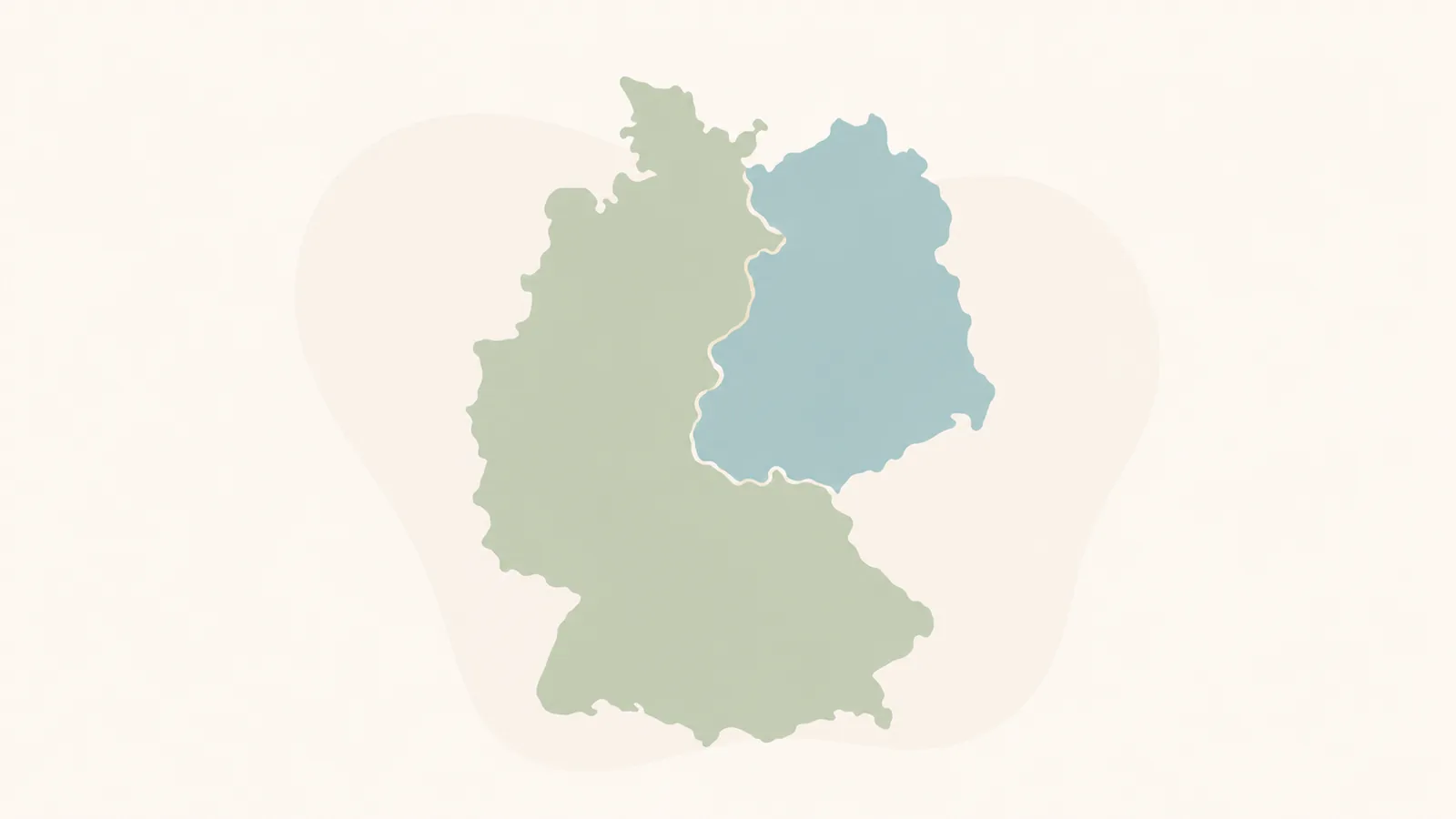
| Region | Under-3s provision rate 2025 |
|---|---|
| Eastern Germany (including Berlin) | 54.9% |
| Germany overall | 37.8% |
| Western Germany | 34.5% |
The reasons are historical and structural: in the east, nursery care has been more widespread and better developed for decades, whilst in the west, expansion started later and is more dependent on what’s available locally.
3. What families want versus what’s available: the care gap
Parents’ need for care is significantly higher than what’s actually available locally. The German Youth Institute surveys parents’ care needs annually; they consistently come out higher than the actual provision rate (methodology: Early Childhood Education Systems Monitor). The Bertelsmann Foundation has quantified the gap: nationwide, approximately 430,000 early years places are missing – concentrated clearly in the west.
4. Staff shortages: the real bottleneck
Space is tight, but staffing is even tighter. According to the Bertelsmann Foundation’s Skills Radar (2023), approximately 114,000 specialist staff are missing across the country. Even if declining child numbers ease the situation mathematically, the quality question remains: where staff are scarce, care quality suffers first and foremost for the youngest. For children from disadvantaged backgrounds, researchers even recommend significantly better staffing levels – by a factor of 1.4.
In practice, this means: more children per adult, less time for each individual child, and high pressure on teams. This is where success or failure in early childhood education is decided.

5. What the figures mean for nursery practice
Tight places and missing staff mean in practice: daily group activities must run with fewer hands. Materials that are safe, durable and ready to use without much preparation make a real difference – they can be used flexibly in different situations and withstand the demanding nursery environment. We pay close attention to these qualities when selecting our under-3s and nursery equipment, because in a stretched staffing situation, they make all the difference.
Frequently asked questions
What is the under-3s provision rate in 2025?
It stands at 37.8 per cent (as of 1 March 2025) – a slight increase on 37.4 per cent the previous year.
How big is the difference between east and west?
In the east (including Berlin), 54.9 per cent of under-3s are in care, compared to 34.5 per cent in the west – a gap of just over 20 percentage points.
Why are child numbers falling but the provision rate rising?
Because the overall number of under-3s is falling faster due to lower birth rates than the number of children in care.
How many early years places and staff are missing?
According to Bertelsmann Foundation calculations (2023), approximately 430,000 places and 114,000 specialist staff.
Sources
- German Federal Statistical Office (Destatis), Early years care, 1 March 2025 – Press release, 31 October 2025
- Bertelsmann Foundation, Early years expansion and specialist staff through 2030 (November 2023) – Study
- Der Paritätische, Skills Radar summary – Statement
- Early Childhood Education Systems Monitor (German Youth Institute needs survey) – Methodology & data
Tip: For under-3s groups, the rule is: a few robust, versatile materials beat lots of specialist items – it saves time, money and stress when staffing is tight.
Get involved: Early Years Equipment Barometer 2026
Do you work in a nursery or early years setting? Then help us with your experience – anonymously, in around 5 minutes. We’ll publish the results freely.