
1. What makes a good teether?
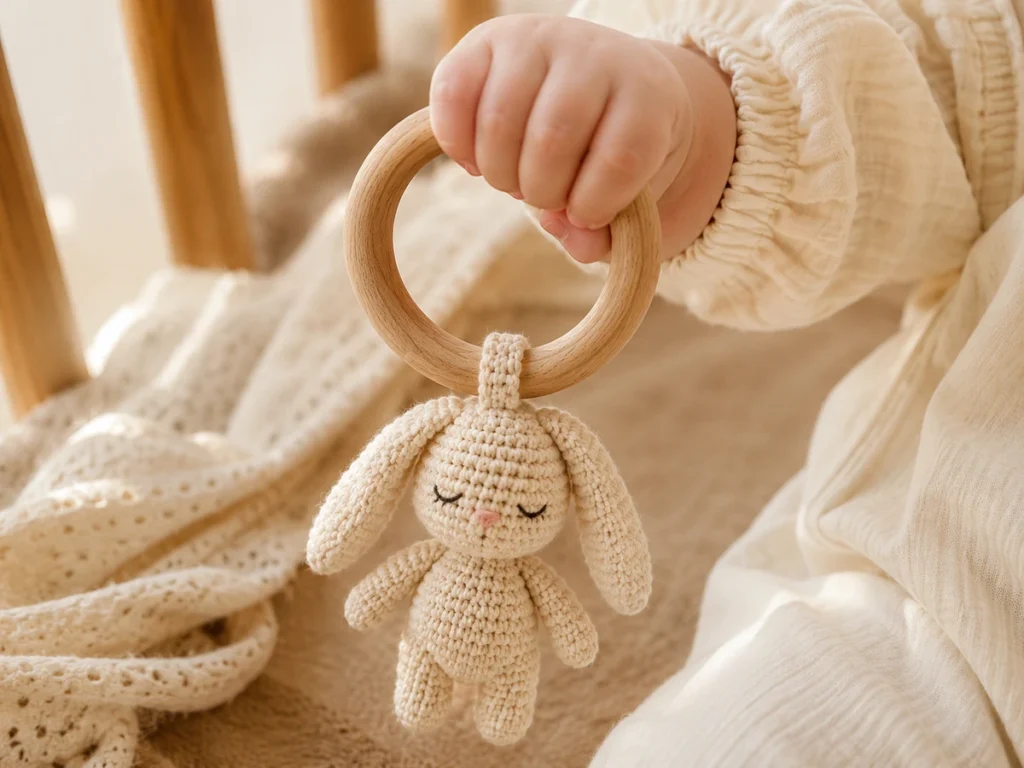
A teether isn’t a decoration — it’s a tool. Babies use it to learn what grasping means. They touch, squeeze, twist, pull — and above all, they put it in their mouth. A good teether is light enough for small hands, robust enough for lots of drool, and interesting enough that your baby keeps coming back to it.
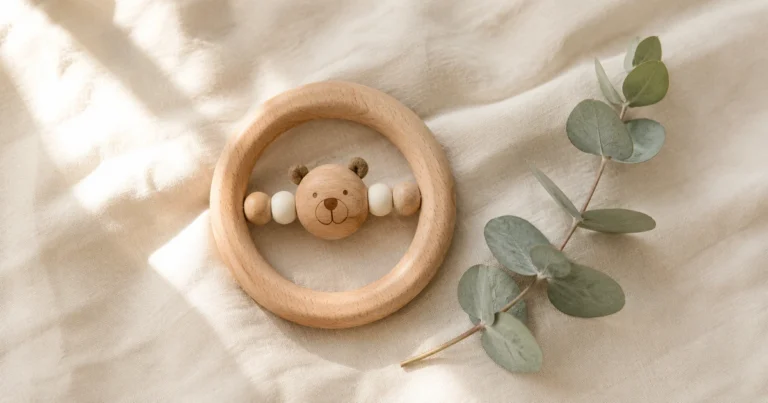
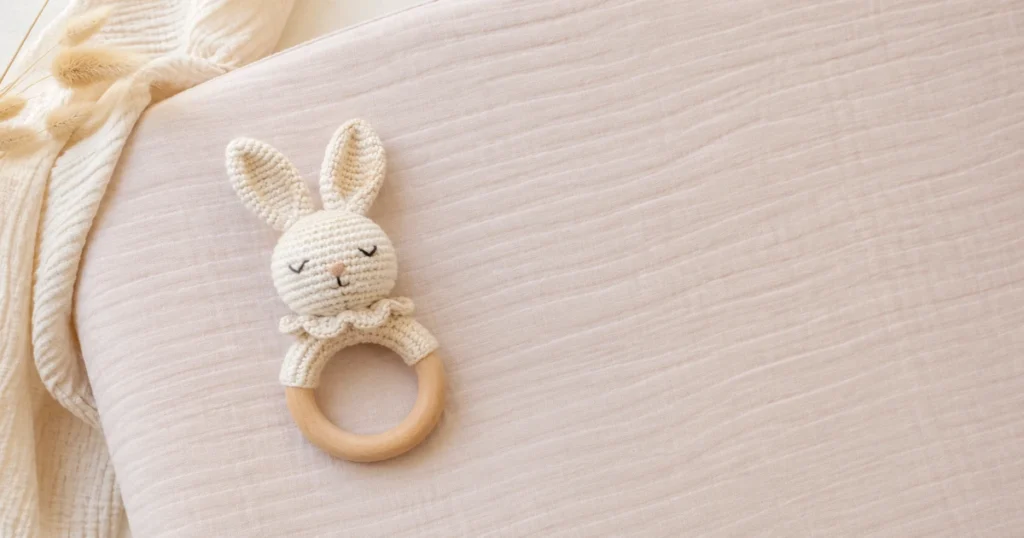
Wood is a wonderful material for this. It feels warm in your hand, has a pleasant surface, and makes a quiet, satisfying sound when you bite into it. Combined with a soft crocheted animal, you get the best of both worlds: firm and soft textures, wood and cotton, smooth and cuddly.
2. Materials and choosing your crocheted animal
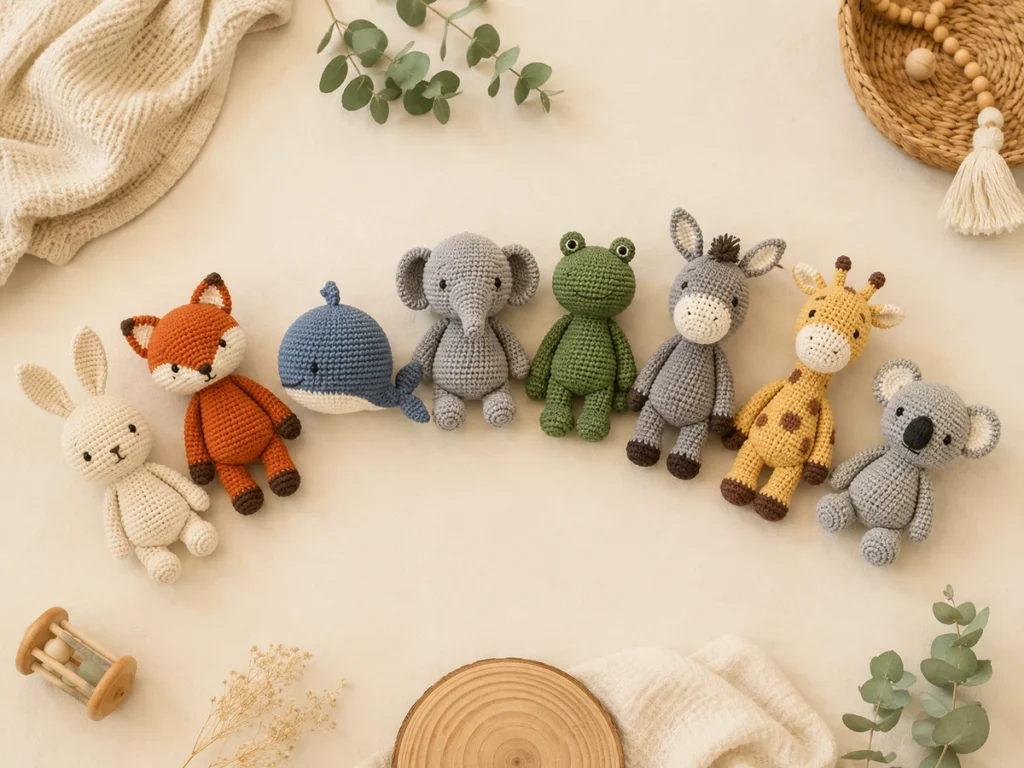
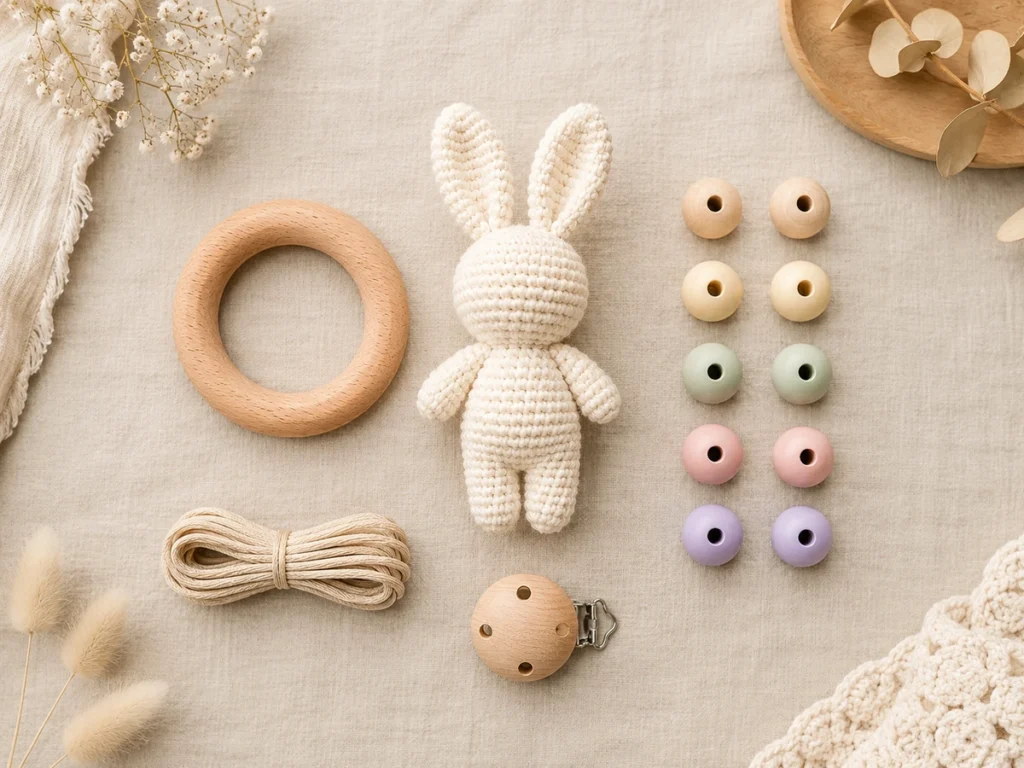
Here’s what you’ll need:
- A wooden ring, approximately 65 mm to 75 mm in diameter (easy to grip)
- A small crocheted animal made from 100% cotton to ÖKO-TEX Standard 100
- Six to ten wooden beads in various sizes
- A tear-resistant polyester or satin cord (approximately 25 cm)
- A safety bead for the hidden knot
- Optional: letter beads for your baby’s name
- Scissors and a lighter
When choosing your crocheted animal: rabbit, fox, elephant, whale, frog — anything works. The key is picking an animal that isn’t too heavy. A teether should rest comfortably in a baby’s hand. Anything too heavy will just frustrate them.
3. Safety: what you need to know
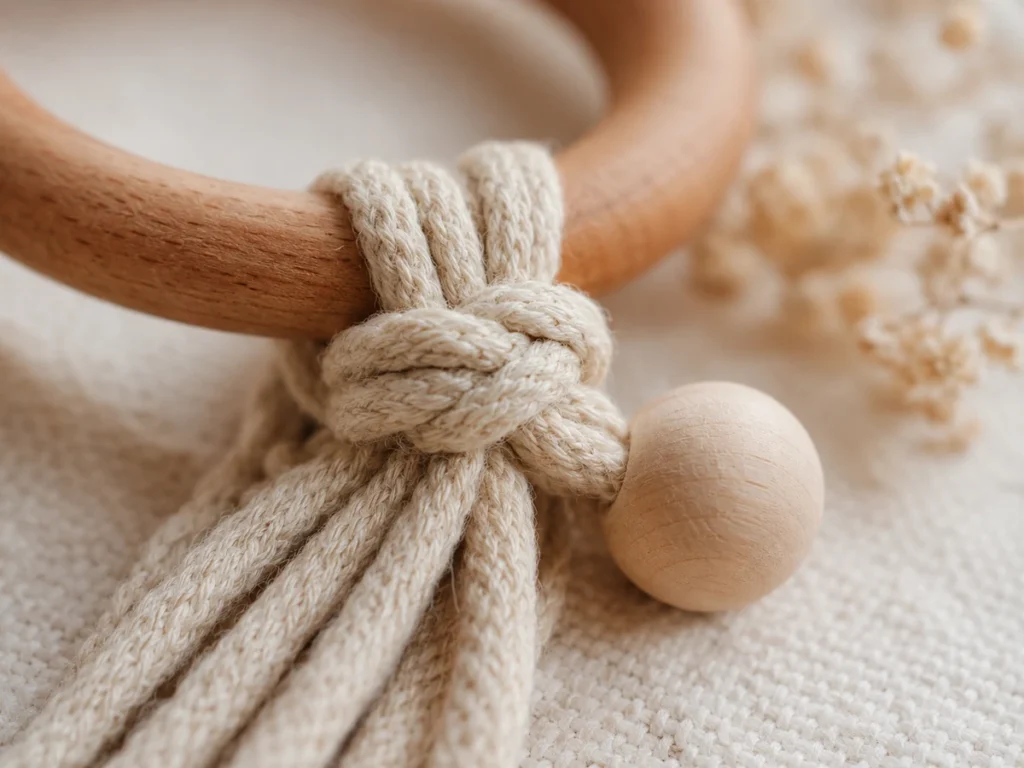
Teethers go in mouths. That’s not just possible — it’s the whole point. That’s why the same safety standards apply as for dummy chains: all materials should be tested to DIN EN 71-3, which means they’re drool-resistant, sweat-resistant, free from harmful substances, and colour-fast.
The crocheted animal must be made from pure cotton with no synthetic fibres, ideally ÖKO-TEX-certified. Make sure the stuffing is firmly sewn and there are no loose bits. Button eyes are a no-go — stitched or crocheted eyes are the safe choice.
The cord must be tear-resistant. Before giving or playing, test every knot — best with a firm tug. If anything feels loose, tie it again.
4. Step-by-step guide
Step 1: Cut about 25 cm of cord and attach one end securely to the wooden ring. Loop the cord through the ring and pull tight.
Step 2: Now thread in this order: safety bead (with the knot tucked inside), then two or three wooden beads of different sizes.
Step 3: Next comes the crocheted animal. Most crocheted animals have a small loop or opening you can thread the cord through. If yours doesn’t, carefully sew a small loop to the side.
Step 4: After the animal, thread two or three more beads — ideally in the same colours as before, but in reverse order. This gives you symmetry.
Step 5: Lead the cord back to the wooden ring, tie it securely, trim, and seal the end. Your teether is now a closed loop, with the animal hanging in the middle.
5. Lovely variations
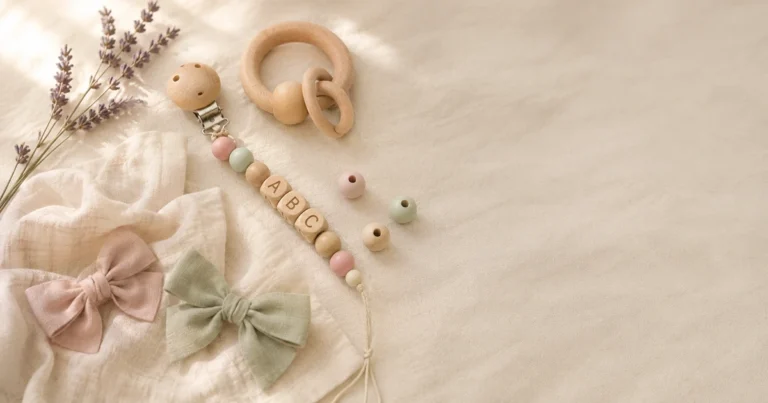
Instead of one wooden ring, you could use two — a larger one as the main ring and a smaller one as a charm. This gives your baby more to grab.
Another variation: crocheted animal in the middle, a small wooden half-ring on each side. These half-rings are wonderful for teething — they fit better with those first teeth.
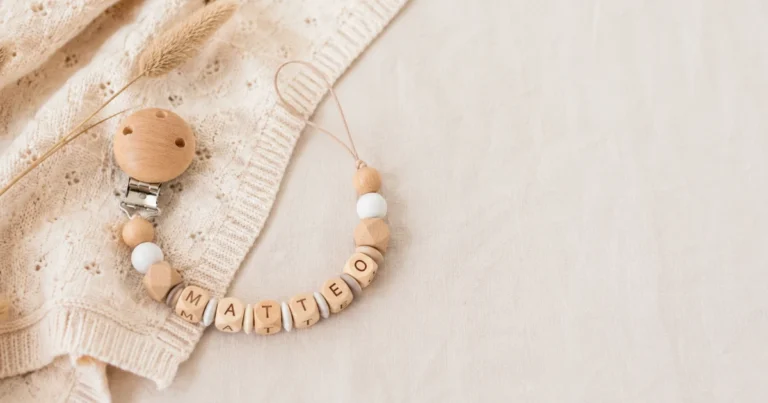
If you want to add your baby’s name, letter beads go right before the animal. That way, when your baby holds the animal, they can read their name.
FAQ
From what age is the teether suitable?
A wooden teether usually becomes interesting from around five to eight months. Before that, softer teethers made from fabric or plush are better. For the first months, a crochet-based teether works better.
How do I clean the teether?
Wipe with a damp cloth; for heavier soiling, rinse briefly under running water. Wash the crocheted animal separately by hand if needed. Then dry thoroughly.
What’s the right wooden ring diameter?
65 to 75 mm is ideal — large enough for you to get your adult fingers through it, and small enough for your baby to wrap their hand around.
Are crocheted animals really safe for babies?
Yes, if they’re made from pure cotton to ÖKO-TEX Standard 100 and have no loose bits. Look for stitched eyes and firm stuffing.
Can the teether also hang in the pram?
Yes, with additional securing, but only if your baby is older than three months. Larger wooden pieces pose a bumping risk for very young babies.
Ready for your first teether project?
At Kiki-Ena, you’ll find finished craft kits with everything included, or individual components to mix and match. And if you need more inspiration, read our Teether Guide with 5 Craft Kit Ideas.