
1. An Overview of the Materials
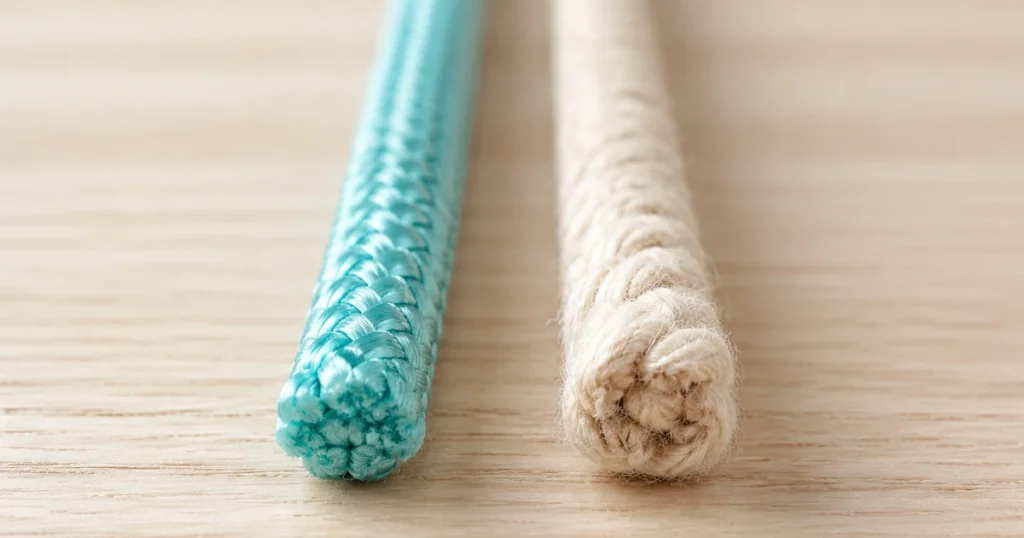
Polyester cord is a synthetic fibre made from polyethylene terephthalate (PET) — the same plastic used in drinking bottles. For crafting, the fibre is spun into fine filaments and then twisted multiple times. The standard thickness for dummy chains is 1 to 1.2 millimetres. Polyester cord is UV-stable, water-repellent and extremely tear-resistant — properties that originally made it attractive for industrial use (sails, geotextiles, safety harnesses).
Cotton string is made from natural cotton fibres. Individual fibres are spun into yarns, which are then braided or twisted into a multi-strand cord. The standard thickness for craft materials is between 1.5 and 2 millimetres. Cotton string is breathable, skin-friendly and compostable — though it’s also absorbent, less tear-resistant and more prone to wear.
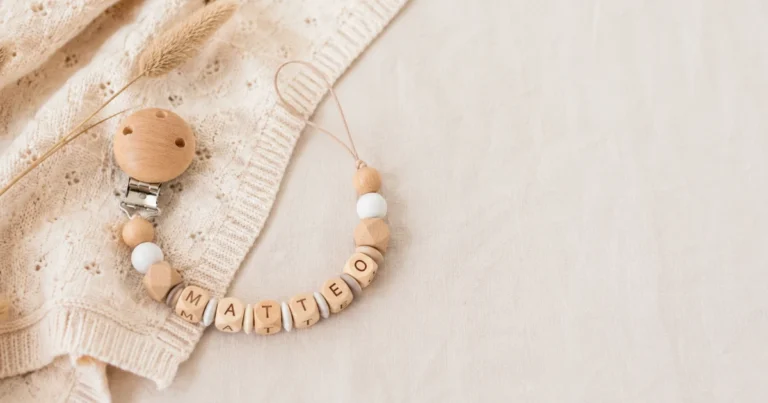
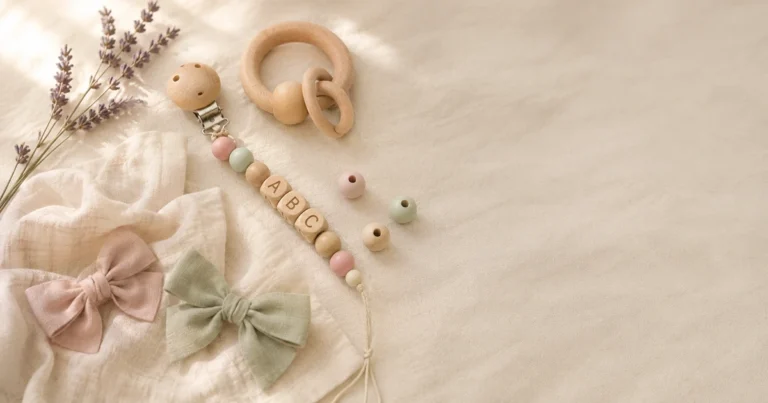
In our dummy chain accessories range, we stock both types. Which cord suits you best depends on your craft project — the following four factors will help you decide.
2. Tensile Strength Compared
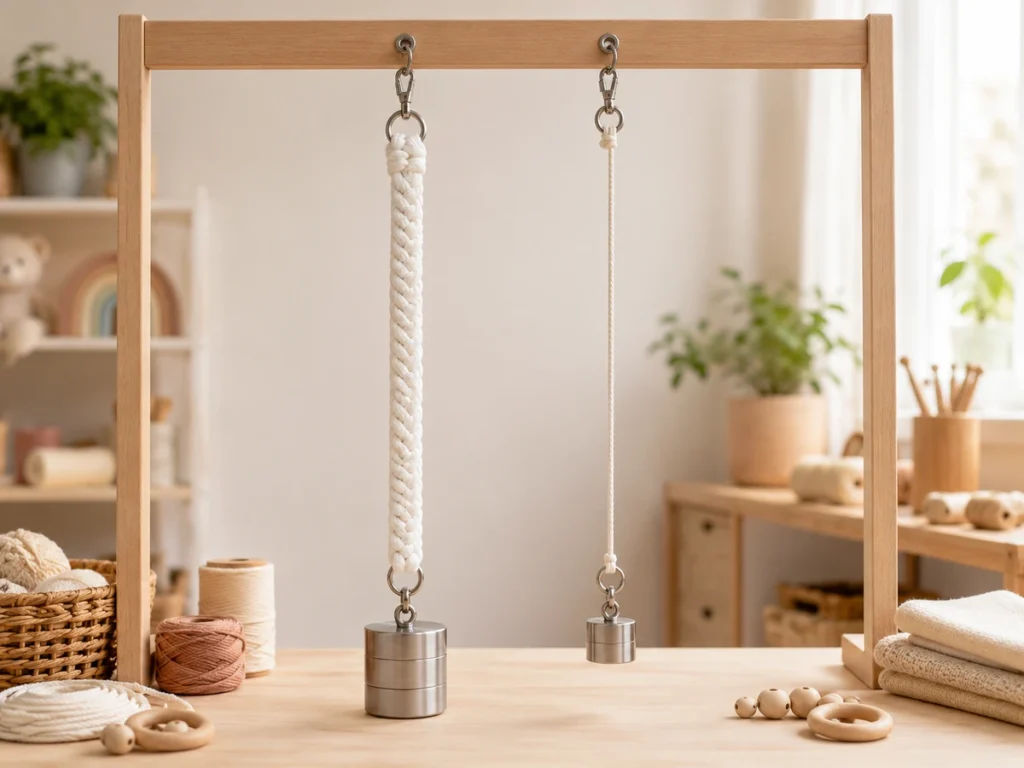
DIN EN 12586 for dummy chains requires the construction to withstand a tensile force of 90 Newtons for ten seconds without individual parts coming loose. The cord itself must bear this load.
A 1.2 mm polyester cord can withstand tensile forces of around 200 to 300 Newtons when new — significantly more than the standard requires. Even after intensive use over twelve months (saliva contact, friction, UV exposure), tensile strength remains above the 90-Newton threshold.
A 1.5 mm cotton string can withstand around 100 to 150 Newtons when new — above the standard threshold but with less margin. However, as it absorbs saliva and experiences material fatigue, tensile strength can drop below the 90-Newton threshold after six to twelve months. This is exactly why we recommend shorter replacement intervals for dummy chains made with cotton string.
3. Care and Durability
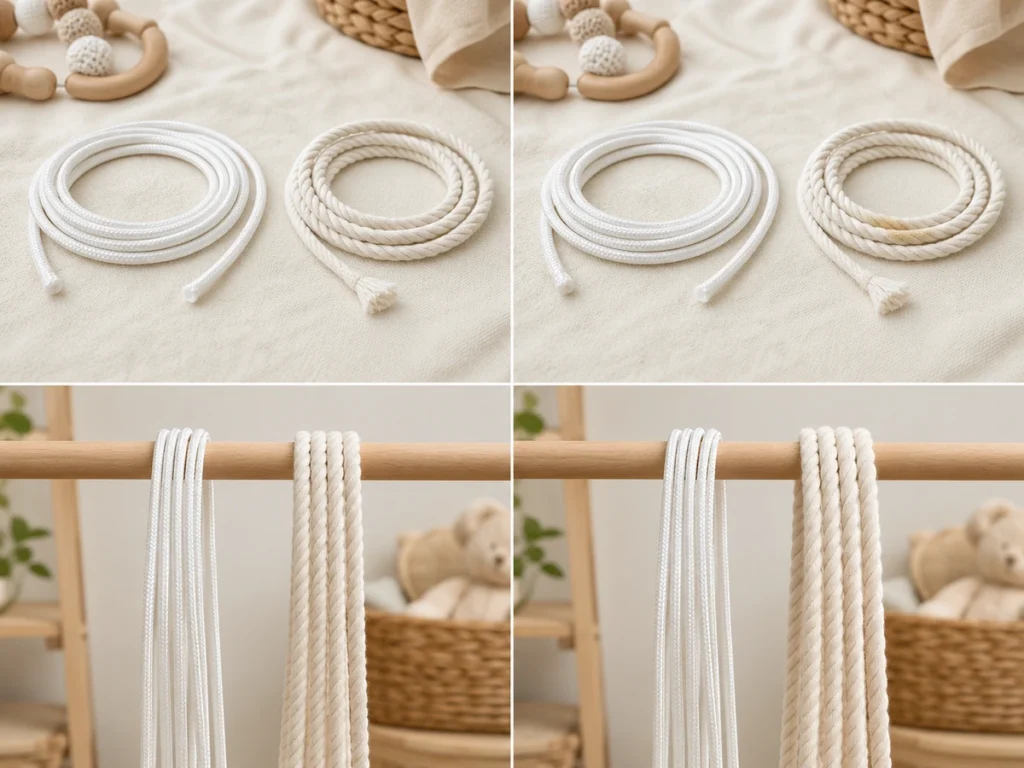
The biggest differences emerge when cleaning:
Polyester cord doesn’t absorb water. You can rinse your dummy chain with lukewarm water, clean it with a drop of soap and use it straight away. Stains from carrot purée, banana or berry juice usually wash out completely. Polyester cord is also stable in sunlight — it barely fades at all.
Cotton string is absorbent. It takes up saliva and water, which causes two effects: it swells slightly, which can cause problems with very tight holes. And it takes longer to dry — at least four to six hours at room temperature. Stains are harder to remove, especially dark berries or carrots leave marks. UV exposure can cause cotton string to fade over time.
The general rule for durability: a dummy chain made with polyester cord can be used for one to two years with good care. A dummy chain made with cotton string should be replaced after six to twelve months, or if you see visible wear (frayed edges, stains, soft material).
4. Appearance, Feel and Aesthetics
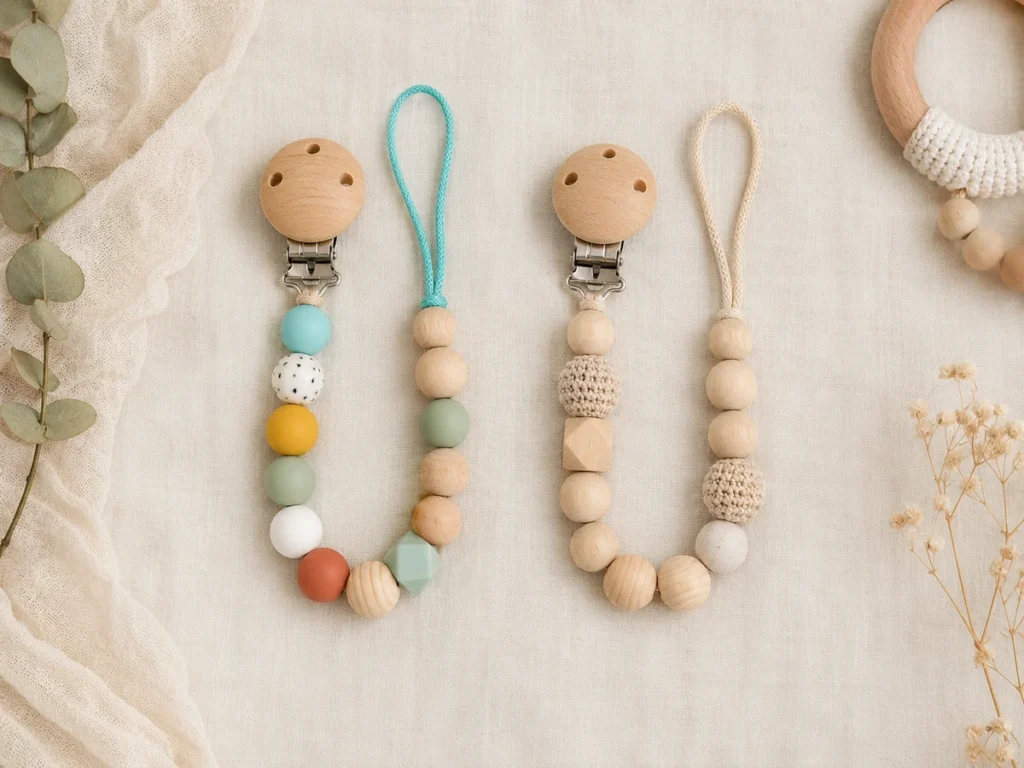
Here’s where the choice becomes emotional. Both cords have very different characters:
Polyester cord has a slightly shiny, smooth surface. It looks modern and clean and comes in an enormous range of colours — from pastel mint to neon pink to charcoal. In photos, dummy chains made with polyester cord often look more vibrant and neat. It feels smooth and slightly cool to the touch.
Cotton string has a matte, slightly textured natural finish. It looks warm and organic and works especially well with wooden beads sealed in beeswax. The colour palette tends to be more muted — beige, off-white, light grey, pastel pink, light blue. It feels soft and warm to the touch. If you’re going for a boho or Scandi look, cotton string is almost always the choice.
You’ll find both types in several colours and thicknesses in our Accessories category. If you’re unsure: make two mini-strands with three beads each, one in each cord type — after a few minutes you’ll know which look you prefer.
5. Which Cord for Which Project?
Here’s a clear decision guide:
- Dummy chain for everyday use, intensive use: polyester cord. It lasts longer, is easier to care for and handles daily baby life better.
- Dummy chain as a gift, for display, for photos: cotton string. It looks more elegant and natural and suits natural-finish wooden beads.
- Teething ring, teether toy: polyester cord. Due to the higher stress from teeth and intense saliva exposure, we clearly recommend the more durable material here.
- Pram chain, mobile: the stress is lower here because the chain doesn’t go directly in the mouth. Both materials work — if you need elastic (for springy movement), go for a polyester elastic band.
- Key fob, decorative mobile: this is purely a matter of taste. Cotton string usually looks more premium.
One final recommendation: if you like both materials, don’t mix them in the same chain. The different stretch under tension will cause uneven wear.
FAQ — Polyester Cord vs. Cotton String
Is cotton string safer than polyester cord?
Both cords can be safe as long as they meet DIN EN 12586. “Natural” doesn’t automatically mean “safer”. Polyester cord is actually more tear-resistant and thus often the more durable choice from a material perspective.
Can polyester fibres cause allergies?
True polyester allergies are very rare. Some parents prefer natural fibres for sensitive baby skin — in that case, cotton string is the choice. With normal use, there are no known cases of allergies to food-grade polyester cord.
Which colours hold better?
Polyester cord barely fades because the colour pigments are locked into the fibre structure. Cotton string does lose some colour over time with intense sunlight or frequent washing.
How do I spot quality polyester cord?
Good polyester cord is evenly twisted (no loose filaments on the surface), maintains consistent thickness and doesn’t come apart if you knot it 30 times around itself. It should be labelled as OEKO-TEX Standard 100 or at least as “food-grade”.
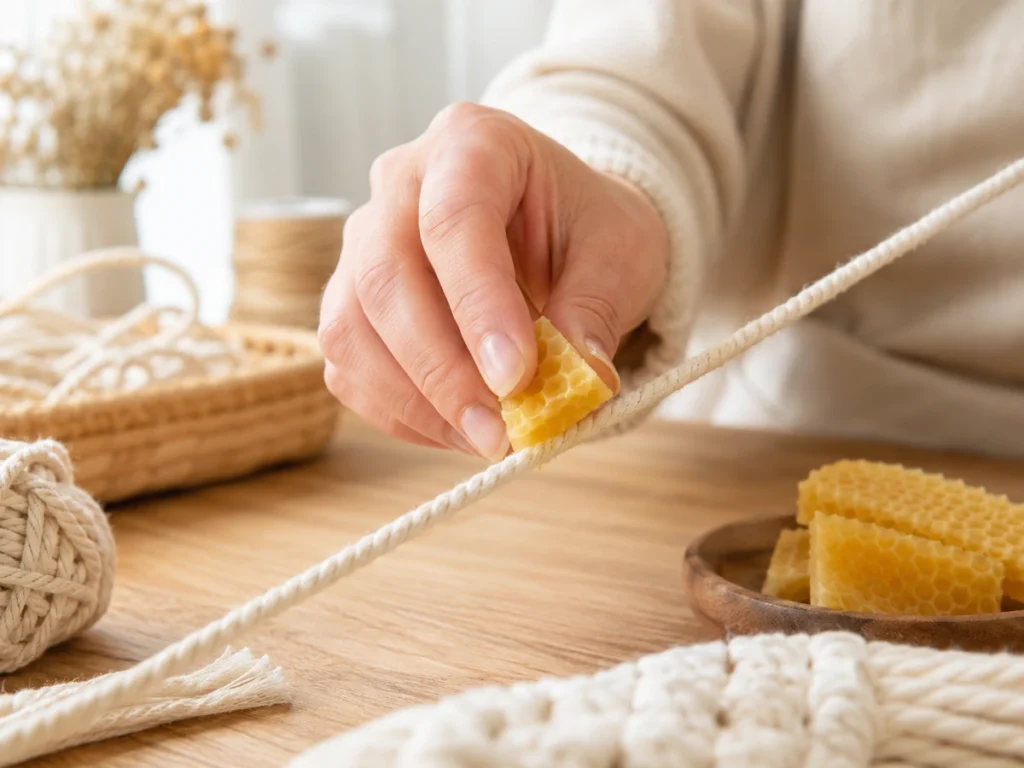
Can I wax cotton string myself?
Yes, with a drop of beeswax (see our article Beeswax Sealing) you can make cotton string a bit more water-resistant. However, this won’t increase tensile strength — just make it easier to care for.
Looking for the right cord? Our Accessories range includes polyester cords and cotton strings in many colours and thicknesses. Learn more about bead holes in our Hole Size Guide.